
Last updated November 15, 2026
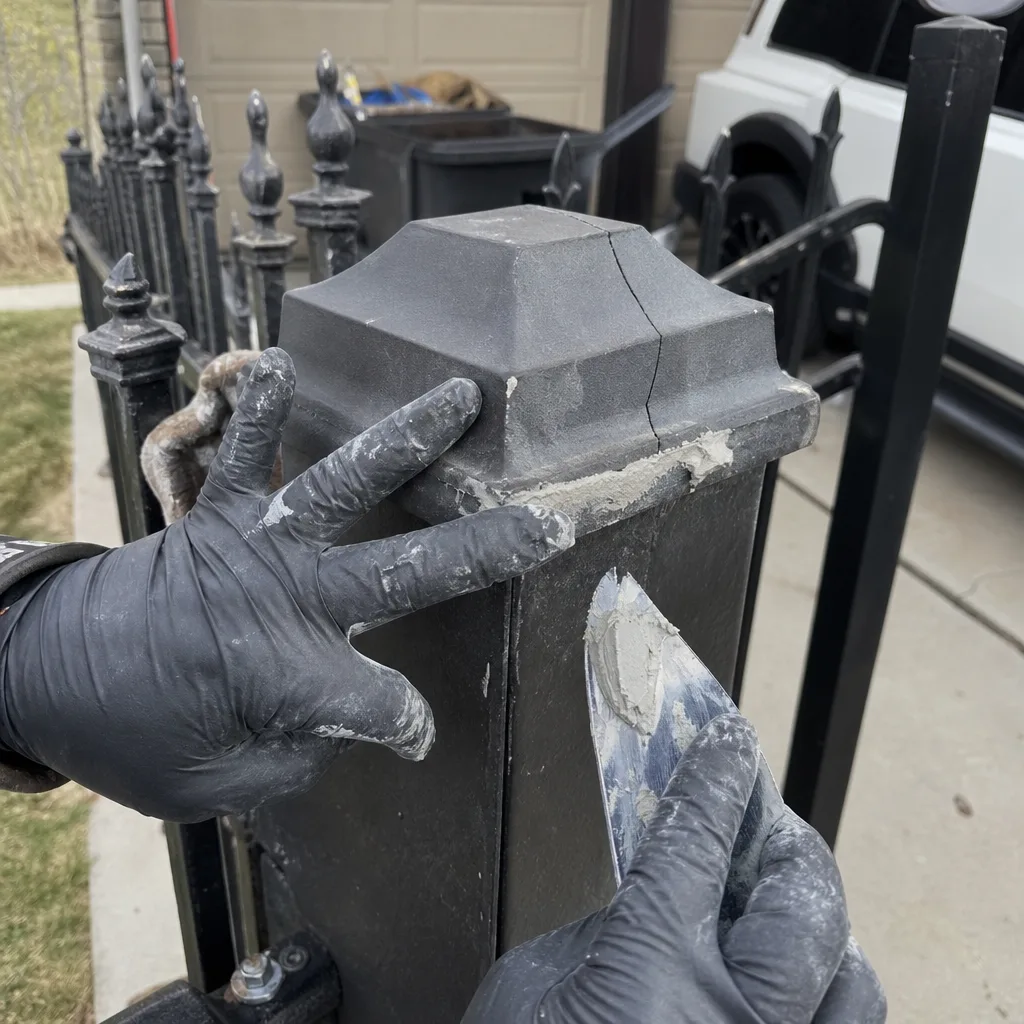
 Wrought iron
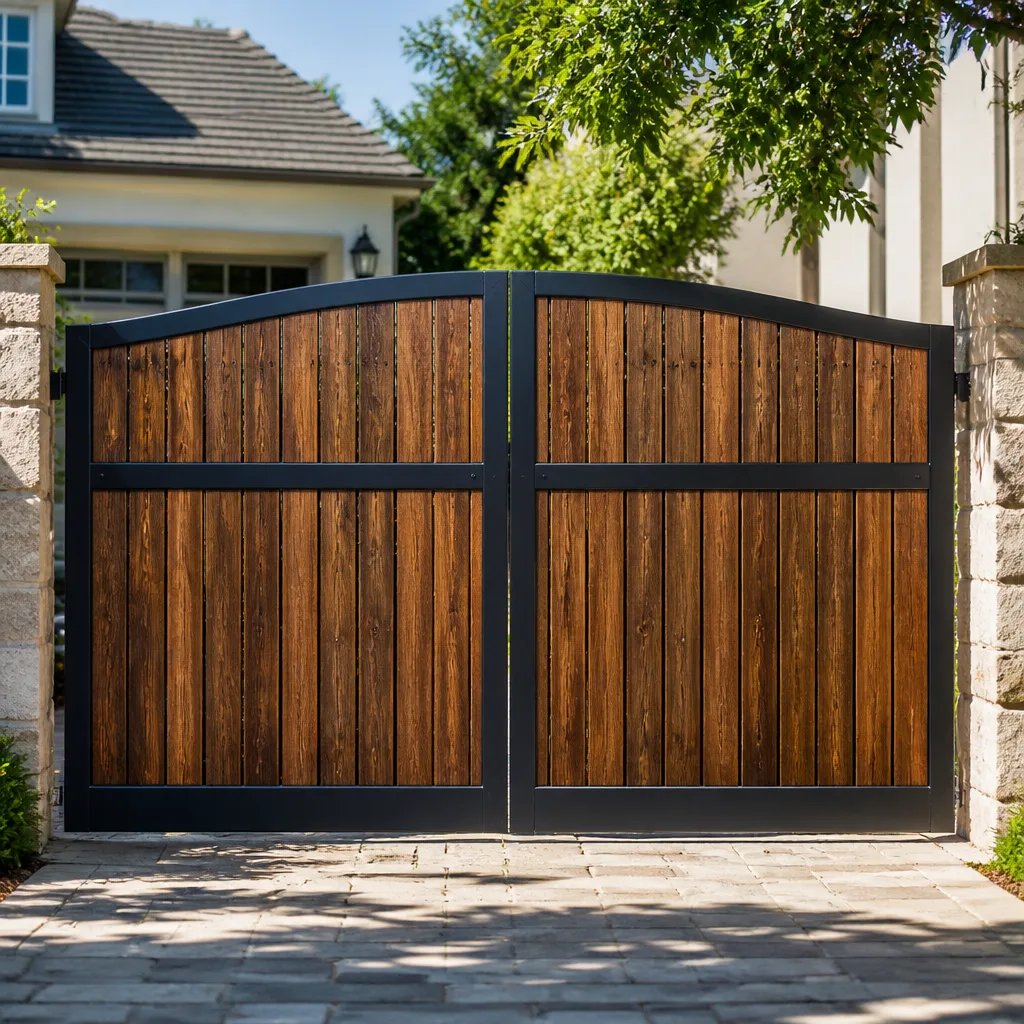 Wood & steel frame
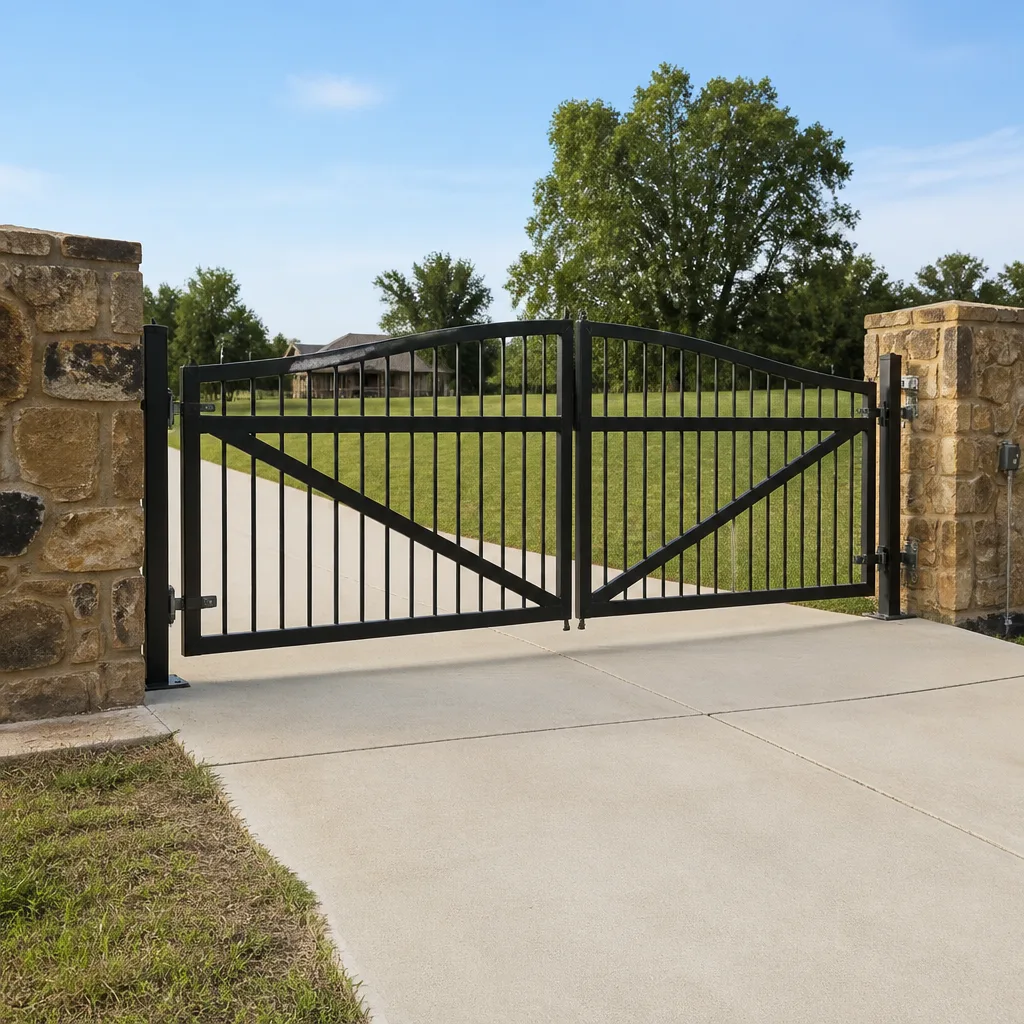 Farm & ranch
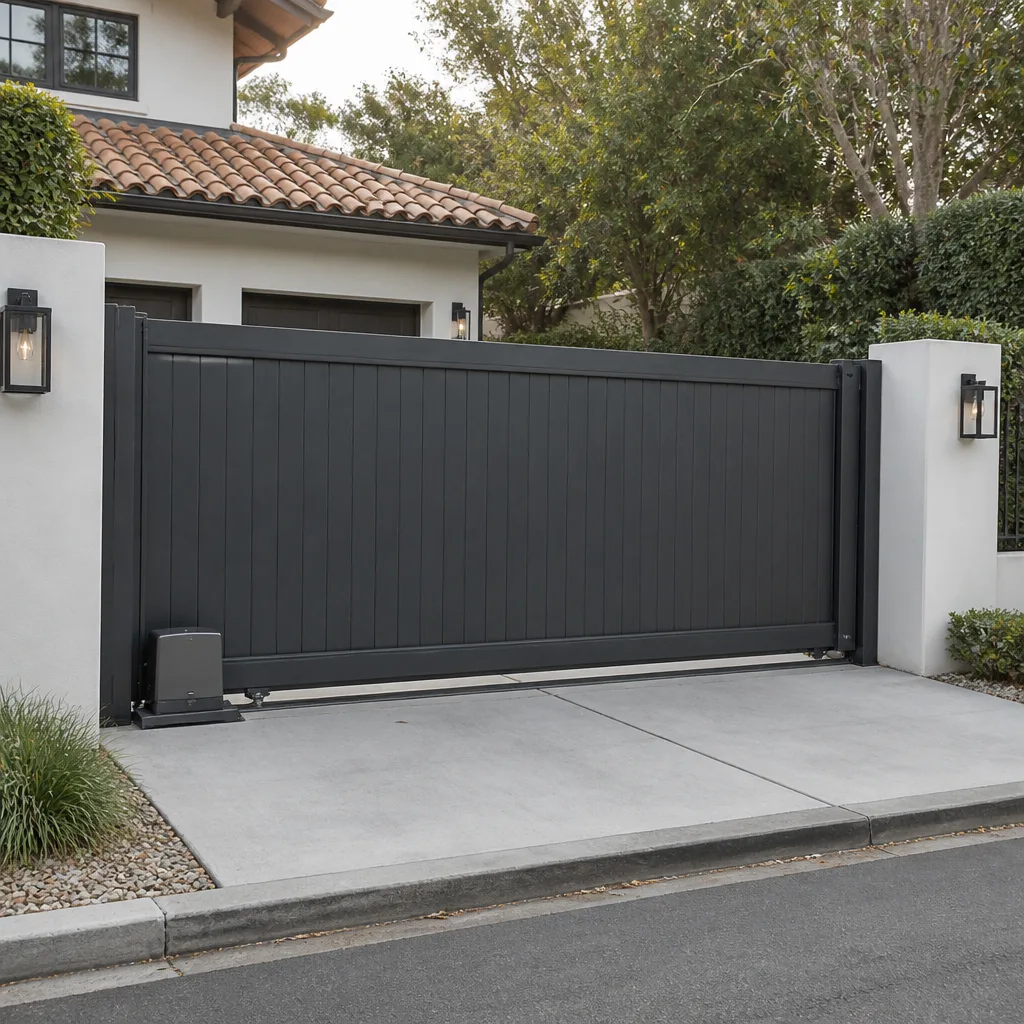 Sliding driveway gates
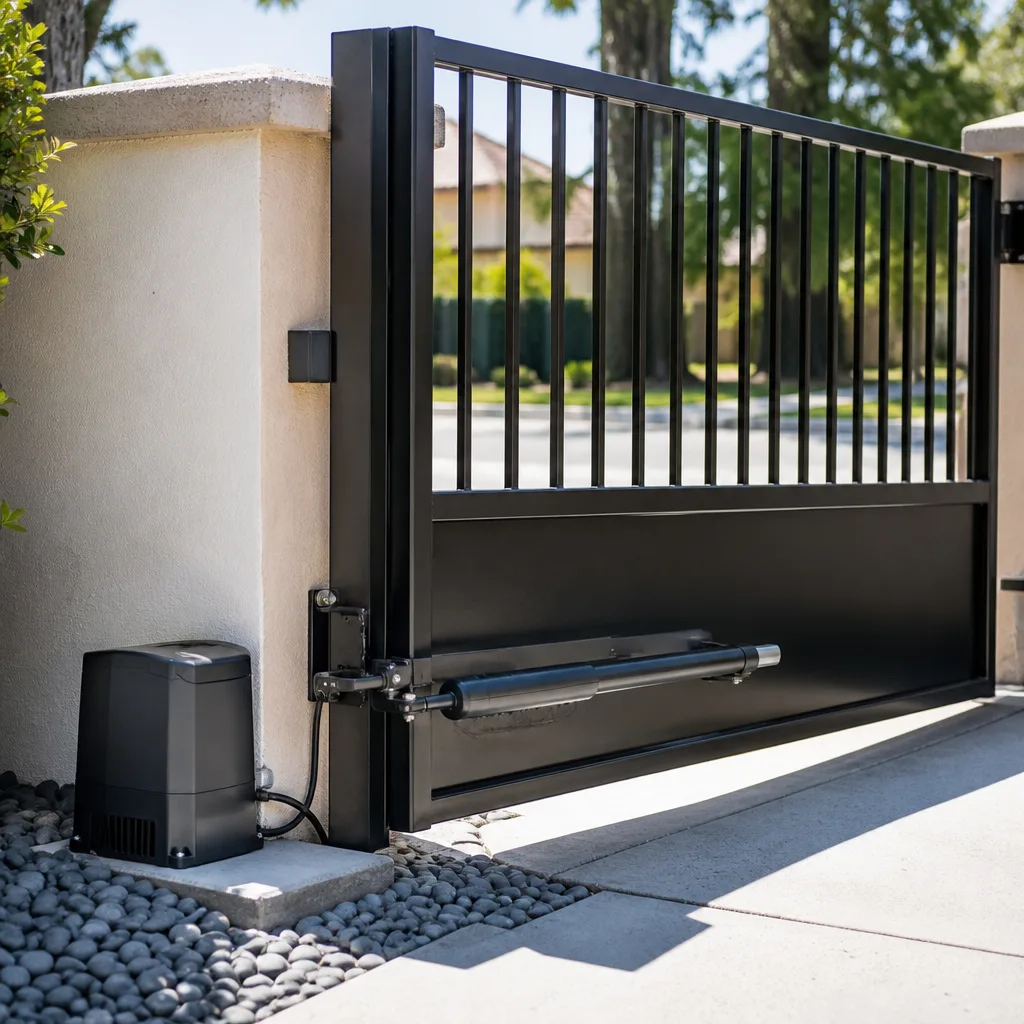 LiftMaster operators
Free on-site gate assessment - hinges, posts, and your LiftMaster or Nice gate operator checked before anything is quoted
The assessment is free and the quote is the invoice.
Get your free estimateGate Repair Maintenance Schedule: What to Do and When
The leading cause of gate motor failure around Aurora isn’t old age. It’s one missed grease point on the drive gear, tended to late, that lets friction chew through a part worth a few dollars and take a control board down with it. Most gate owners mean well and still get this wrong, because the generic advice they’ve heard (“oil the hinges twice a year”) ignores how a gate actually wears through a Colorado year. Here you’ll get a schedule built around Aurora’s four seasons and around real component wear cycles: what to check, when, which tasks you can do yourself, and which belong to a technician.
Quick Answer
A gate maintenance schedule for Aurora should be season-matched, not just annual. Do pre-winter prep in fall (battery load test, limit switch check, low-temp grease), a post-winter inspection in early spring (post alignment after freeze-thaw, hinge torque), a loop detector reset in spring after ground shift, and UV and ventilation checks in summer. On top of that, service individual parts on their own clocks: drive chains at 12 months, hinge pins at 18 months, control board capacitors at 36 months. A gate-only specialist can match each task to your specific brand and model, which matters more than any generic checklist.
Styles & brands we work with
- Wrought iron
- Wood & steel frame
- Farm & ranch
- Sliding driveway gates
- LiftMaster operators
Table of Contents
- Why a Calendar Schedule Fails a Colorado Gate
- Pre-Winter Checklist: The Most Important Visit of the Year
- Post-Winter Inspection: What Freeze-Thaw Does to Your Gate
- Spring: Loop Detectors, Ground Shift, and Safety Sensors
- Summer: UV, Rubber Seals, and Control Board Ventilation
- Component-Specific Service Intervals by Part Type
- Brand-Specific Lubrication: Why the Wrong Grease Costs More
- Owner Tasks vs. Technician-Only Tasks
- How to Log Maintenance So a Repair Goes Faster
Why a Calendar Schedule Fails a Colorado Gate
A gate in Aurora doesn’t wear at a steady rate. It wears in bursts, and those bursts line up with the seasons. A gate west of Parker Road where the afternoon wind runs harder, or one on an open lot near the Plains Conservation Center, faces a different set of stresses than a sheltered residential gate. Treating maintenance as “one annual checkup” means the gate gets attention at whatever time of year is convenient, not when it needs it.
The four stress periods in Aurora look like this:
- Fall: temperature swings that expose a weak battery and thicken old grease.
- Winter: repeated freeze-thaw cycles that heave posts and work hinge bolts loose.
- Spring: ground movement that knocks loop detectors out of tune, plus the first heavy use of the year.
- Summer: strong high-altitude UV that dries out rubber seals and bakes control boxes that don’t vent well.
Each of these asks for a different set of tasks. Getting them in the right order is the difference between a gate that opens cleanly for years and one that surprises you at the worst moment. The schedule below is how we think about it at Aurora Gate Repair, and it’s built for the specific way gates wear here, not a national template.
Pre-Winter Checklist: The Most Important Visit of the Year
The fall visit is the one that pays for itself. A battery that’s healthy in September can fail on the first cold morning in November, and a limit switch that drifts a few degrees in the cold can throw a gate off its stop entirely. This is the time to catch both before they strand you.
Do these five things before the first hard freeze:
- Battery load test. A voltage check isn’t enough on a gate battery; you need a load test to see how it behaves under the current the operator actually draws. Healthy voltage, weak load capacity is the classic cold-weather failure.
- Limit switch check. Verify the open and close stops and confirm the switches aren’t drifting. Cold shrinks metal and changes clearances, so a limit that was fine in August can be off in December.
- Swap to low-temp grease. Whatever lubricant served you in summer can thicken below freezing and load the motor. A low-temp grease suited to your drive type keeps the motor from working harder than it should.
- Hinge and roller inspection. Check for play, tightness, and any hinge pin that’s started to seize. Cold-weather binding is a hinge problem waiting to become a motor problem.
- Control box seal check. Confirm the enclosure is sealed against snow and meltwater, and that the vent path is clear. A box that takes on water is a box that fails in spring.
The right lubricant depends on the system. A LiftMaster jackshaft operator and a Viking slide gate motor don’t want the same grease, and putting the wrong one in can damage seals. That’s why our gate repair work starts with identifying the specific system before anything goes on the drive gear.
Post-Winter Inspection: What Freeze-Thaw Does to Your Gate
Winter is hard on posts. Every freeze-thaw cycle pushes and pulls at the ground a little, and after a full winter the post alignment can shift. That shows up as a gate that drags, binds against its stop, or closes unevenly. It’s not a motor problem. It’s a post problem, and the fix starts with checking the posts before blaming the operator.
Start the season with a post-winter pass:
- Post alignment inspection. Check that posts are plumb and that the gate swings or slides on its intended line.
- Hinge torque check. Re-torque hinge bolts to spec. Cold cycles loosen fasteners, and a loose hinge accelerates wear on everything downstream.
- Ground clearance check. A gate that scraped through snow may have shifted or bent in a way that needs correcting before the first big traffic day.
- Safety edge and sensor check. Confirm safety edges respond and photo-eyes work. A jammed or misaligned edge can make a gate reverse when it shouldn’t.
- Operator mode check. Test manual release in a controlled setting so you know it works if you ever need it.
If a post has moved, a hard fix is usually cheaper than the wear that misalignment causes. It’s the single most common thing we find on post-winter visits in Aurora. The good news is that once posts are corrected, the rest of the schedule holds.
Spring: Loop Detectors, Ground Shift, and Safety Sensors
Loop detectors are one of the first things to go out of tune in spring, and one of the last things homeowners think to check. The reason is ground shift: the freeze-thaw cycle that moves posts also disturbs the ground around any buried loop, which changes the loop’s sensitivity and can cause false detections or missed vehicles.
Spring tasks:
- Loop detector sensitivity reset. Re-tune the detector per the manufacturer’s procedure after the ground settles. This is the step most often skipped, and it’s why some gates start opening “for no reason” in spring.
- Photo-eye and safety sensor alignment. Confirm sensors are aligned and clean, and that the detection zone covers what it should.
- Control board inspection. Look for moisture, corrosion, or anything loose on the board. Spring moisture finds the weak points.
- Full cycle test. Run several full open and close cycles and note anything rough, slow, or intermittent.
Spring is also when we see the effect of a winter’s worth of deferred tasks. If a gate has been struggling, the spring visit is when the problem shows up. That’s why a schedule works best when the pre-winter and spring visits are treated as a pair. A specialist who already knows your brand can tune spring behavior to the specific operator, whether it’s an entry-level Mighty Mule or a commercial-grade DoorKing, and get it right the first time. That’s the core of our electric gate repair approach: diagnose the system, then set it up for the season ahead.
Summer: UV, Rubber Seals, and Control Board Ventilation
Summer in Aurora is easy on the ground and hard on anything rubber and anything electronic. The UV gain at this elevation is real: rubber seals, safety-edge gaskets, and weatherstripping dry out and crack faster than they would at sea level. Meanwhile, a control box in direct sun heats up, and a box that can’t vent well will run hotter than its components were designed for.
Summer tasks:
- UV seal inspection. Check rubber components for cracking, hardening, or shrinkage. Cracks in a safety edge gasket can compromise the edge itself.
- Control board ventilation check. Confirm the enclosure vents and that nothing is blocking airflow. Consider whether the box sits in full afternoon sun and whether that’s a problem for your equipment.
- Fastener and connector inspection. Heat loosens and expands things; a quick check of the connectors that see the most heat is worth the time.
- Battery state re-check. Heat is hard on batteries too. A mid-summer check catches a battery that’s losing capacity before fall.
None of the summer tasks are difficult. The mistake is skipping them because nothing seems wrong. A well-run gate rarely announces summer problems; it just wears a little faster, and you find out in fall. Our technicians have up to experience with these seasonal cycles in Aurora and other Front Range conditions, and that matters when the wear pattern on a rubber seal or a control board is telling you something.
Component-Specific Service Intervals by Part Type
Parts don’t wear on the same clock, so a blanket annual checkup misses most of what matters. Here’s how we think about intervals by component, and why they differ:
| Component | Typical interval | Why it wears at that rate |
|---|---|---|
| Drive chain | 12 months | Constant load cycling, dirt, and temperature swings all load the chain blades. Twelve months is when most chains show the wear that a lubrication pass and a tension check will reset. |
| Hinge pins | 18 months | Hinges cycle more than the chain on most gates, but each pin sees less load per cycle. A pin inspection at 18 months catches seize or looseness before it loads the operator. |
| Control board capacitors | 36 months | Capacitors wear by operating hours and heat. In a well-vented box they last years; in a hot enclosure their interval shortens. Three years is the inspection point, not a replacement guarantee. |
A few notes on these intervals. They’re typical, not fixed, and they shorten under heavy use or in harsher conditions. The numbers are a good starting point for a residential gate. A commercial-grade system that cycles a hundred times a day needs a tighter schedule, and that’s where brand knowledge pays off: a FAAC or BFT commercial operator may have its own service points and wear items that a generic checklist won’t name.
Use these intervals as the backbone of your log. If you note the date and the cycle count (or an estimate) at each service, the next technician can tell how fast your gate is actually wearing through each part. That’s worth more than any one checkup.
Brand-Specific Lubrication: Why the Wrong Grease Costs More
Lubrication is where well-meant maintenance does damage. Every gear unit has a specific lubricant profile, and putting a generic grease into a gearbox designed for something else can swell or harden seals, or simply fail to protect the gears at the temperatures a gate actually sees. Here’s how the needs differ by brand family:
- FAAC gear units. FAAC gearboxes have specific lubricant requirements tied to the gear materials and seals. Using a grease that isn’t compatible with the seals can cause them to fail, and a leaking gearbox is a bigger repair than the missed lubrication was worth.
- LiftMaster jackshaft operators. The jackshaft drive has its own lubrication points, and not all of them want grease; some want a lighter oil. Mixing the two, or over-greasing, causes problems that a correct service visit would avoid.
- Viking slide gate motors. Slide gate motors have their own gearbox and seal designs. The wrong lubricant can damage seals and accelerate wear on the drive gear, which is exactly the repair this whole guide is built to prevent.
- Ghost Controls and Mighty Mule. These entry-level systems often have simpler lubrication points, but “simpler” doesn’t mean “anything goes.” A product rated for these systems is cheap insurance against a control board failure.
The safest rule: match the lubricant to the system, not to what’s on hand. That means knowing the brand and model before you touch the gearbox. When a technician arrives knowing your specific system, the correct grease goes in the correct place, and that’s the visit that actually saves you money. Serving Aurora means seeing all of these systems on the same day, which is how that knowledge stays sharp.
Owner Tasks vs. Technician-Only Tasks
A good maintenance schedule makes clear which tasks you can do and which you shouldn’t touch. Here’s the split we recommend:
Tasks you can do yourself
- Visual inspection. Look for cracks, corrosion, loose fasteners, and anything that looks off. No tools required.
- Cleaning. Clear debris from the track, hinges, and the operator enclosure. A soft brush and a rag handle most of it.
- Wiping and inspecting rubber seals. A visual check for UV cracking is enough; don’t apply anything to seals without checking what the manufacturer allows.
- Testing the safety edge and photo-eyes. A controlled test with the gate in motion, from a safe position, confirms the safety system responds.
Tasks that belong to a technician
- Any lubrication inside a gearbox. The wrong lubricant damages seals. This is the task that most often causes a bigger repair when done without knowing the system.
- Limit switch adjustment. Small adjustments here can cause a gate to overrun or fail to close. This is not a good first-time DIY task.
- Battery load testing. A real load test needs equipment most homeowners don’t have, and the result is what matters for pre-winter prep.
- Loop detector re-tuning. Post-ground-shift re-tuning calls for the right meter and the right procedure.
- Control board work. Capacitor inspection, connector service, and board work all belong to someone trained for it.
When in doubt, treat it as a technician task. A gate repair specialist can do the DIY-level checks in the same visit for a low incremental cost. It’s also why maintaining a log matters: it lets the technician focus on the real work instead of re-discovering what you already know.
How to Log Maintenance So a Repair Goes Faster
A maintenance log is the single most useful thing a gate owner can keep, and almost nobody does it. When a technician shows up for a repair, a log turns a diagnostic visit into a targeted fix. Here’s what to record:
- Date of each service. Every visit, whether owner-performed or by a technician.
- Brand and model. Write down the operator and all gate hardware. This is the first thing a technician needs.
- What was done. Lubrication, battery test, limit check, loop reset. One line each is enough.
- What was found. Note anything that looked worn, loose, or off. “Gate dragged on the last six inches” is worth more than you’d think.
- Any parts replaced. Date and part. This is how you know how fast a chain or a capacitor is wearing.
- Any adjustments made. Limit switch adjustments, loop tuning, torque changes. If a gate is behaving differently, the log shows why.
Keep it in a single place: a notebook near the operator, a note on your phone, or a laminated card in the control box. The format matters less than the habit. The best log is the one that survives a few years. When we work on a gate in Aurora with a log, the diagnosis is faster and the repair is more accurate, because we know what was done and when.
Common Mistakes to Avoid
- Skipping the pre-winter visit. A battery that passes in September can fail in November, and the fall visit is the one that prevents a December breakdown. If you do one thing this year, do the pre-winter prep.
- Using the wrong grease. This is the mistake that turns a small lubrication job into a gearbox seal repair, especially on FAAC, Viking, and LiftMaster systems. Match the lubricant to the system.
- Oil-styling the hinges without checking the pins. Lubricant doesn’t fix a seized hinge pin. Inspect, then lubricate.
- Assuming post-winter misalignment is a motor problem. If a gate drags or closes unevenly after winter, check post alignment first. The motor is often working correctly against a gate that has moved.
- Ignoring the loop detector in spring. False detections and gates opening for no reason are almost always a loop that needs re-tuning after ground shift. It’s a quick, cheap fix when it’s caught early.
- Letting a control box bake in the sun. Ventilation check in summer is simple and prevents board-level failures. A box that runs hot fails sooner.
- Keeping no log. The single biggest thing that slows a repair is not knowing what was done before. A few lines at each service saves time and money later.
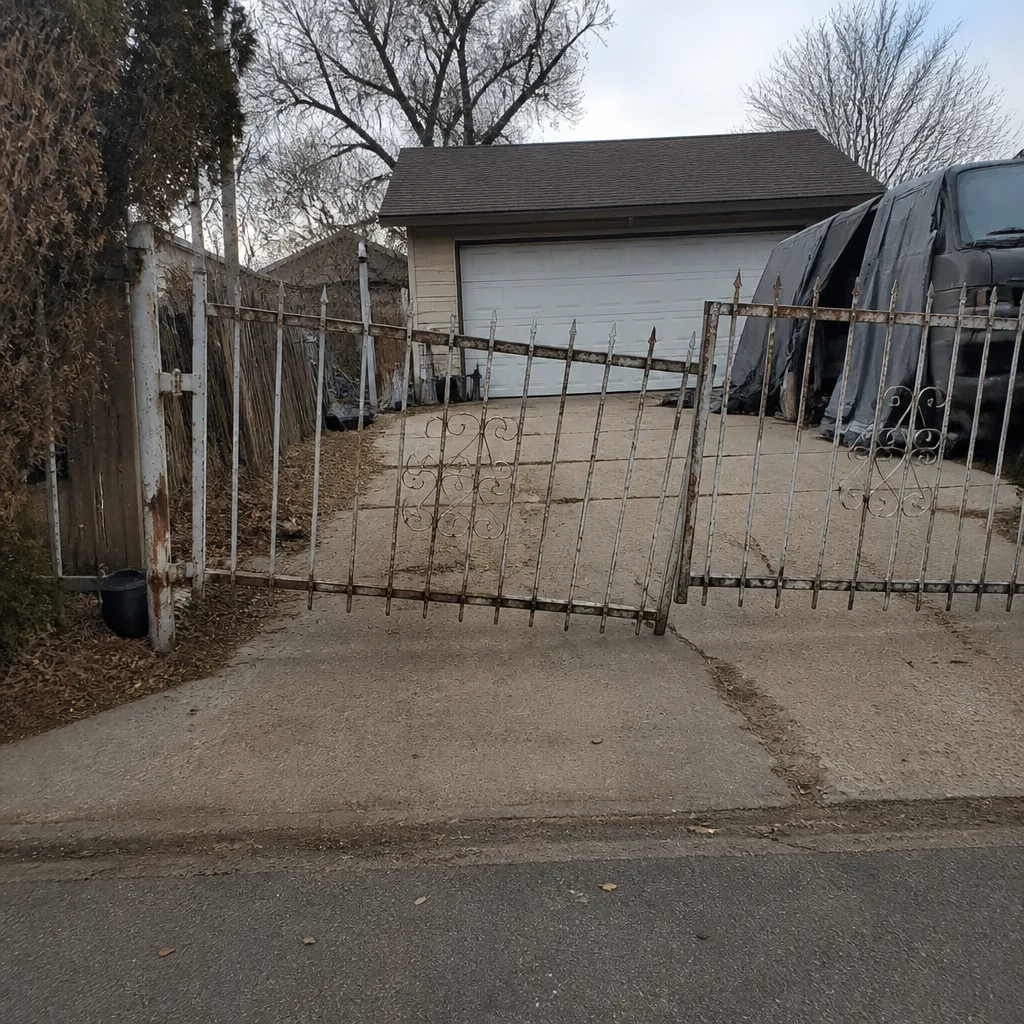
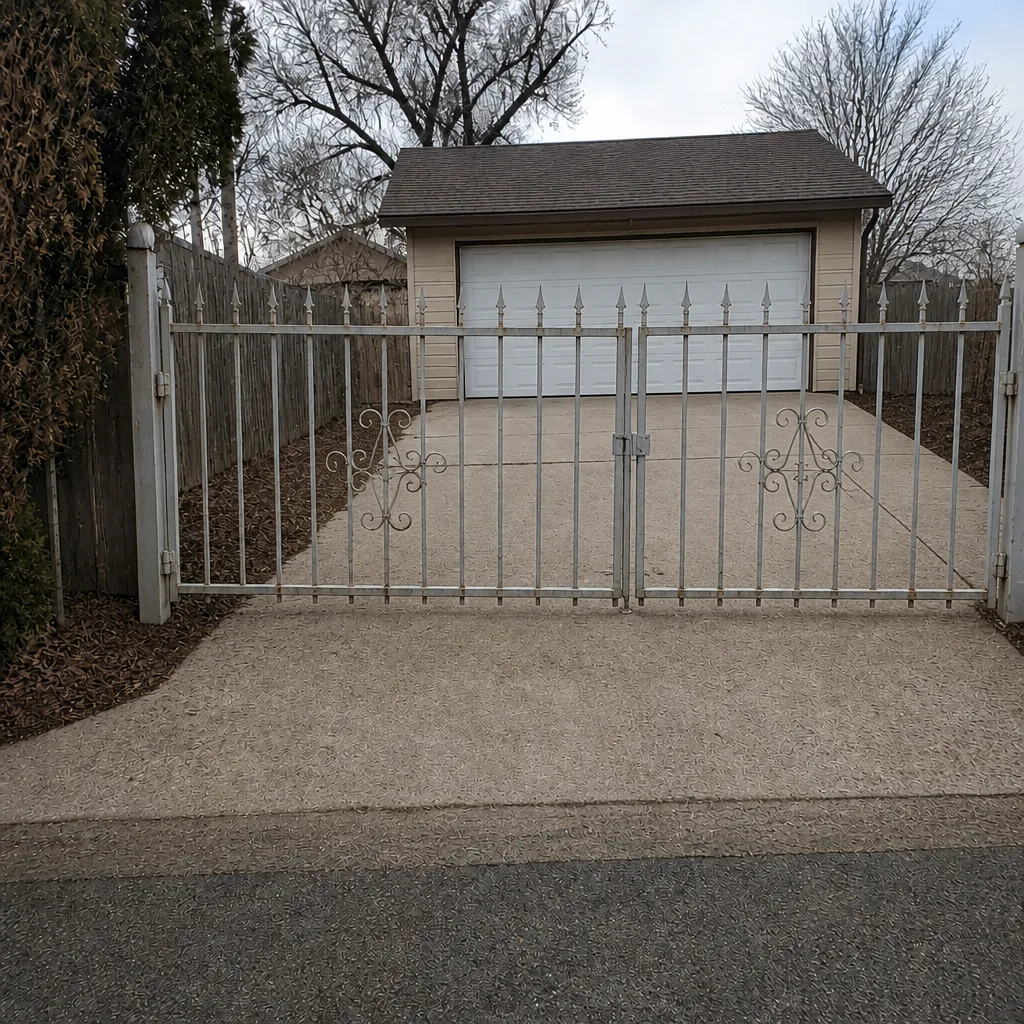
See the difference
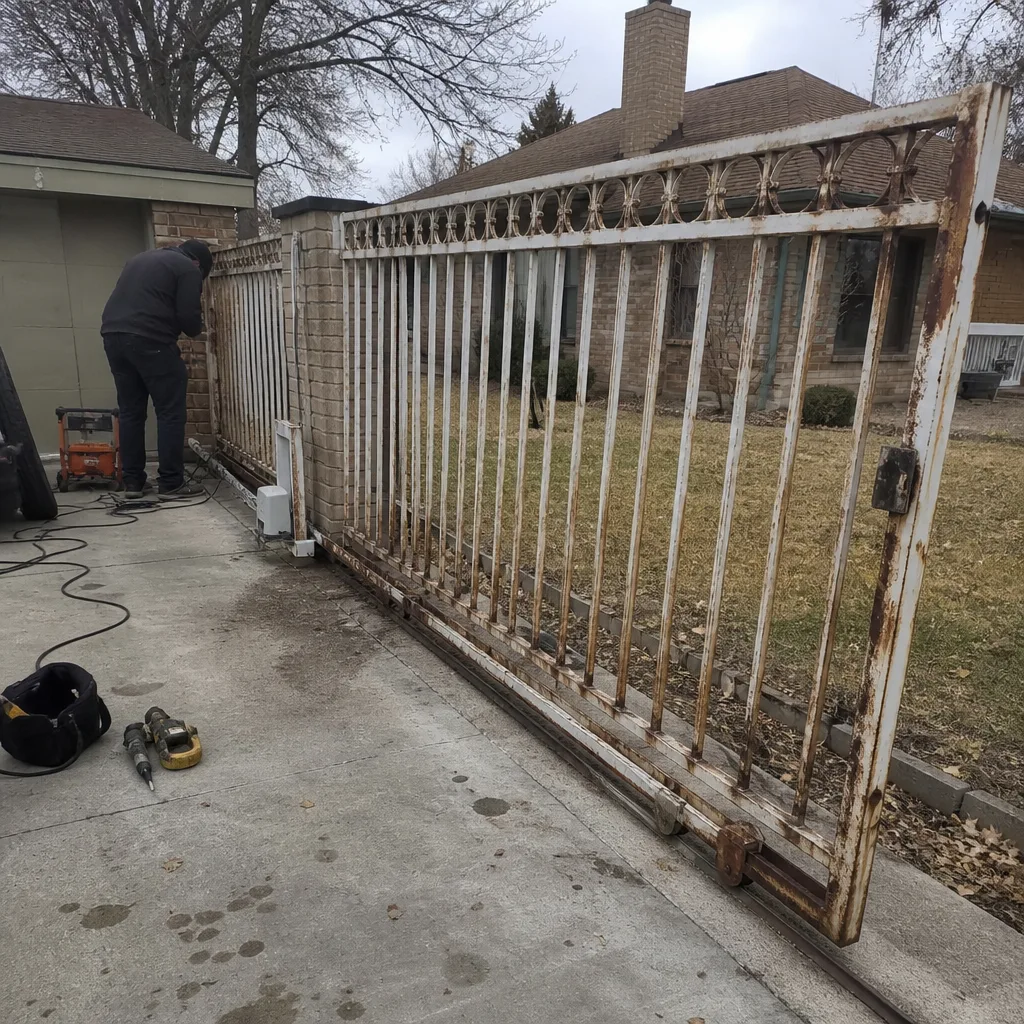 Before
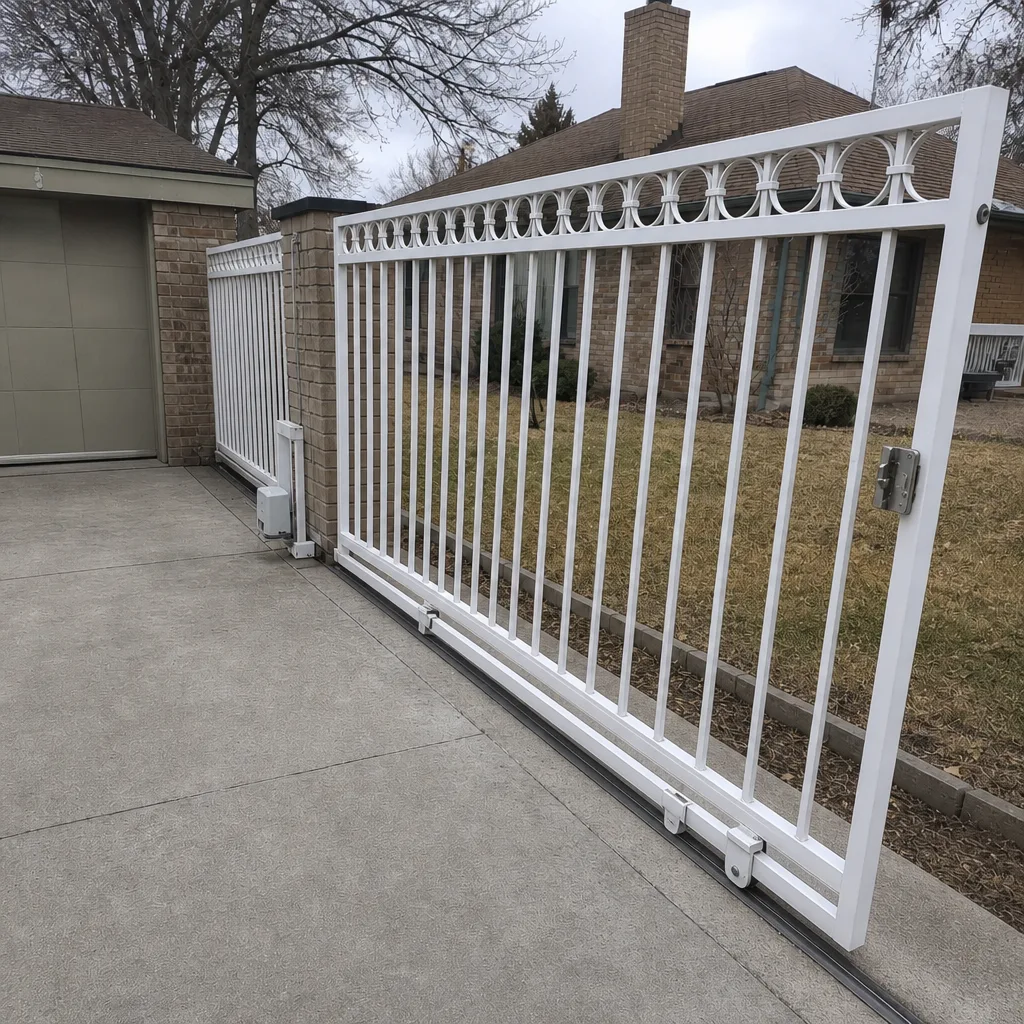 After
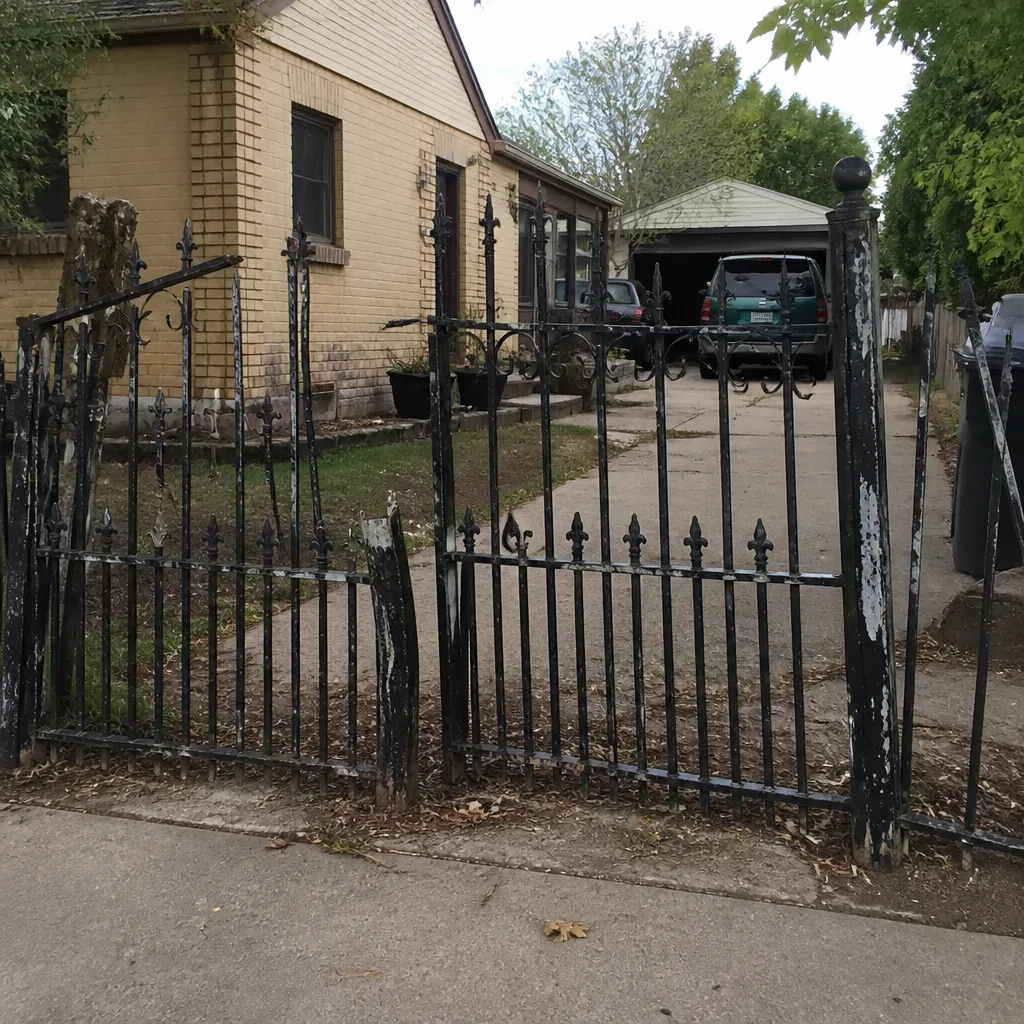 Before
 After
 Before
 After
When to Call a Professional
Some situations call for a trained technician rather than a checklist pass. Call us if the gate reverses on its own, opens or closes on its own, or moves unevenly or haltingly. Reach out if a post appears to have moved after winter, if the operator won’t respond to commands, or if there’s visible damage to the control box or wiring. Safety systems (safety edges, photo-eyes, loop detectors) should always be serviced by a professional, because a compromised safety system isn’t a small problem. And if you’re not sure, the safest call is to get a diagnosis rather than guess.
Aurora Gate Repair offers free estimates in Aurora. Call (877) 330-0618 to schedule a visit or to talk through what you’re seeing. We answer 24/7, and we have fast dispatch from 7am to 7pm, Sunday through Friday. We work on gates throughout Aurora and know the brand range you’re likely to have, from a residential Ghost Controls system to a commercial DoorKing operator.
Frequently Asked Questions
A gate in Aurora benefits from a seasonal schedulerather than a single annual visit: pre-winter, post-winter, spring, and summer. On top of the seasonal passes, individual parts follow their own intervals (drive chains at 12 months, hinge pins at 18 months, control board capacitors at 36 months). Ask your technician to confirm the right cadence for your specific system and use. Call (877) 330-0618 for a free estimate – estimates are free.
The battery load test followed by a limit switch check and a switch to low-temp grease. A battery that looks fine can lose capacity under load and fail on a cold morning; a limit switch can drift with temperature changes. Both are easy to check in fall and expensive to discover later. Call (877) 330-0618 to schedule a pre-winter visit.
It depends on the system. External hinge and pivot points can often be cleaned and inspected by an owner, but any lubrication inside a gearbox should be handled by a technician. The wrong lubricant can damage seals, especially on FAAC and Viking gearboxes, and the correct product varies by brand and model. Call (877) 330-0618 if you’re unsure what your system requires.
Almost always a loop detector that needs re-tuning after the ground shifts during freeze-thaw. The detector’s sensitivity changes when the ground around the buried loop moves, and a detector that’s out of tune can register a vehicle that isn’t there. It’s a quick fix with the right meter. Call (877) 330-0618, and we’ll diagnose it and get it dialed in.
Record the date of each service, the brand and model, what was done, what was found, any parts replaced, and any adjustments made. The format matters less than consistency; a single notebook near the control box works. A log shortens the diagnostic time on any future repair and shows how fast each part is actually wearing. Call (877) 330-0618 for a service visit.
Yes. We service powered and non-powered systems, so a manual gate with a binding hinge gets the same attention as an automated commercial slide gate. That matters as a gate changes over time, since a manual gate that later gets an operator still needs the same structural maintenance. Call (877) 330-0618 to schedule a visit.
The Bottom Line
A gate maintenance schedule for Aurora has two layers: seasonal tasks tied to the four stress periods, and component intervals tied to wear cycles. Do the pre-winter prep, the post-winter inspection, the spring loop reset, and the summer ventilation and UV check. Follow the part-specific intervals for the chain, hinges, and capacitors. Match the lubricant to the brand and system, log what’s done, and call a specialist when the safety systems, gearboxes, or control boards are involved. A gate-only technician with brand-level knowledge is the right call for Aurora gates, whether it’s a budget Mighty Mule or a commercial-grade system.
Our technicians have up to experience with exactly these systems, and we work the full range of gates that Aurora owners actually have. Call Aurora Gate Repair at (877) 330-0618 for a free estimate. We answer 24/7. Fast dispatch from 7am to 7pm, Sunday through Friday.
Written by the team at Aurora Gate Repair.