
Last updated November 15, 2026
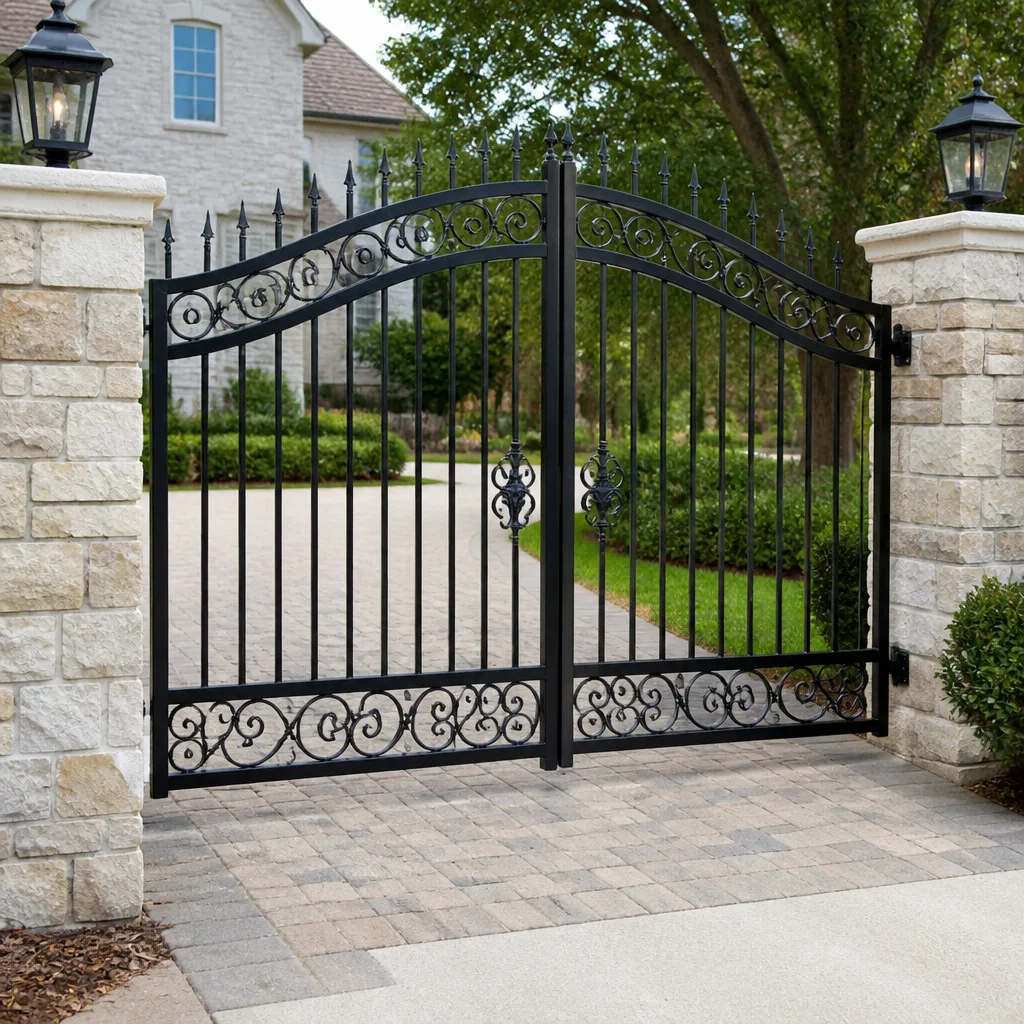 Wrought iron
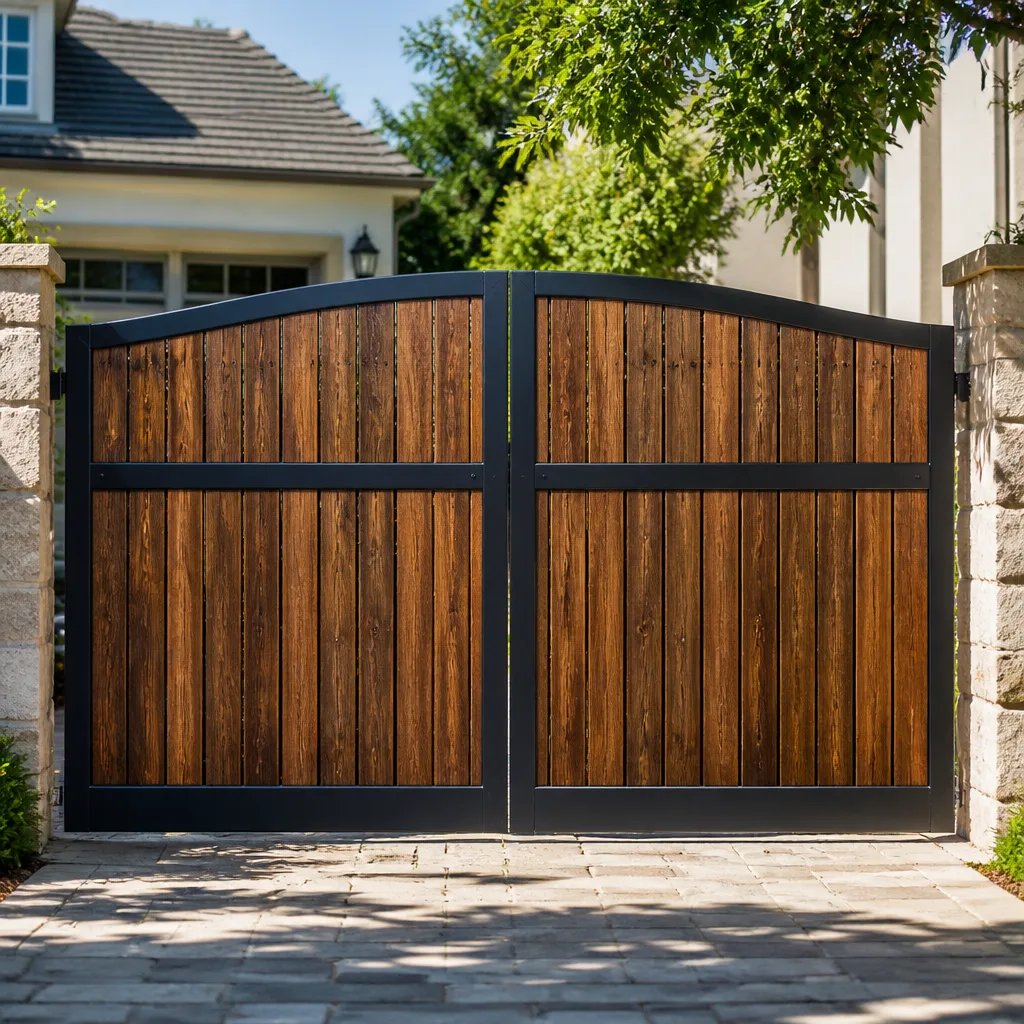 Wood & steel frame
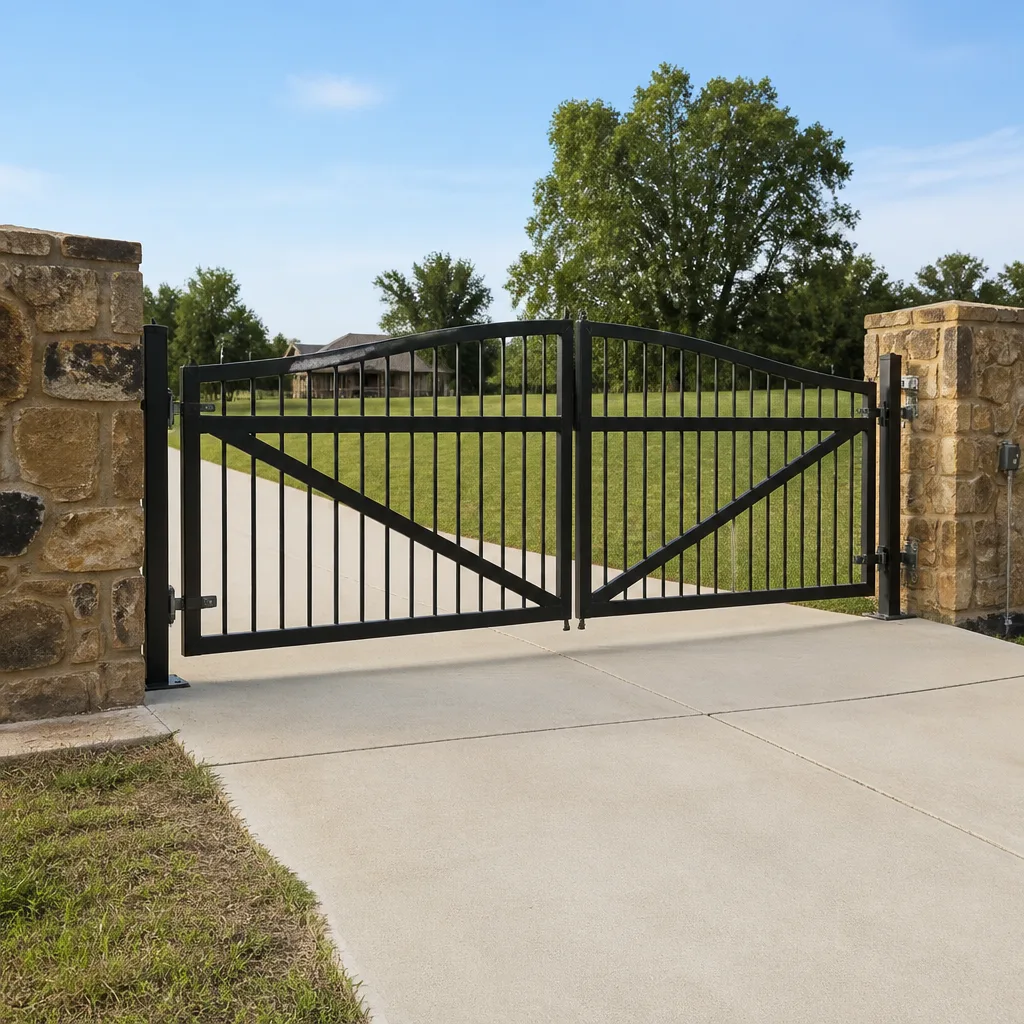 Farm & ranch
 Sliding driveway gates
 LiftMaster operators
Free on-site gate assessment - hinges, posts, and your LiftMaster or Nice gate operator checked before anything is quoted
The assessment is free and the quote is the invoice.
Get your free estimateGate Repair Permits, Codes & Inspections in Aurora, CO: What You Need to Know
Most Aurora homeowners treat gate repair as a category that never touches the building department. For a hinge swap or a sagging post, they’re right. But here’s the part that surprises people: replace a gate operator, add a keypad entry system, or widen the opening on a driveway gate, and you’ve stepped into permit territory that Aurora’s Building Services division actually enforces. The consequences don’t show up on the day of the work. They show up years later, during a home sale inspection or after a pedestrian entrapment incident prompts an insurance investigation. This guide walks through exactly which scopes trigger a permit, how UL 325 entrapment protection ties into inspections, and how to handle HOA gates that have stricter rules than the city itself.
Quick Answer
In Aurora, CO, most routine gate repairs are permit-exempt, but replacing a gate operator, adding new electrical wiring for an automatic gate, or changing a driveway gate’s opening width typically requires a permit through Aurora Building Services. The electrical work on any 120V or 24V operator must be permitted and inspected, and operator replacements must meet UL 325 entrapment protection standards. HOA covenants can impose stricter approval requirements than the city itself.
Styles & brands we work with
- Wrought iron
- Wood & steel frame
- Farm & ranch
- Sliding driveway gates
- LiftMaster operators
Table of Contents
- Which gate projects need a permit in Aurora
- What’s exempt from permitting
- UL 325 and entrapment protection
- Pulling an electrical permit for a gate operator
- HOA overlays in Aurora
- What to expect at inspection
- Unpermitted work at property transfer
- Common mistakes to avoid
Which Gate Projects Need a Permit in Aurora?
Aurora’s general rule is straightforward: physical repairs and like-for-like replacements stay exempt, but anything that introduces new electrical work, changes the structure’s dimensions, or brings a powered system into the picture crosses into permit territory. In our experience, this line is where most homeowners get caught off guard.
Here’s how we break it down. A permit is typically required in Aurora when the project involves:
- Installing a new electric or automatic gate operator on a gate that has never been automated.
- Replacing an operator when the new unit has a different voltage, wiring configuration, or entrapment protection setup than the old one.
- Adding a keypad, intercom, or card-reader access system that ties into the home’s electrical system.
- Changing the opening width of a driveway gate, which counts as a structural modification.
- Adding new electrical circuits, running conduit, or installing a low-voltage transformer that isn’t on an existing circuit.
- Widening or regrading the driveway approach so a sliding gate’s track placement changes.
That last one surprises people. A wider driveway approach can push a sliding gate’s track into a new setback line, and Aurora’s zoning rules and permit review treat that as a project rather than a repair. If you’re touching the approach or moving the gate posts, assume a permit is in play until Building Services tells you otherwise.
We know from working operators like Ghost Controls and Mighty Mule on residential gates across Aurora that the city is mostly checking the electrical side and the entrapment protection side, not the mechanical hardware. But they still want to see the paperwork on the electrical side, and they want to see UL 325-compliant sensors before they sign off.
What Gate Repair Work Is Exempt From Permitting in Aurora?
Plenty of gate work stays permit-exempt in Aurora, and pulling a permit for a hinge replacement would just waste your money and slow you down. The city treats the physical gate assembly itself as a household fixture, not a structure, so maintenance and like-for-like repair generally don’t need a permit.
Typical exempt work includes:
- Replacing a hinge, roller, latch, or striker.
- Straightening or reinforcing a bent gate panel.
- Repainting, refinishing, or re-staining a gate.
- Repairing or replacing a manual gate’s spring-loaded or ball-bearing hinge assembly.
- Replacing a gate operator with an identical model on the same wiring and same entrapment protection setup. Even here, we recommend confirming with Aurora Building Services before you assume, because the exact reading depends on the building official’s interpretation.
- Adjusting a gate’s swing, sag, or alignment.
- Replacing a damaged post or footing to the same spec, as long as you aren’t changing opening dimensions.
The “identical model, same wiring, same entrapment protection” scenario is the one where we see the most debate. Some jurisdictions will call it a like-for-like replacement; others want a permit because the operator is being replaced at all. Since that line moves between inspectors, the cheapest move is a phone call to Building Services before the work begins. For standard gate repair that doesn’t touch wiring, hinges and hard parts are the everyday bread and butter and don’t raise permitting questions at all.
When in doubt, treat a project as permitted. The cost of a permit in Aurora runs less than the cost of retrofitting compliance on the back end.
How Does UL 325 Entrapment Protection Affect Aurora Gate Inspections?
UL 325 is the safety standard for gate operators and entrapment protection devices, and Aurora inspections treat it as the baseline for any automated gate. When an inspector comes out on a gate operator replacement, they want to see two things: that the operator is certified to UL 325, and that the entrapment protection device actually works.
Entrapment protection comes in two flavors. Primary protection is built into the operator itself, typically a built-in current-sensing circuit that reverses the gate when it hits an obstacle. Secondary protection is an external device, usually either photoelectric sensors that use an invisible beam to stop the gate, or edge sensors mounted on the leading edge of the gate that detect a light touch.
The most common failure we see in Aurora is a homeowner who installed secondary protection but never wired it correctly. The sensor is mounted and visible, but the operator’s control board doesn’t recognize it, so the gate closes right through a pedestrian. An inspector will test this by walking a flat test object through the gate’s path and watching whether the gate reverses or stops. If it doesn’t, the inspection fails.
For residential gates using brands like Elite or Ghost Controls, this typically means a pair of photoelectric sensors on either side of the opening, wired into the operator’s accessory terminals and enabled in the control board menu. For commercial-grade systems from DoorKing or FAAC on larger property gates, you’ll often see both photoelectric sensors and a reversing edge on the gate’s leading edge.
Two things worth knowing before you install:
- Entrapment protection is required by the standard for any operator installed on a gate that moves. There is no grandfathering for residential drives.
- If you’re replacing an older operator that had only primary protection, the new installation should bring the system up to the current secondary protection requirement. Inspectors in Aurora check this.
If you’re mid-repair and the safety devices on your gate are failing their test, that’s a safety issue, and we recommend stopping the gate in the open position until a trained technician can look at it. Automated gates weigh hundreds of pounds and a failed safety sensor is the exact scenario the standard is designed to prevent.
How Do You Pull an Electrical Permit for a Gate Operator in Aurora?
Any gate operator running on 120V line voltage needs an electrical permit in Aurora, full stop. Operators running on 24V still need a permit if the low-voltage transformer itself is being newly installed on the circuit. The permit is pulled by whoever is doing the electrical work, which is typically the gate company or a licensed electrician they work with.
Here’s how the process generally runs:
- Confirm the scope. Identify the operator’s voltage, amperage draw, and whether an existing GFCI-protected receptacle can be used or a new circuit is needed. Aurora follows the general practice of requiring GFCI protection for exterior 120V outlets at gate operators.
- Submit the electrical permit application. Aurora Building Services accepts electrical permit applications through their online portal. You’ll need the property address, operator model, voltage, and a simple scope statement. Some contractors pull the permit; some homeowners do it themselves if the work is allowed to be owner-permitted.
- Schedule the rough inspection. The rough inspection happens after the conduit is run and the wiring is installed, but before the trench is backfilled if the run is underground. If the operator is surface-mounted and the wiring is in a wall, the rough inspection happens after the boxes are mounted but before devices go in.
- Inform the inspector of the gate’s safety setup. This is where the UL 325 devices matter. Have the entrapment protection spec on hand so the electrical inspector can confirm the circuit supports the sensors.
- Final inspection. Once the operator is operational and the safety devices are wired and tested, the final inspection signs off the circuit. That’s the permit with the sticker that shows up clean at a home sale.
One detail Aurora homeowners miss: if the operator is being fed from an existing exterior outlet on the house, and the outlet is on an existing circuit that isn’t GFCI-protected, an inspector may require a GFCI upgrade as part of the final sign-off. This is a real cost most people don’t budget for.
How Do Aurora HOA Covenants Stack on Top of City Permits?
HOA covenants in Aurora estates and planned communities are frequently stricter than the city permit process. A city permit means the work meets code. An HOA approval means the work meets the community’s architectural standards. Both can apply to the same project, and both can cause a legal problem if one is skipped.
Common HOA overlays on gate work include:
- Approved color and finish palettes. A gate that matches the neighborhood aesthetic is often a covenant requirement, not a preference.
- Approved material limits. Some communities prohibit chain link on street-facing gates or restrict the height and opacity of privacy gates.
- Approved operator brands and styles for uniformity. Communities with shared fence lines or gated entries sometimes require a match to an existing operator style.
- Setbacks that differ from the city’s general development standards.
- Pre-approval by the architectural review committee before permit application, not after.
Here’s the practical problem. Even if the city issues a permit, if the HOA denies the work, the homeowner can be forced to remove the gate they just installed at their own expense. And even if the HOA approves, if the city doesn’t, the homeowner is stuck with a gate the city won’t inspect. The order matters: HOA approval first, then city permit, then work.
If you’re working with an Aurora property manager on a shared gate, pull the HOA rules and the city’s requirements side by side before the project scope is even quoted. It saves weeks and a lot of back-and-forth. For gates inside an HOA, our rule of thumb is to treat the architectural review as the first step, not the last.
What Happens During a Gate Inspection in Aurora?
The inspection visit itself is usually short, but what the inspector tests varies depending on whether the permit is an electrical permit, a building permit, or both. In our experience, most gate-related inspections in Aurora fall into the electrical category, with structural review only on projects that changed the gate’s footprint.
For an electrical permit inspection on a gate operator, expect the inspector to:
- Verify the operator’s UL 325 certification label is present.
- Trace the circuit from the panel or exterior receptacle to the operator, confirming wire gauge and GFCI protection.
- Test the primary and secondary entrapment protection by walking an object through the gate’s path while it closes.
- Test the manual release, which must allow the gate to be opened by hand during a power failure.
- Confirm the operator is mounted to a structurally sound post and not to a post that’s rotting or leaning, which is a common reason an inspection fails on the spot.
For a building permit inspection on a widened gate opening, the inspector checks the post footings, the track and header for a sliding gate, and the clear opening width against the approved plan. If the project widened the approach, they’ll check the setback from the property line.
The single biggest reason an inspection fails in Aurora is a gate that tests fine on the install day but fails on the walk-through because the sensors had drifted out of alignment. Modern photoelectric sensors are sensitive and homeowners moving things around the gate can bump them without noticing. The second biggest reason is a missing secondary protection device entirely, which is a hard fail.
If the inspection fails, the fix is usually a re-test after adjusting the sensors and a re-inspection fee. That’s why we recommend having the safety devices tested and confirmed working twice: once before you call for inspection, and once on the day, so the gate is in the same physical state the inspector will see.
What Happens If Gate Work Was Done Without a Permit in Aurora?
Unpermitted gate work is a problem that surfaces at the worst possible moment: the property transfer. When a buyer’s inspector or title company’s underwriting looks at the property and finds a permitted electrical circuit next to a new gate operator with no permit on file, that discrepancy becomes a negotiating point or a deal killer. Unpermitted automation can also create a coverage problem for a homeowner’s insurance policy if an entrapment injury is ever claimed against the property.
If you’re reading this because unpermitted gate work was done on your Aurora property before you realized a permit was needed, the good news is the path forward is usually straightforward:
- Call Aurora Building Services. Explain the situation plainly, provide any records you have, and ask what the requirements are for a retroactive permit.
- Expect an inspection. The city will want to see the installation before issuing a retroactive permit. That means the safety devices, wiring, and mounting will all be looked at as if the work were new.
- Correct anything that doesn’t pass. This is the variable part. If the original install was compliant, it’s just paperwork and inspection. If the safety devices are wrong or the wiring isn’t right, those fixes come first.
- Get the permit and inspection records. Once issued, keep the permit number, inspection dates, and any photos of the work. These are what the title company will pull during the next sale.
We’ve walked Aurora homeowners through the retroactive-permit path on gates installed by previous owners, and the outcome depends heavily on how compliant the original install was. If a brand like Mighty Mule was installed on a dedicated circuit with proper secondary protection, retroactive permitting is quick. If the operator was wired into an interior outlet with no GFCI and no entrapment protection, the city will require the safety upgrades first.
One thing we always tell people: don’t panic, and don’t assume the retroactive permit requires tearing out the gate. It doesn’t. What the city cares about is electrical code and entrapment protection, not cosmetics.
Common Mistakes to Avoid
- Assuming all gate repair is permit-exempt. The single biggest misconception in Aurora. Hinge work is exempt; operator replacement and electrical work usually aren’t.
- Waiting until the inspection to test the sensors. Photoelectric sensors drift out of alignment with wind, kids, and yard work. Test before you call for inspection, and test on the day.
- Pulling the city permit before the HOA approval. In Aurora’s planned communities, no city permit will save you if the HOA denies the design. HOA first, always.
- Installing a new operator on a rotting post. Inspectors will flag it, and it also fails safety. If the post is going, it needs replacing to proper footing depth before the new operator goes on.
- Skipping the GFCI check on existing exterior circuits. An inspector can require the GFCI upgrade as part of the final sign-off even though it wasn’t in your scope.
- Widening the gate opening without a plan. A wider approach is a structural change, not a repair. Bring it to Building Services before you dig.
- Leaving retroactive work undocumented. If you inherited unpermitted work, chase down the permit and the inspection record before you list the property. It’s much easier to fix on your timeline than on a buyer’s.
See the difference
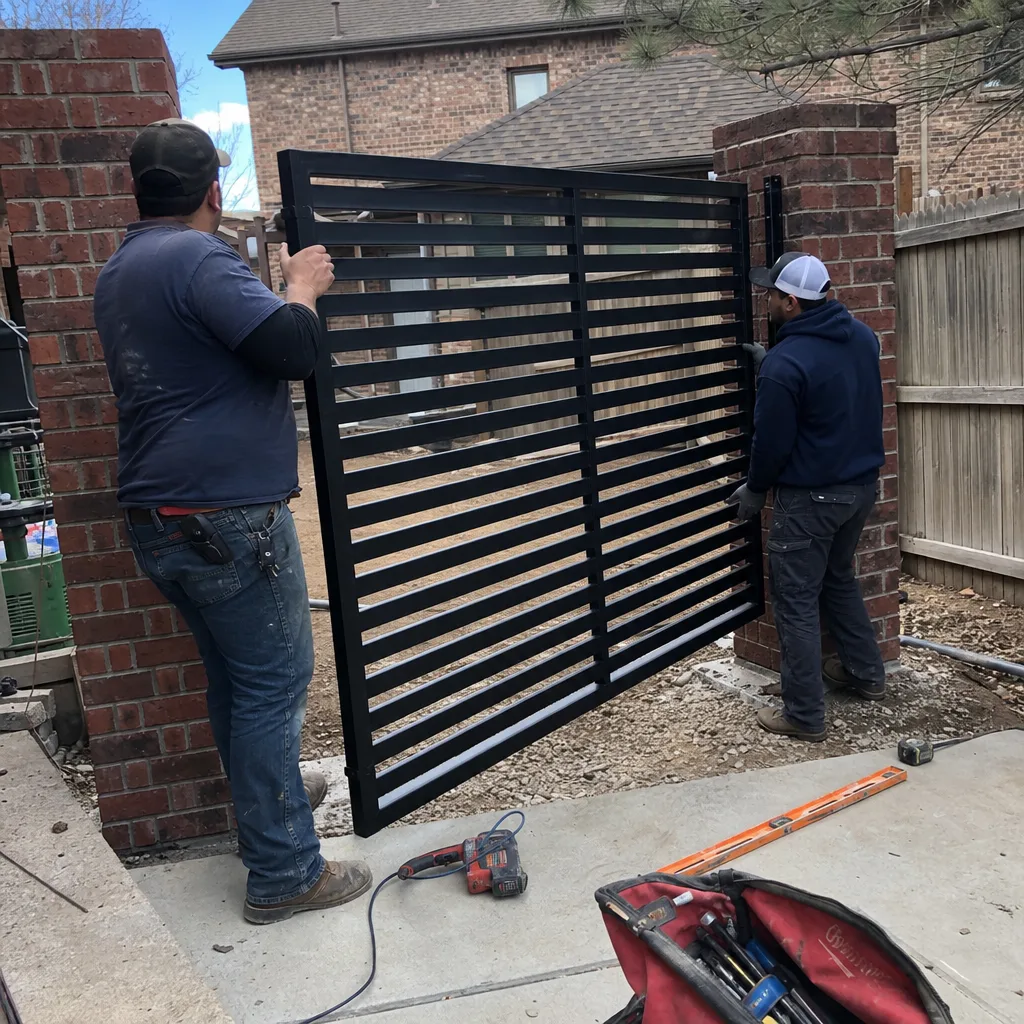
 Before
 After
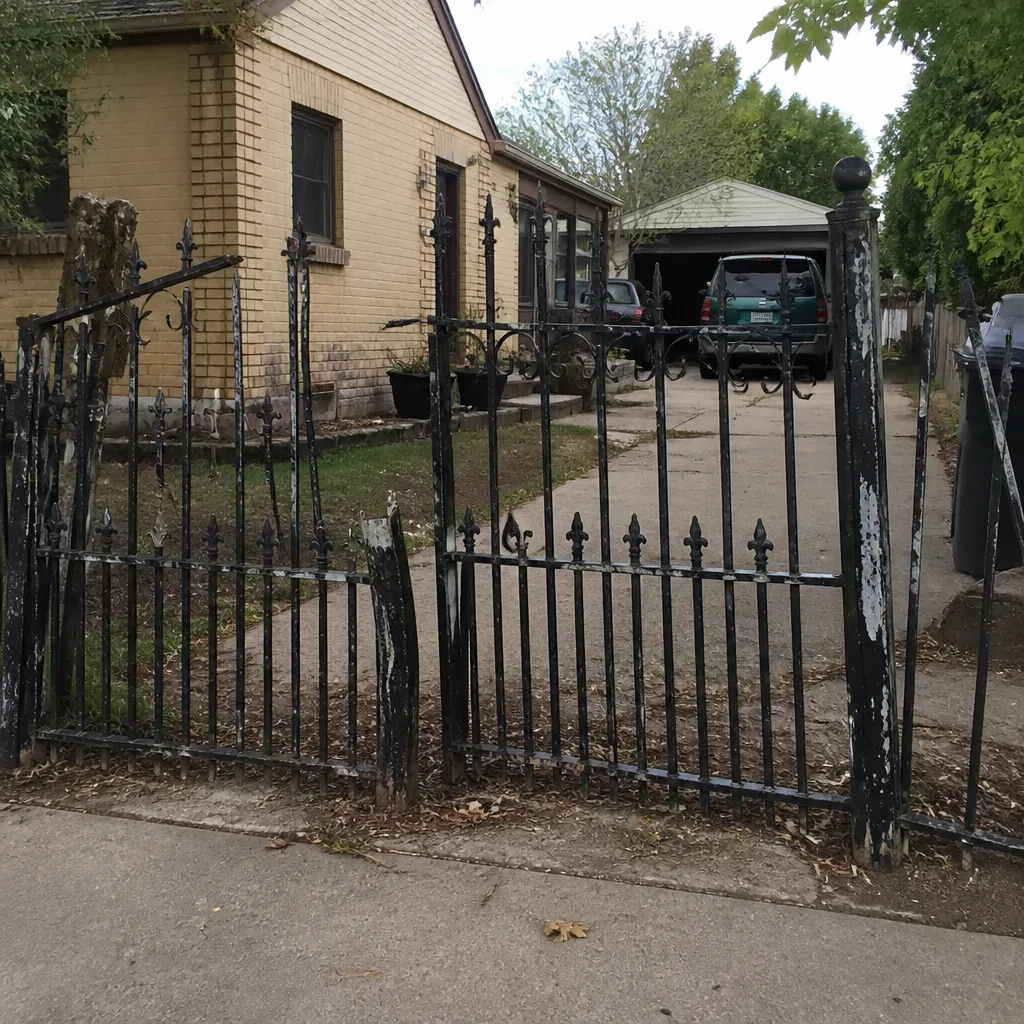 Before
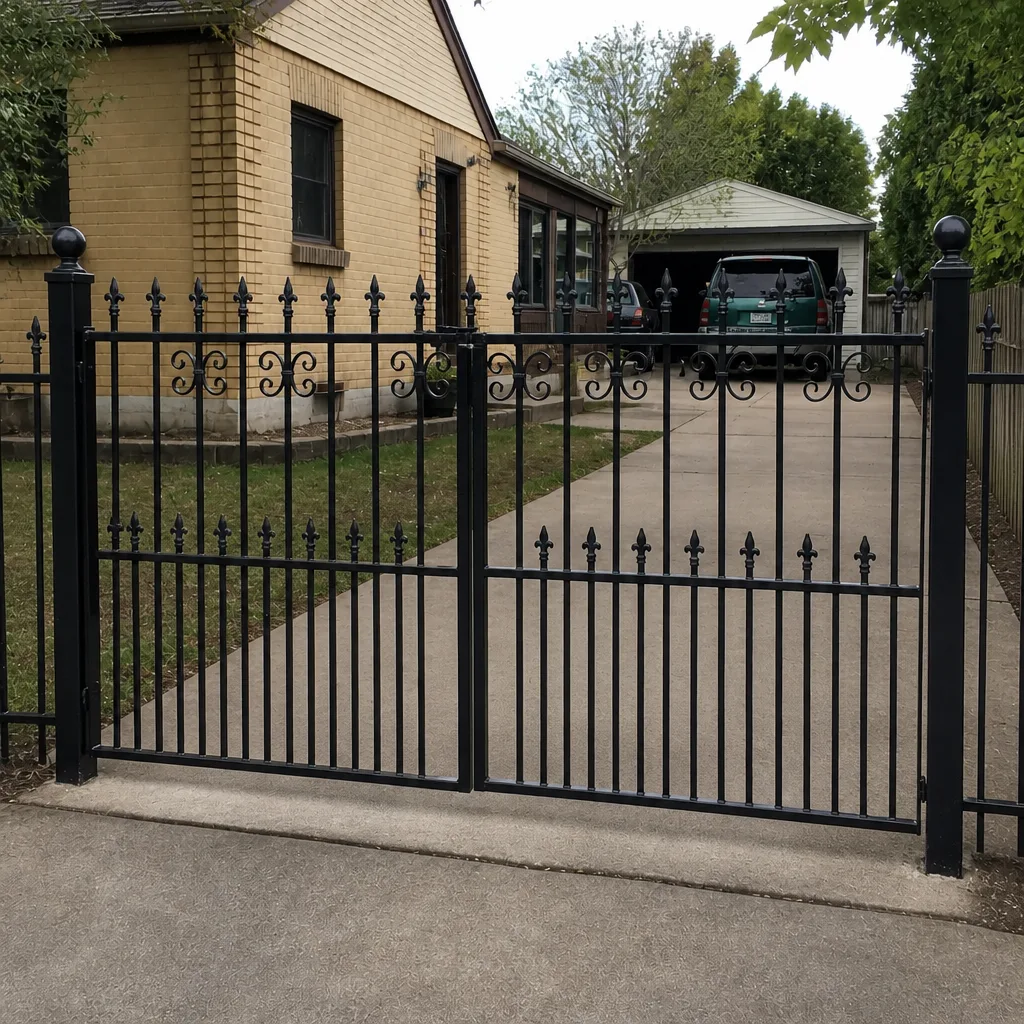 After
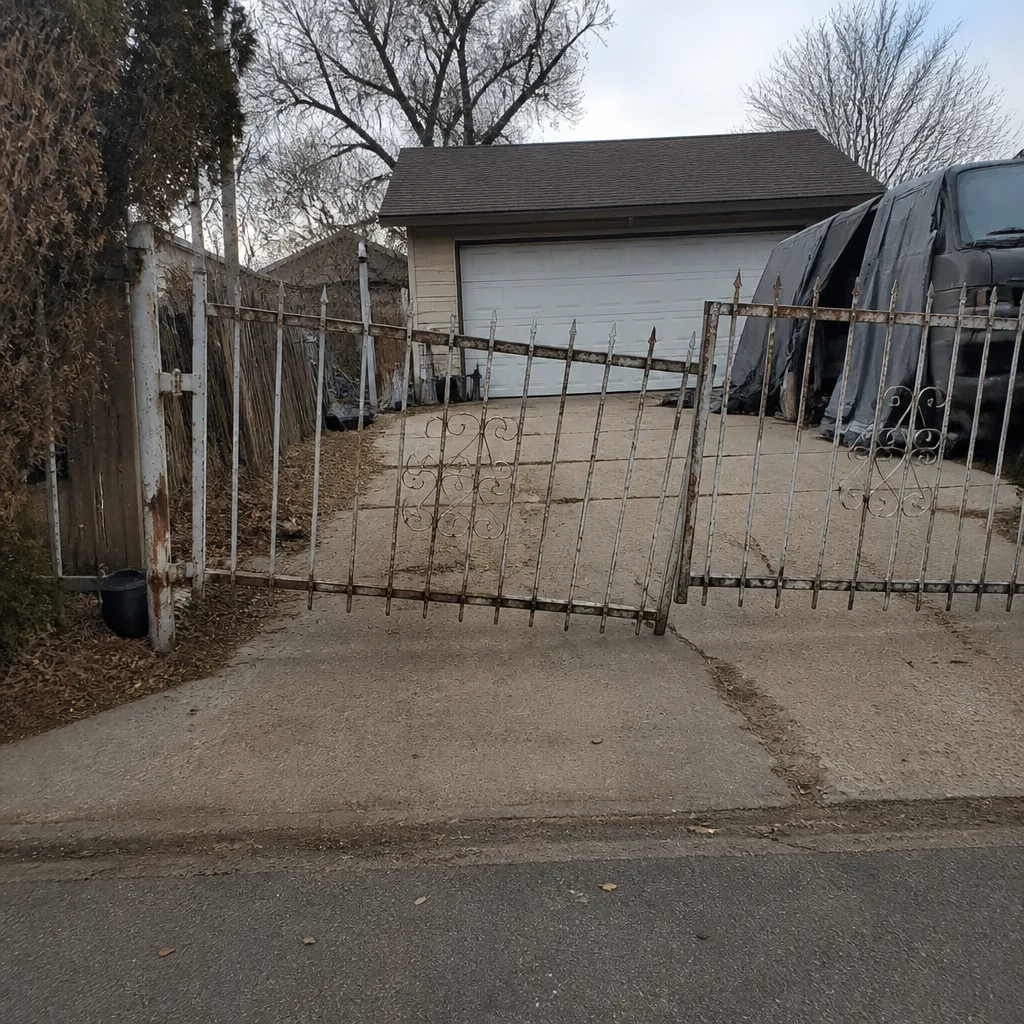 Before
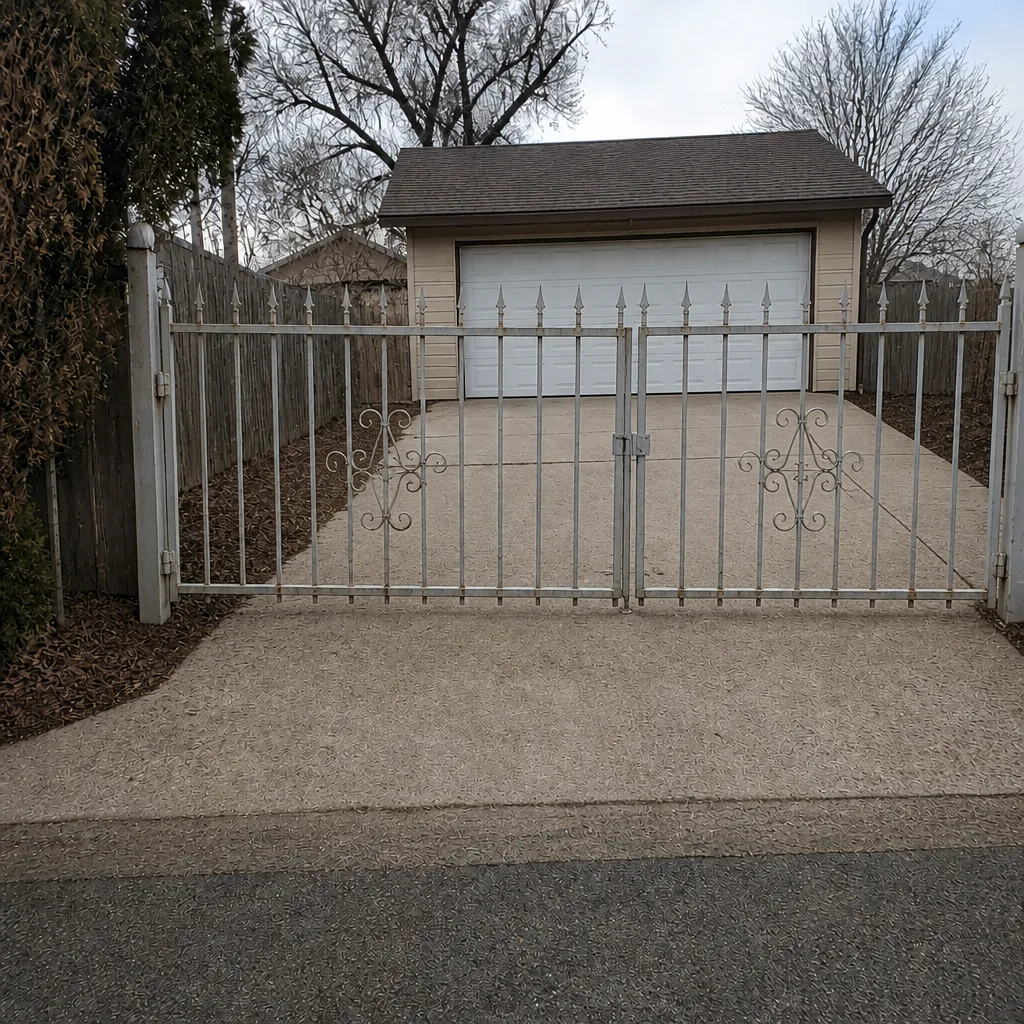 After
When to Call a Professional
Call a professional when your gate project involves any electrical component, any new operator installation, or any change to the gate’s dimensions. Those are the areas where Aurora’s permitting and inspection requirements kick in, and where a missed step turns into a property-transfer headache. Call a professional when the gate’s safety devices are failing their test, when the operator’s manual release won’t disengage, when the post footing is lifting or the track is out of level, and when you can’t tell whether the scope you’re describing is exempt or permitted. Electric gate work involves line voltage and entrapment protection, and an operator installed with the wrong sensor wiring is a pedestrian hazard, not a nuisance. For a brand-specific system in electric gate repair like FAAC, BFT, or DoorKing, a specialist who has inspected these systems under Aurora’s rules saves you from the back-and-forth of failed inspections.
Aurora Gate Repair offers free estimates in Aurora – call (877) 330-0618. We answer 24/7. Fast dispatch from 7am to 7pm, Sunday through Friday.
Frequently Asked Questions
Yes, in most cases. Replacing a gate operator typically requires an electrical permit in Aurora because the operator is being connected to line voltage or a new low-voltage transformer. Even a like-for-like operator replacement can trigger a permit, and the operator replacement must bring entrapment protection up to current UL 325 standards. Call Aurora Building Services before the install and confirm the scope. For a quote on the electrical work involved, call (877) 330-0618 – estimates are free.
Routine gate repairs like hinge replacement, latch fixes, panel straightening, and repainting are generally exempt from permitting in Aurora because the gate itself is a household fixture, not a structure. Anything touching the electrical circuit, the gate opening width, or a new automatic operator usually crosses out of the exempt category. If your repair is brand-specific – a Mighty Mule or Ghost Controls system – the specialist handling the work can tell you which side of the line your scope falls on. Call (877) 330-0618 for an exact quote.
UL 325 is the safety standard for gate operators and entrapment protection devices in the US, and Aurora inspections use it as the baseline for every automated gate. The inspector will test both primary protection (built into the operator) and secondary protection (external sensors or reversing edge) by walking an object through the gate’s path during a close cycle. If the gate doesn’t reverse or stop, the inspection fails. Plan to test the sensors yourself before the inspection. For expert help on that, call (877) 330-0618 – estimates are free.
Electrical permits in Aurora go through Aurora Building Services, and the permit is pulled by whoever is doing the electrical work – typically the gate company or a licensed electrician. Submit the application with the operator’s voltage and amperage, schedule a rough inspection after the wiring is installed but before backfill or final device installation, and schedule the final inspection after the operator and safety devices are operational. Have the entrapment protection spec ready so the inspector can confirm the circuit supports the sensors. Call (877) 330-0618 to talk through the scope and get an exact quote.
HOA approval comes first, then the Aurora city permit. If the HOA denies the work after the city has already issued a permit, the homeowner can be forced to remove the gate at their own expense. If the city denies the work after the HOA approves, you’re stuck with a system the city won’t inspect. Pull both rulebooks before the project is quoted. Call (877) 330-0618 for a free estimate on the gate work itself once approvals are in place.
Unpermitted gate work shows up first during a property transfer – usually on the buyer’s inspection or title underwriting – or after an entrapment incident triggers an insurance review. The path forward is to call Aurora Building Services, request a retroactive permit, and expect an inspection of the safety devices and wiring. If the installation is compliant, it’s mostly paperwork. If the safety devices or wiring are wrong, those fixes come first. For help getting the install back to compliance, call (877) 330-0618 – estimates are free.
The Bottom Line
In Aurora, gate repair stays exempt for hard parts, hinges, and like-for-like work, but the moment an operator, a new electrical circuit, a keypad, or a widened gate opening enters the picture, plan for a permit. UL 325 entrapment protection is not optional on any automated gate, and it’s the exact thing Aurora inspectors test. HOA approvals come before city permits, and unpermitted work is a headache best fixed on your own timeline rather than a buyer’s. The list of gate brands we know well – LiftMaster, FAAC, BFT, Linear, Viking, Ghost Controls, DoorKing, Elite, and Mighty Mule – spans residential DIY and commercial-grade systems, so we can help you sort out the scope and permit question before the work starts. Every job is priced per job by a written estimate, quoted and agreed before any work begins.
If you’d rather have someone who knows your gate’s brand walk you through the permit question in person, that’s what we do. Call (877) 330-0618 for a free estimate. We answer 24/7. Fast dispatch from 7am to 7pm, Sunday through Friday.
Written by the team at Aurora Gate Repair.