
Last updated November 15, 2026
 Wrought iron
 Wood & steel frame
 Farm & ranch
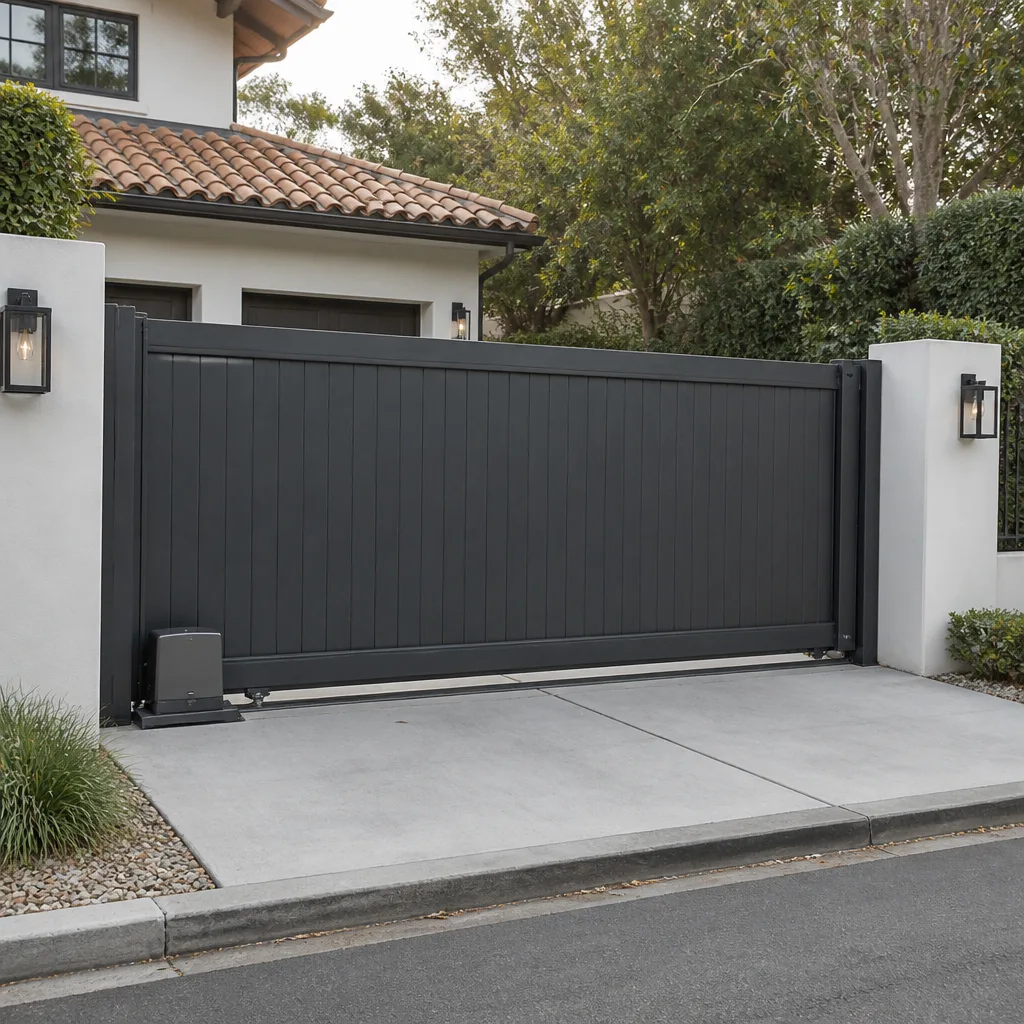 Sliding driveway gates
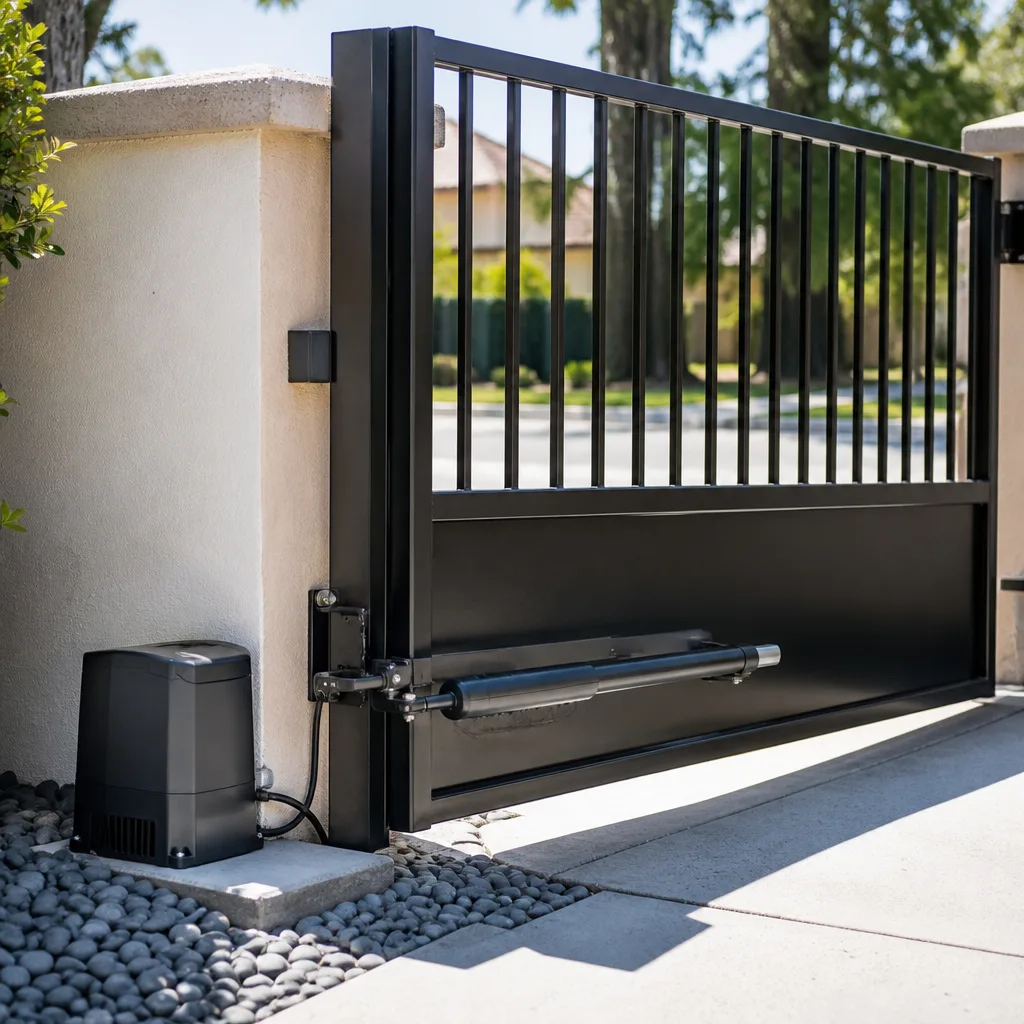 LiftMaster operators
Free on-site gate assessment - hinges, posts, and your LiftMaster or Nice gate operator checked before anything is quoted
The assessment is free and the quote is the invoice.
Get your free estimateGate Repair Cost Breakdown: The Aurora Homeowner’s Reference for 2026
Two quotes for the same gate symptom, one at $1,200 and one at $400, usually aren’t a sign that one company is gouging you. They’re often signs that the two technicians found different root causes. The cheaper fix might replace the visible symptom and leave the real failure to compound quietly for another season. This guide lays out the actual cost drivers behind gate repair in Aurora, from operator brand and gate weight class to parts availability and whether a small problem was caught early. By the end, you’ll be able to read a quote the way a technician reads a gate.
Quick Answer
Gate repair in Aurora typically runs from about $85 for a diagnostic visit up to $4,000-plus for a full operator and hardware replacement, with most component-level repairs landing between $150 and $900. The spread is driven by four main factors: the operator brand and whether parts are on hand or special-order, the gate’s weight and voltage class, the extent of the damage, and whether you’re looking at a single failed part or a cascade of failures. The written estimate you receive before any work begins sets the final price.
Styles & brands we work with
- Wrought iron
- Wood & steel frame
- Farm & ranch
- Sliding driveway gates
- LiftMaster operators
Table of Contents
- What actually drives gate repair cost in Aurora?
- Service call and diagnosis: what to expect
- Component replacement costs by part
- Structural repair: hinges, tracks, and frames
- Full operator replacement: when repair stops making sense
- The cascade failure multiplier
- Commercial vs. residential pricing in Aurora
- How to read a legitimate itemized quote
What actually drives gate repair cost in Aurora?
Four variables move the price more than anything else, and they interact. Understanding each one helps you see why two Aurora gate repair quotes for what sounds like the same problem can land $800 apart.
Operator brand and parts availability. A LiftMaster residential operator is a different animal from a FAAC or BFT commercial-grade unit. Consumer-grade brands like Mighty Mule and Ghost Controls use widely stocked parts that a technician can often source locally. Commercial operators from brands like Elite, FAAC, BFT, DoorKing, and Viking sometimes need a specific control board or motor ordered in, which lengthens the job and changes the cost structure. We know your brand, and we work across all nine major manufacturers, but “available today” and “ships in a week” are not the same repair.
Gate weight and voltage class. A 300-pound ornamental steel swing gate on a low-voltage residential operator is a different repair than a 1,500-pound slide gate on a 220-volt commercial operator. Heavier gates mean heavier hardware, more powerful operators, and more careful labor. Labor is billed by time, so a gate that requires two technicians to safely support and cycle is going to cost more than one that one technician can manage.
Extent of damage. A single failed capacitor is not a seized motor is not a bent gate frame. The further a failure has progressed, the more parts and hours it takes to correct.
Seasonal and freeze-thaw wear. Aurora’s Front Range climate swings hard between freeze and thaw, and gate hardware is exposed all year. Ground shifting and frost heave can throw a slide gate off track or misalign a swing gate latch. That kind of damage shows up as structural repair, not a quick adjustment.
All of these factors should be visible in a written estimate. If a quote can’t explain which of these is driving the price, that’s your first sign to ask more questions.
Service call and diagnosis: what to expect
Every repair starts with diagnosis, and in the Aurora market a diagnostic visit typically runs $85 to $150. That fee covers a technician’s time to identify the actual failure, not to guess at it. The estimate itself is free with us, and the price you agree to before work begins is the price you pay.
A proper diagnostic visit for a gate should include:
- Manual operation check. The technician disconnects or bypasses the operator and cycles the gate by hand to confirm the gate itself moves freely. A gate that binds by hand has a mechanical problem, not an electrical one, and no amount of board replacement will fix that.
- Operator inspection. Motor, control board, capacitor, limit switches, and wiring terminations checked against the brand’s spec.
- Safety device testing. Photo eyes, safety edges, and any reversal function tested for correct operation. On a powered gate, these are not optional.
- Power and voltage check. Confirm the operator is receiving correct voltage at the terminals. A low-voltage residential unit and a 220-volt commercial unit fail in different ways, and the diagnosis follows the voltage class.
- Structural review. Hinges, posts, track, rollers, and frame checked for wear, movement, or damage.
For an electric gate problem that seems intermittent, the diagnosis can take longer because the failure only shows under certain conditions. That’s why an accurate diagnosis is worth paying for. A technician who diagnoses correctly the first time saves you the cost of replacing a part that was never the problem.
For a call: electric gate repair is our specialty, and we answer 24/7. Fast dispatch from 7am to 7pm, Sunday through Friday.
Component replacement costs by part
Once the diagnosis points to a specific failed part, the repair cost is the part plus labor. Here are typical Aurora-market ranges for the components that fail most often. These are estimates, and the written estimate sets the final price.
| Component | Typical estimated range | Notes |
|---|---|---|
| Control board | $280 – $650 | Wider range reflects brand; commercial boards sit at the top |
| Motor | $350 – $900 | Part plus labor; operator voltage class matters |
| Capacitor | $150 – $280 | Common on older single-phase residential operators |
| Photo eye / safety sensor | $180 – $380 | Pair replacement is standard |
| Limit switch | $160 – $320 | Adjustment or replacement |
| Remote / receiver | $85 – $250 | Depends on multi-channel and brand |
| Battery backup | $220 – $450 | Common add for gates used as primary access |
Control boards are the single most variable part on the list. A consumer-grade Mighty Mule board is a different order of cost than a multi-input FAAC or DoorKing board built for access control integration. Parts availability matters here too: boards for mainstream brands like LiftMaster tend to be readily available, while specific commercial boards may be a special order.
When a technician tells you the board failed, ask whether they tested the motor and capacitor too. A failed capacitor can take a board with it, and replacing the board without addressing the capacitor is a repair that comes back.
The gate repair we provide covers all of these components across residential and commercial brands, and we’ll tell you plainly which part failed and why.
Structural repair: hinges, tracks, and frames
Structural repair is where gate weight and age show up in the bill. These aren’t electrical failures, but they can stop a gate just as completely. The physical gate has to move freely before the operator can do its job without straining.
- Hinge replacement (swing gates). Typically $150 to $400 per hinge, depending on gate weight and whether the post needs work. Heavy gate leaves require heavy-duty hinges, and a sagging gate often needs the post plate reinforced.
- Track and roller replacement (slide gates). Typically $250 to $700. A slide gate that has come off track can bend rollers and track rail; the rail is the bigger expense.
- Frame straightening or welding. Typically $300 to $900, depending on whether the frame can be straightened in place or needs to be cut and re-welded.
- Gate alignment and latch adjustment. Typically $120 to $300. This is the routine adjustment that keeps the operator from fighting a misaligned gate.
- Post stabilization or resetting. Typically $400 to $1,200. In Aurora, ground movement and frost heave can shift a gate post out of line, and setting it right often means resetting the footing to proper depth.
Here’s the thing about structural work: it’s easy to defer, and deferring it is expensive. A gate that drags because of a worn hinge loads the operator motor every time it cycles. A gate that’s come off track can damage the operator arm or drive gear. When we look at a gate in Aurora, structural issues are often the reason an electrical problem keeps returning.
Structural repair is scheduled work, not same-day work. It’s measured, planned, and parts are ordered against the actual gate. You’ll get a written price before we start.
Full operator replacement: when repair stops making sense
At some point, repairing an operator costs more than replacing it. In the Aurora market, a full operator replacement typically runs $1,200 to $4,000-plus, with residential systems landing at the low end and heavy-duty commercial systems at the top. If you’re weighing a $650 board replacement on an operator that’s showing multiple symptoms, replacement is often the better value.
Replacing an operator is scheduled work, not a same-day job. It requires measuring the gate, confirming the operator’s weight and duty-cycle rating, ordering the correct unit, and scheduling the install. A free measure and written price is how a replacement starts. Nobody can quote a replacement accurately over the phone without knowing the gate’s weight and the existing wiring setup.
What a replacement includes:
- Gate survey and measure. Weight, width, travel, and mounting confirmed against the replacement operator’s spec.
- Power and wiring review. Existing power run, low-voltage control wiring, and any conduit confirmed. The power run is a real cost item and needs to be in the estimate.
- Operator and accessories. Operator, control board (usually integrated), remotes, receiver, and any safety edges and photo eyes required for a safe install.
- Mounting and alignment. Operator mounted, gate cycled manually, limit switches set.
- Safety testing. Photo eyes, safety edges, and reversal function tested before the gate is handed back to you.
Residential operators from LiftMaster, Linear, and Mighty Mule are common replacements in Aurora. Commercial systems often call for commercial-grade operators from FAAC, BFT, DoorKing, or Elite, which carry a different spec and a different price. We service all of these brands, and we can tell you what your current system was built to do.
The cascade failure multiplier
This is the part most homeowners don’t see coming. A gate problem is rarely just one failed part if it’s been left alone. It cascades. And the cost of fixing the cascade is far higher than the cost of the original small fix.
Here’s how a cascade typically develops:
- Stage one. A worn hinge or a slightly misaligned gate. The gate drags. Maybe it’s a little slow. The operator motor strains on each cycle.
- Stage two. The strained operator wears prematurely. The motor runs hot, the capacitor stresses, and the control board takes the load.
- Stage three. The gate is cycling against resistance every time. Hinges wear further, the frame flexes, and eventually the gate binds or the operator gives out.
A $150 hinge repair at stage one is a small number. A bent gate frame and a seized operator at stage three is a structural repair plus a component replacement plus labor, and it lands far higher than the small fix would have. The cascade isn’t a scam or a mark-up. It’s what happens when a mechanical drag is allowed to load an electrical system for months.
This is the single biggest reason two quotes for “the gate doesn’t open” can differ by hundreds of dollars. One technician is quoting a stage-one fix. The other is quoting the stage-three repair that the gate actually needs. The $400 quote isn’t necessarily the honest one; it may just be the one that replaces the visible part and leaves the cause in place.
The takeaway: when a gate starts to drag, slow down, or cycle unevenly, get it looked at before it becomes a compound failure. That’s the cheapest decision in this entire guide.
Commercial vs. residential pricing in Aurora
Commercial gate repair costs more than residential, and it’s not because commercial property managers are an easy mark. Different systems, different safety obligations, different parts. A commercial operator has to handle higher duty cycles, heavier gates, and often access-control integration. A quote that treats a commercial gate like a residential one is a quote that will come back.
- Duty cycle and weight class. Commercial operators from FAAC, BFT, DoorKing, and Elite are built for continuous cycling and heavy gates. They cost more to buy, more to service, and require different diagnostic knowledge than a residential unit.
- Access control integration. Card readers, intercoms, and loop detectors add complexity. A technician who doesn’t know the system won’t diagnose it correctly.
- Safety device requirements. Commercial gates typically have more extensive safety device requirements, and those devices have to be tested and maintained as part of any repair.
- Callback cost. This is the quiet killer. A cheap residential contractor working on a commercial system often gets it wrong the first time. The callback costs more than the original repair, and the downtime costs more than both. A commercial system deserves a technician whose expertise sits inside the gate category.
In our experience, the Aurora market has a real mix: residential subdivisions with consumer-grade operators, and commercial and multifamily properties running heavier systems. We work across both. We know your brand, whether that’s a Mighty Mule swing gate at a home or a FAAC slide gate at a commercial property.
How to read a legitimate itemized quote
An itemized quote and a flat-rate quote can describe the same repair. The question is which one lets you see what you’re paying for. A flat “gate repair: $850” doesn’t tell you whether the parts are priced at retail or cost, whether labor is estimated at one hour or three, or whether the technician has any idea what the actual failure is.
A legitimate itemized quote typically includes:
- Diagnosis summary. What was tested and what failed. Not “board is bad” but “board bench-tested, motor load within spec, capacitor failed on test.”
- Part-by-part breakdown. Part name, brand, and price. You should be able to see whether the part is a $60 capacitor or a $400 commercial board.
- Labor line. Hours estimated and the labor rate. A repair that requires two technicians to safely support and cycle a heavy gate should say so.
- Safety device scope. Whether the estimate includes testing and, if needed, replacing safety edges and photo eyes.
- Clear exclusions. What is not included, like structural repair discovered mid-repair, so there are no surprises.
- A written total. The number you agree to before any work starts, with any parts that may need to be ordered called out.
If a quote can’t explain why the price is what it is, ask. A technician who knows your system can explain it line by line. A technician who is guessing can’t. That distinction is where the real cost difference between quotes lives.
Common Mistakes to Avoid
- Taking the lowest quote without asking what it fixes. As covered above, a cheap quote and an expensive quote for the same symptom may be diagnosing different root causes. Ask what was tested and what failed before you compare numbers.
- Replacing a board without testing the motor and capacitor. A failed capacitor can take out a board. Replacing the board alone leaves the cause in place, and the repair returns.
- Treating a mechanical drag as an electrical problem. A gate that binds by hand has a structural problem. No operator part will fix it. Push the gate by hand with the operator disengaged and see whether it moves freely before you approve an electrical repair.
- Deferring a $150 hinge repair until it becomes a $1,500 cascade. The cheapest money you’ll ever spend on a gate is catching a problem at stage one, before it loads the operator.
- Ignoring the safety devices. Photo eyes and safety edges are there for a reason. A repair that doesn’t include testing them leaves you with a gate that functions but isn’t safe.
- Hiring a general contractor on a commercial system. Commercial gates from FAAC, BFT, DoorKing, and Elite aren’t a residential repair scaled up. A technician whose specialty is gates is cheaper in the long run than a callback.
- Accepting a flat-rate quote with no breakdown. If the quote can’t show the part, the labor, and the diagnosis, get a second itemized quote and compare like with like.
See the difference
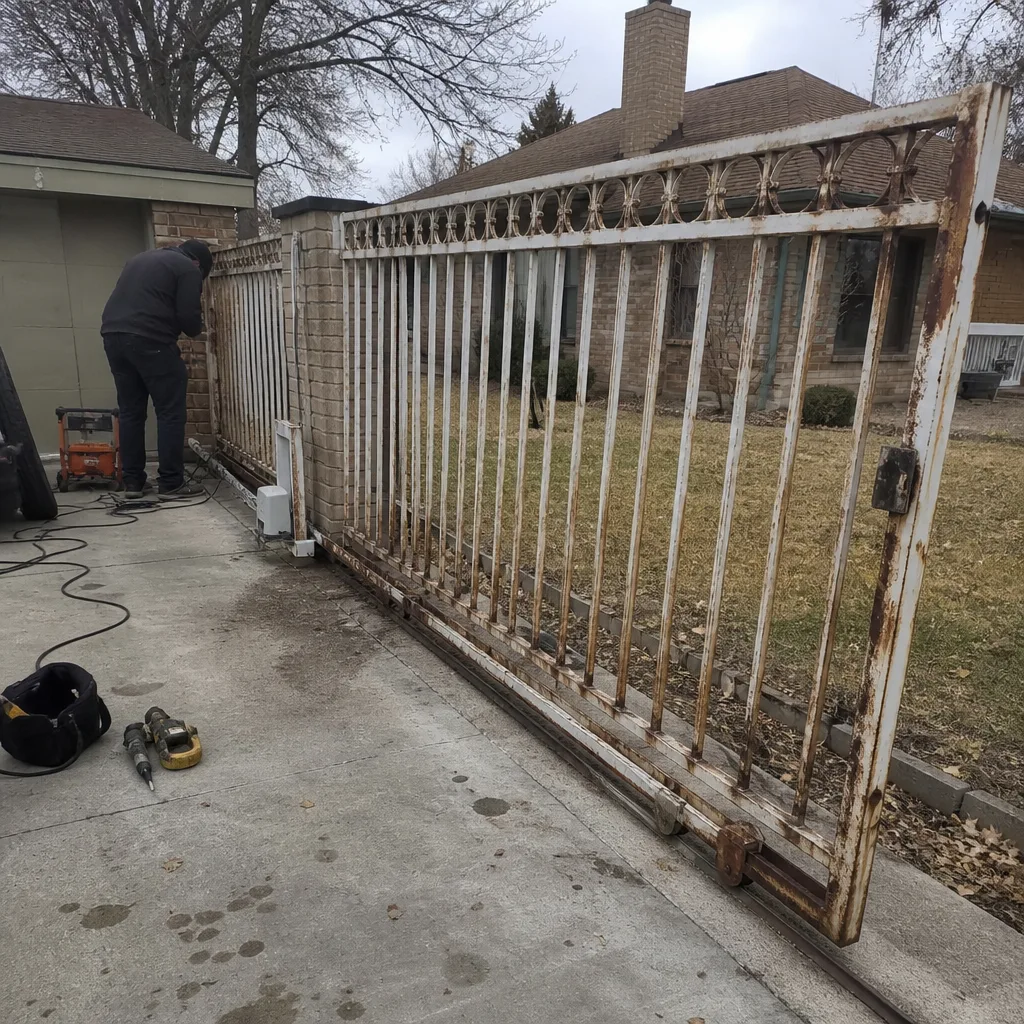 Before
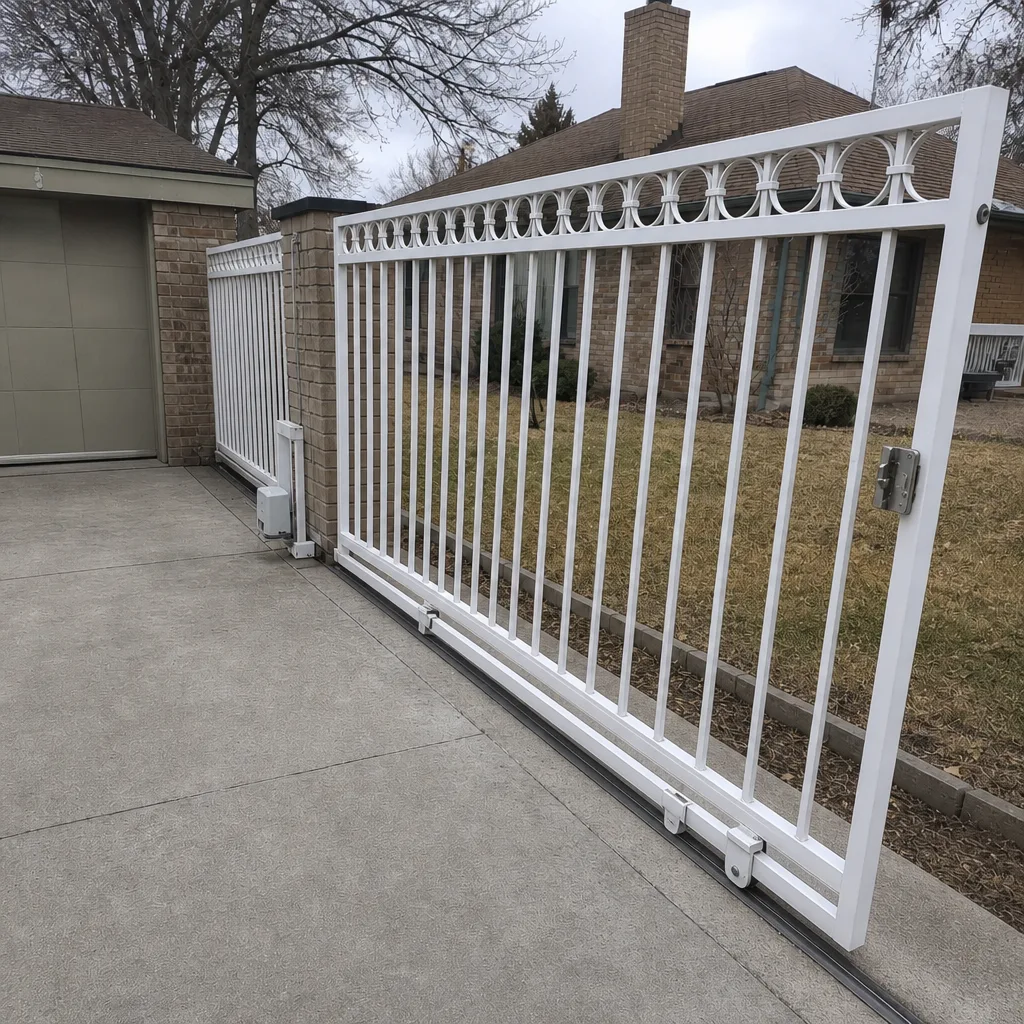 After
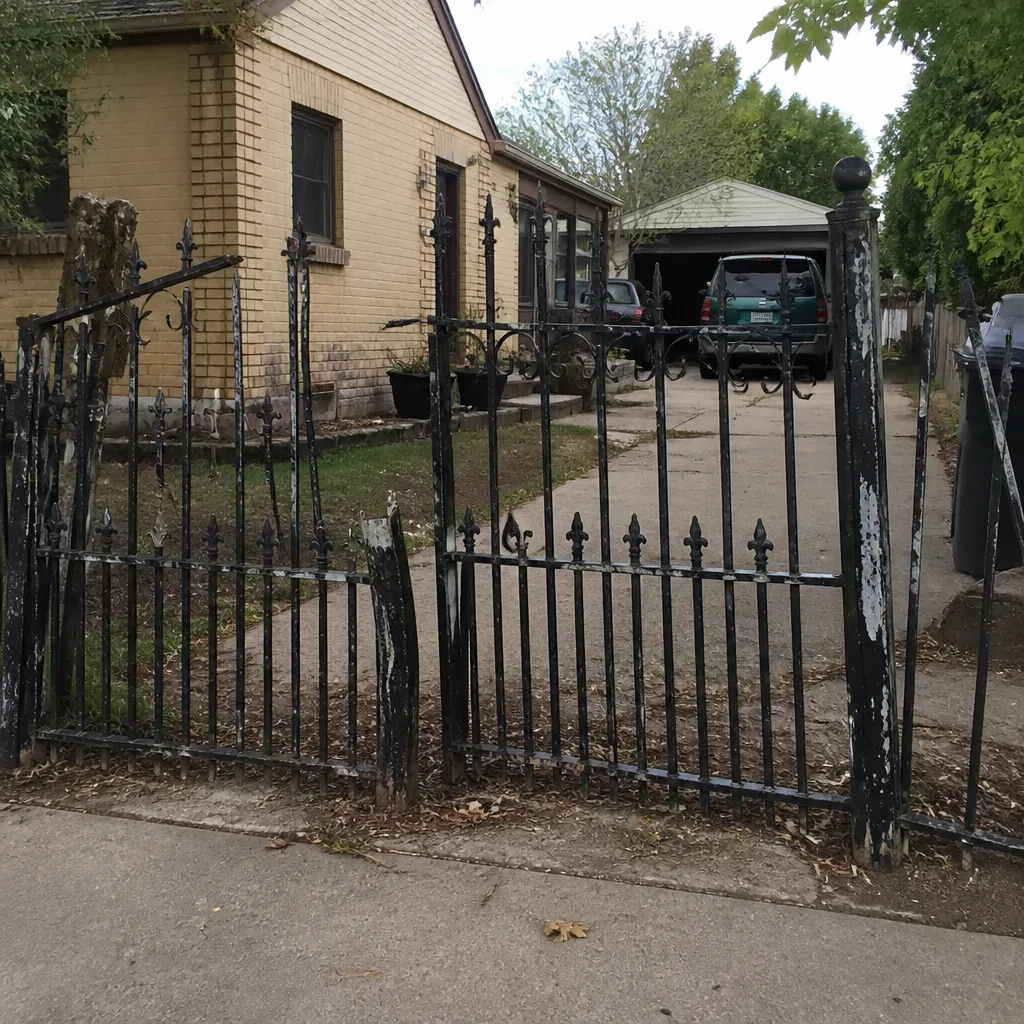 Before
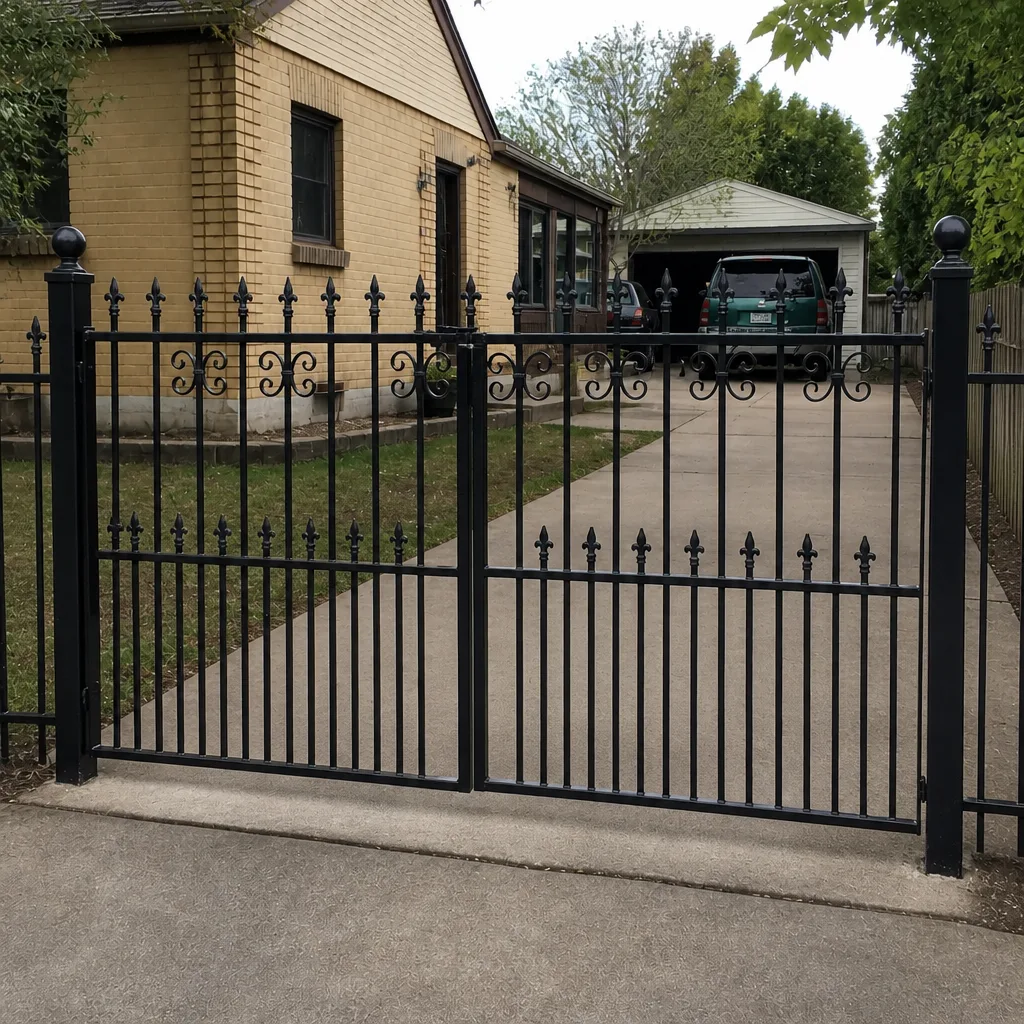 After
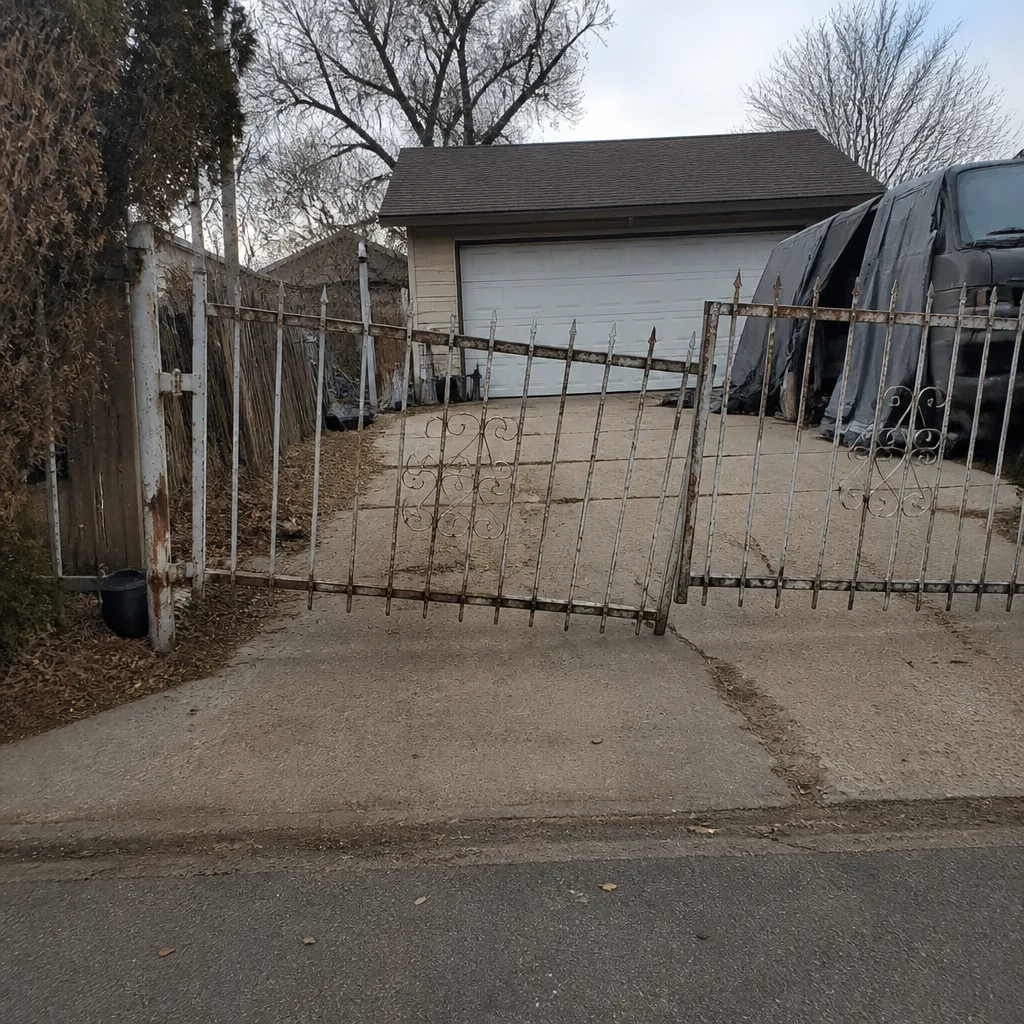 Before
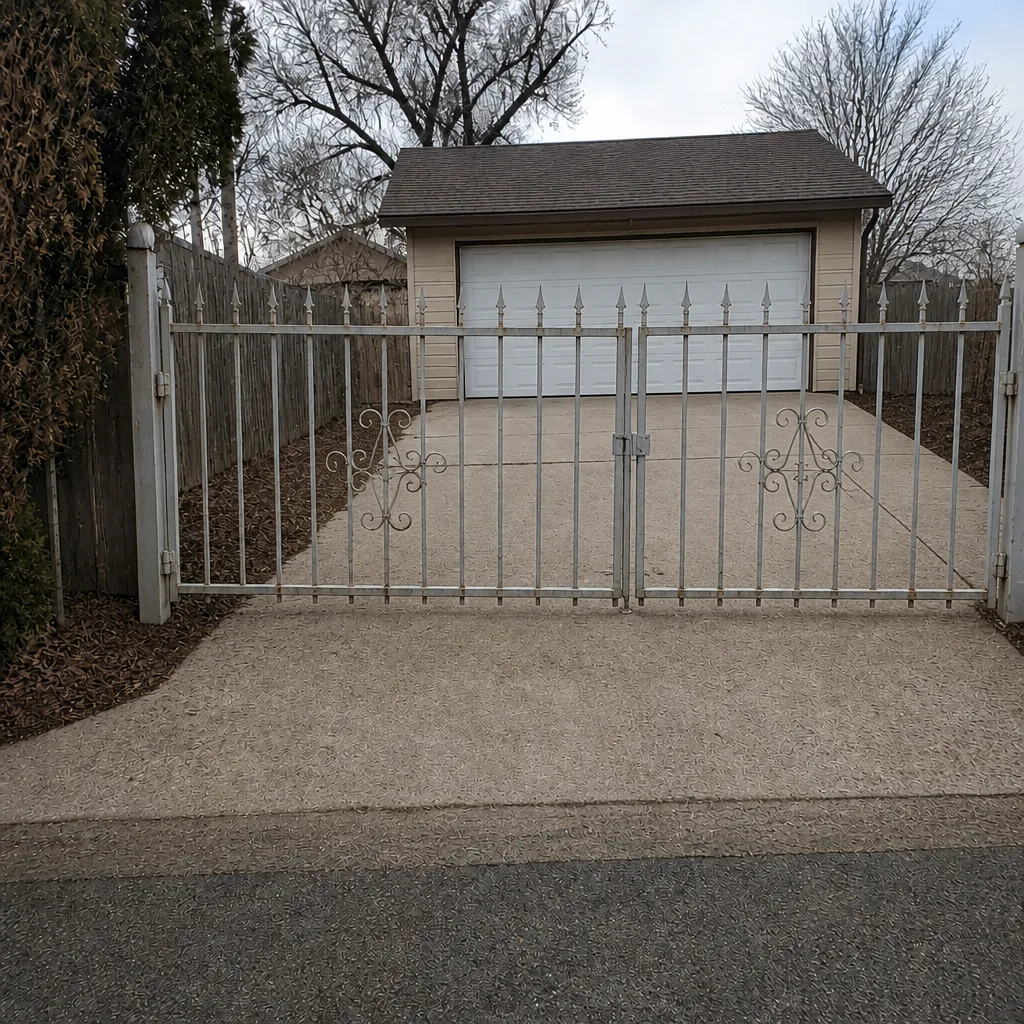 After
When to Call a Professional
Some gate problems need a trained technician in Aurora, not a DIY attempt or a postponed repair. Call when a powered gate stops reversing on obstruction, when a safety edge or photo eye fails, when the gate has come off track or a post is leaning, when the operator hums but won’t move the gate, when a gate drags by hand, or when a structural failure has left the gate unstable. Move faster when a gate is stuck open and the gate is your property’s main access; that’s a security exposure as well as a repair.
We answer 24/7. Fast dispatch from 7am to 7pm, Sunday through Friday. We’re closed Saturday. A call outside dispatch hours is booked into the next opening, Sunday through Friday, 7am to 7pm.
Aurora Gate Repair offers free estimates in Aurora. Call (877) 330-0618 to book a diagnostic visit and get a written price before any work starts.
Frequently Asked Questions
Gate repair in Aurora typically runs from about $85 for a diagnostic visit to $4,000-plus for a full operator and hardware replacement, with most component-level repairs between $150 and $900. The written estimate you receive before any work starts sets the final price. Call (877) 330-0618 for an exact quote. Estimates are free.
For repair and diagnostic work in Aurora, often yes. We answer 24/7 and dispatch from 7am to 7pm, Sunday through Friday. Installation, operator replacement, and new gate projects are scheduled work, not same-day work; those begin with a free measure and a written price.
Because the two technicians may be diagnosing different root causes. One may be quoting a stage-one fix, while the other is quoting the cascade repair the gate actually needs after months of deferred wear. Ask each technician what was tested and what failed before you compare the numbers.
A full operator replacement includes a gate measure, a power and wiring review, the new operator and accessories, mounting and alignment, and safety testing for photo eyes and safety edges. In Aurora, a residential replacement typically runs $1,200 to $2,500, and a commercial replacement runs higher. A free measure and written price comes before any work.
Yes. A proper estimate includes a review of the existing power run and the safety edges and photo eyes. If a new power run is needed, it’s called out in the estimate as a line item. Safety devices are tested as part of the repair or installation, not left as an afterthought.
We work on products from at least nine named manufacturers, including LiftMaster, FAAC, BFT, Linear, Viking, Ghost Controls, DoorKing, Elite, and Mighty Mule. That spans consumer-grade residential operators and heavy-duty commercial access systems. We know your brand, and we’re experienced with these systems as an independent specialist. Call (877) 330-0618 to confirm your model.
The Bottom Line
Gate repair cost in Aurora isn’t random. It’s driven by operator brand, gate weight class, parts availability, and whether the problem was caught early or allowed to cascade. A $150 hinge repair that gets deferred can become a bent frame and a seized operator that lands well past $1,000. The cheapest decision in the whole guide is to get a dragging gate looked at before the cascade begins.
Read quotes for what they test and what they fix, not just their total. An itemized quote from a technician who knows your brand is worth more than a cheaper flat-rate guess. And on a commercial system, a gate-only specialist costs less in the long run than a callback from a contractor who’s learning on your gate.
Call (877) 330-0618 for a free estimate. We answer 24/7. Fast dispatch from 7am to 7pm, Sunday through Friday. As the Aurora Gate Repair team, we handle repair, electric gate repair, and installation for customers across Aurora, including the older subdivisions where frost heave moves gate posts and the newer builds with their own wiring quirks.
Written by the team at Aurora Gate Repair.