
Last updated November 15, 2026
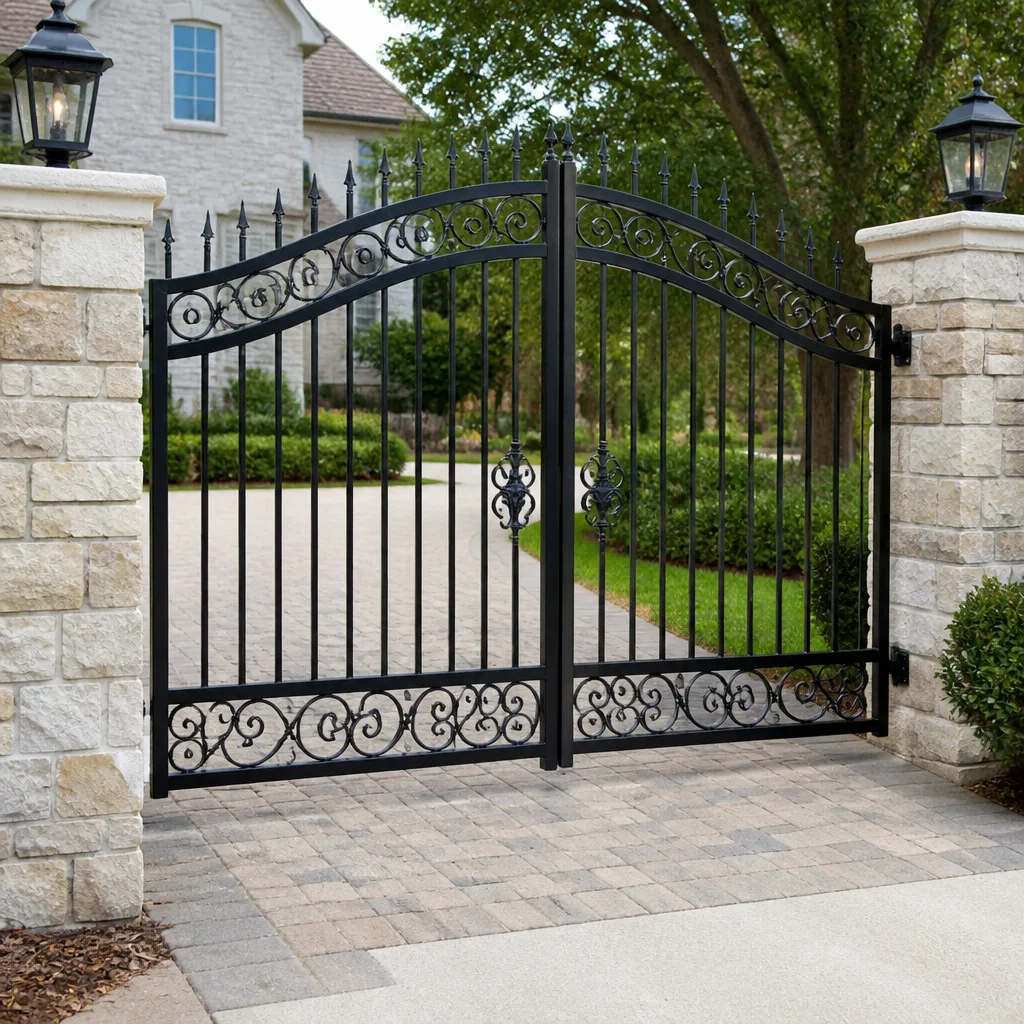 Wrought iron
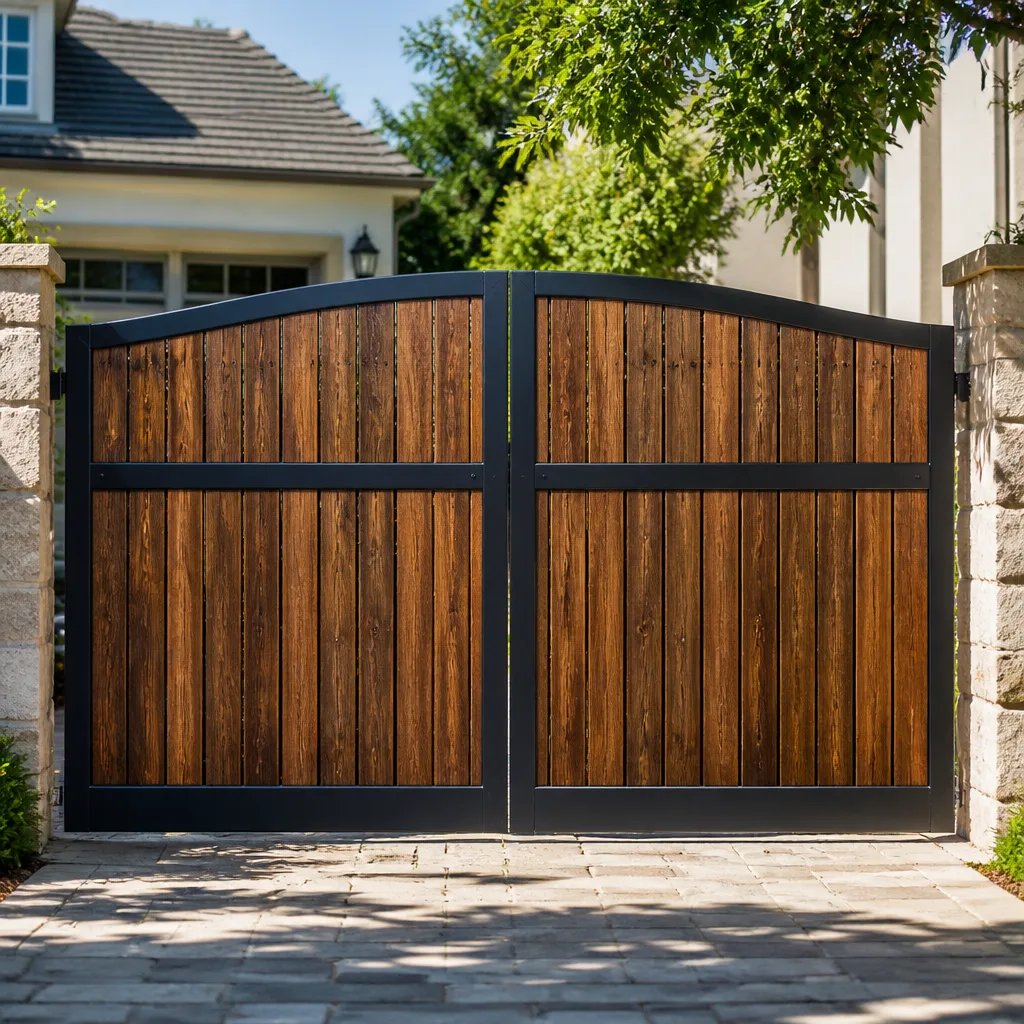 Wood & steel frame
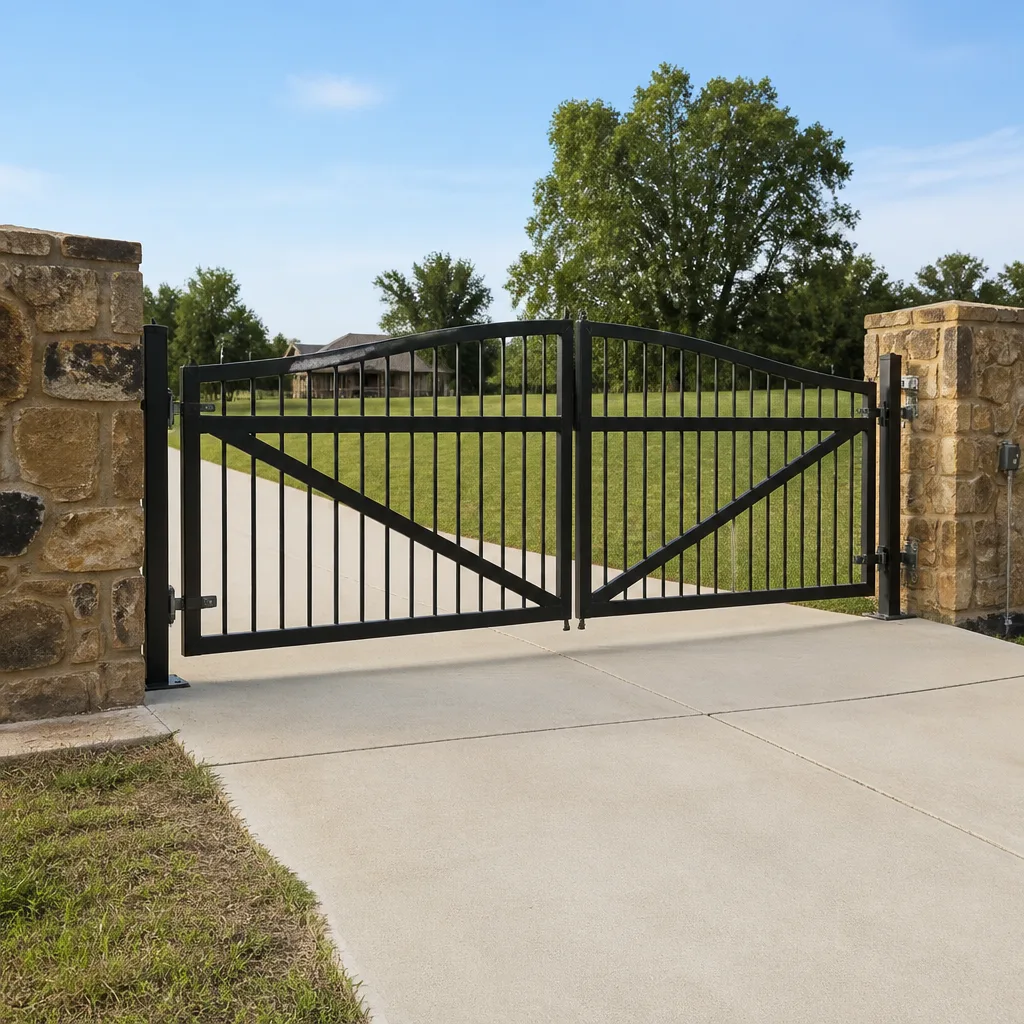 Farm & ranch
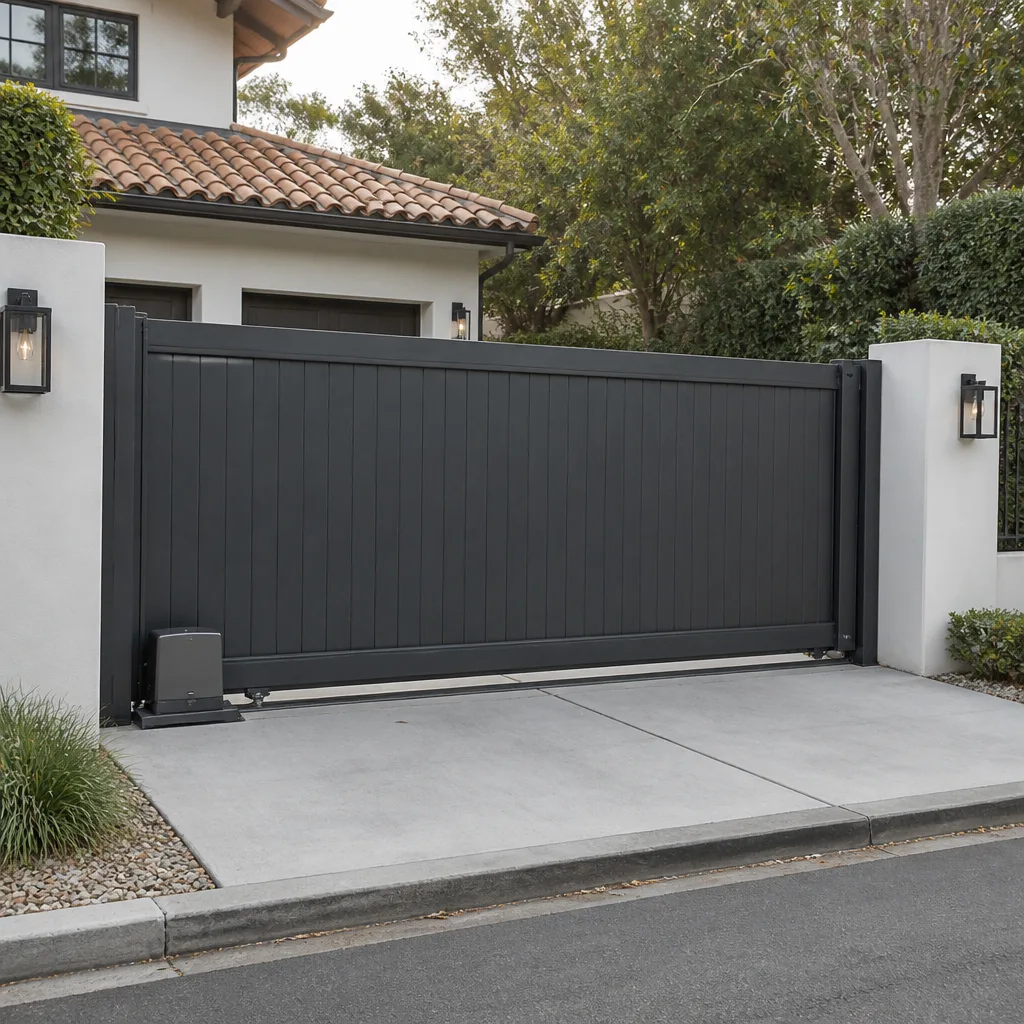 Sliding driveway gates
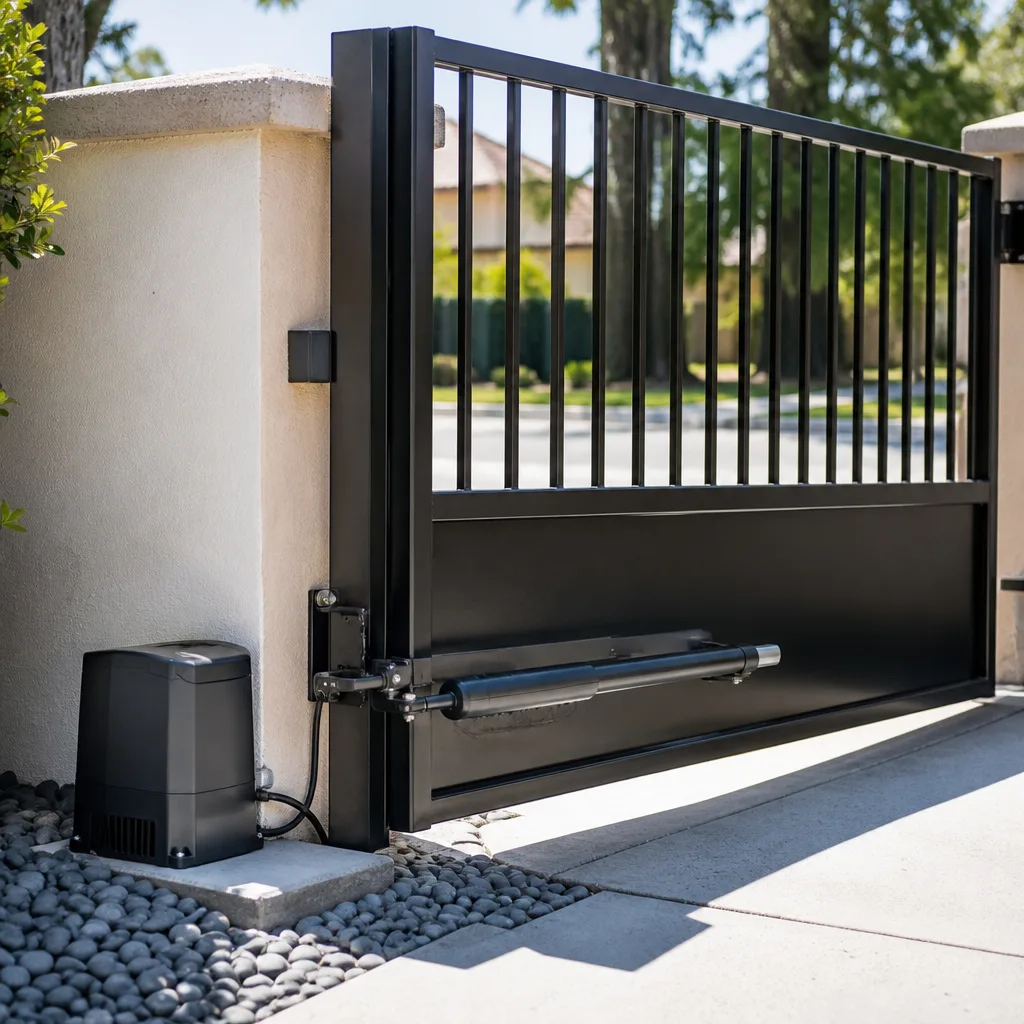 LiftMaster operators
Free on-site gate assessment - hinges, posts, and your LiftMaster or Nice gate operator checked before anything is quoted
The assessment is free and the quote is the invoice.
Get your free estimateGate Repair Troubleshooting in Aurora: Common Problems and How to Fix Them
A gate that reverses the moment it finishes closing usually isn’t broken. It’s reading a sensor as an obstruction, and treating it like a motor failure wastes hours and money. We see this in Aurora often: a photo-eye lens glazed by afternoon sun or a safety edge nudged out of alignment sends a false signal, the control board does exactly what it’s designed to do, and the gate retracts. The trick with any gate fault is finding which of five categories it belongs to before you touch anything. This guide maps the common failure modes to their causes, covers the Aurora conditions that trigger them, and gives you a symptom-to-cause path so you know what to check and when to stop and call.
Quick Answer
Most gate problems in Aurora trace back to one of five fault categories: mechanical (binding or misalignment), electrical (control board or wiring), sensor (photo-eye, loop detector, or obstruction), remote and access (frequency or programming), or structural (post lean or hinge failure). Identifying the category first cuts diagnostic time sharply, because each category has its own symptoms and its own safe owner-side checks. Anything that involves the control board, high-voltage wiring, or loop recalibration belongs with a trained technician.
Styles & brands we work with
- Wrought iron
- Wood & steel frame
- Farm & ranch
- Sliding driveway gates
- LiftMaster operators
Table of Contents
- The Five Fault Categories: A Triage Map
- Mechanical Problems: Binding, Misalignment, and Hinge Wear
- Electrical Faults: Boards, Wiring, and Power Failures
- Sensor False Reads: Photo-Eyes, Loops, and Safety Edges
- Remote and Access Control Problems
- Structural Issues: Post Lean and Hinge Failure
- Aurora-Specific Causes: Freeze-Thaw, UV, and Wind Load
- Reading Your Control Board: FAAC, Linear, and LiftMaster
- Safe Owner Checks vs. What Needs a Technician
- Common Mistakes to Avoid
- When to Call a Professional
- Frequently Asked Questions
The Five Fault Categories: A Triage Map
Every gate fault we diagnose in Aurora lands in one of five buckets. Sorting a symptom into the right bucket before you lift a screwdriver saves time, and it prevents the most expensive mistake in gate work: replacing a motor that was never the problem. Here’s the map.
- Mechanical: the gate physically drags, binds, sags, or stops partway. The operator may be fine and the gate itself is fighting it.
- Electrical: the operator has no power, blows fuses, or behaves erratically. The control board or the wiring is involved.
- Sensor: the gate reverses without contact, refuses to close, or closes on an object. A safety device is reporting an obstruction that isn’t there.
- Remote and access: the gate works from one remote but not another, works from the keypad but not the fob, or stopped responding after a power event.
- Structural: the gate is leaning, the hinges are torn or worn, or the post has shifted. This is a mounting problem, not a motor problem.
The triage works because symptoms cluster. A gate that reverses right after closing is almost always sensor or mechanical, not electrical. A gate that clicks and does nothing is usually electrical. A gate that moves slowly and strains is mechanical or structural. When you sort the symptom into a category, you’ve eliminated most of the system before you’ve tested anything.
If the symptom doesn’t fit cleanly, that’s useful information too. Two categories failing at once, like a gate that reverses and also drags, usually points to a post that has shifted, which is both a structural and a mechanical cause. Start with the category that’s cheapest to rule out. For a full walk-through of what falls under gate repair, that page covers the scope.
Mechanical Problems: Binding, Misalignment, and Hinge Wear
Mechanical faults are the most common cause of a gate that moves but doesn’t move well. The operator gets blamed, but the gate is binding against its own track, hinges, or posts, and the motor is simply fighting more resistance than it was set up for. In our experience, a gate that strains, jerks, or stalls partway through its travel is usually a mechanical problem showing up as an electrical symptom.
What to look for, in order:
- Visual alignment. Stand at the gate and look down its length. A gate that’s out of plumb or out of level will bind as it swings or slides. Look for daylight under one side and contact on the other.
- Hinge condition. Worn hinges let the gate sag, which changes the geometry and loads the operator. Check for play by lifting the gate slightly at the free end. Any wobble is a worn hinge.
- Track and roller wear on sliding gates. Rollers that are flat-spotted or tracks that are dented create binding points you can feel by pushing the gate manually.
- Obstruction. Debris, gravel, or vegetation in the travel path. This sounds trivial until you find a gate that’s been dragging a rock for a season.
- Manual release test. Disconnect the operator and push the gate through its full travel by hand. If it binds by hand, the problem is mechanical, not electrical. This is the single most useful test an owner can run.
Mechanical fixes are usually straightforward: hinges get replaced, tracks get straightened, posts get reset. The tricky part is knowing when a mechanical issue has become structural. A gate that binds by hand because a hinge is worn is a repair. A gate that binds because the post has heaved is a different job, and we cover that below.
Electrical Faults: Boards, Wiring, and Power Failures
Electrical faults are where the danger and the cost both go up. The control board is the brain of an automatic gate, and it’s also where most of the expensive failures happen. A board that’s been hit by a power surge, cooked by heat, or damaged by moisture behaves unpredictably: the gate may run on its own, refuse to respond to any input, or blow fuses repeatedly. We treat every electrical fault as a technician job, and you should too.
The safe things an owner can check before calling:
- Power to the operator. Is the circuit live? Tripped breaker, blown fuse, or a GFCI that needs resetting are common and cheap to rule out.
- Battery backup. Many residential operators run on a backup battery. A gate that behaves oddly after a power outage often has a battery that’s failed or needs recharging. Test and replace per the operator’s manual.
- Visible wiring damage. Look at exposed low-voltage runs for chewed insulation, corrosion at terminals, or a wire that’s pulled loose. Don’t touch anything connected to line voltage. If you see a damaged high-voltage conductor, stop and call.
What belongs with a technician: control board diagnosis and replacement, high-voltage wiring, transformer faults, and anything that requires opening the operator housing. A board can be tested and often repaired or replaced with the right part, but the wrong guess costs more than the right diagnosis. This is where brand knowledge earns its keep; our technicians have up to experience, and they know how a FAAC board reports a fault differently from a LiftMaster unit. That system-level familiarity is the reason we can diagnose electrical faults correctly the first time rather than swapping parts and hoping. If your gate has a control board problem, that’s electric gate repair territory, and it’s worth having someone who reads that board for a living.
Sensor False Reads: Photo-Eyes, Loops, and Safety Edges
Sensor faults are the most misdiagnosed category in gate work, and they’re the reason a gate that reverses at the end of its close cycle gets blamed on the motor. A gate that reverses is doing exactly what its safety system tells it to do. The safety system thinks it sees an obstruction. Your job is to find out why.
The three sensor types on a typical Aurora automatic gate, and what makes each one misfire:
- Photo-eyes. A beam across the gate opening that, when broken, tells the operator to stop or reverse. A dirty lens, a misaligned pair, sun glare, or vegetation in the beam path all create a false obstruction. In Aurora, the low afternoon sun hits west-facing lenses directly through much of the year, and a lens that’s hazed by UV exposure will scatter that light and read as blocked even when nothing is there.
- Loop detectors. An inductive loop buried in the driveway that senses metal. A loop that’s been damaged by soil movement, cracked pavement, or a heavy vehicle will report a permanent vehicle, which holds the gate open or stops it closing. Loop recalibration is a technician job.
- Safety edges. Pressure-sensitive strips on the gate leaf that reverse the gate on contact. A damaged edge, a pinched wire, or a misadjusted sensitivity setting causes phantom reversals.
Owner-side sensor checks are safe and useful. Clean both photo-eye lenses with a soft cloth. Confirm the beam is unobstructed. Check that the photo-eye pair is aligned by confirming the indicator light on the receiver, if the unit has one. Look for a safety edge that’s torn or has a wire pulled out. If the gate reverses and you can’t find an obvious physical cause, the next step is a technician with a meter and the loop detector’s setup procedure.
Remote and Access Control Problems
Remote and access faults are the ones that feel like a crisis and usually aren’t. If the gate opens from the keypad but not the remote, or works from one fob and not another, the operator is fine. The problem lives in the access layer: the remote, the receiver, or the programming.
A short diagnostic sequence:
- Test from multiple inputs. Try the keypad, an interior control, and a second remote. If one input works, the operator is fine and the fault is in the channel that doesn’t.
- Replace the remote battery. The cheapest test in gate work, and one of the most common fixes.
- Re-pair the remote. Frequency issues, interference, and a receiver that’s lost its memory after a power event all look like a dead remote. Reprogramming per the operator’s manual often restores it.
- Check receiver reception. A metal gate, a new fence, or a large vehicle parked in the line of sight can weaken reception. If range has gradually dropped, that’s the symptom to report.
Access control systems on commercial properties add another layer: card readers, intercoms, and entry codes. Those are system-specific, and DoorKing and Viking systems each have their own programming logic. If a commercial access system stops accepting credentials, the fault is usually in the controller or the credential database, not the gate operator, and it needs someone who knows the system.
Structural Issues: Post Lean and Hinge Failure
Structural faults are the ones owners miss longest, because the gate still moves. It just moves badly, and it wears out the operator in the process. A post that has shifted, a hinge that’s tearing out of the gate frame, or a footing that’s settled all change the gate’s geometry. The operator then works against resistance it wasn’t set up for, and the failure cascades from there.
Signs of a structural problem:
- Visible lean. A post that’s out of plumb, even slightly, throws the whole gate out of alignment.
- Gate sag at the free end. If the gate dips when open, the hinge or the post is giving way.
- Cracks in the footing or pavement around the post. This is the ground moving under the gate.
- A gate that binds in one direction but not the other. That asymmetry usually points to a post or hinge, not the operator.
Structural repairs range from replacing a hinge to resetting a post to proper footing depth. The important thing is not to keep adjusting the operator to compensate for a leaning gate. That’s a temporary fix that accelerates wear. A structural problem needs a structural repair, and the gate should be realigned before the operator is dialed back in.
Aurora-Specific Causes: Freeze-Thaw, UV, and Wind Load
Aurora’s climate puts specific stresses on gate systems, and the failures we see here reflect them. Three local conditions account for a large share of the seasonal gate problems in Aurora: soil movement from freeze-thaw cycles, UV exposure on sensor lenses, and wind load on gate panels.
Freeze-thaw soil movement. Aurora’s winter cycles of freezing and thawing move soil, and that movement pushes on gate posts and buried loop wire. A post that was perfectly set in summer can shift through the winter and leave the gate out of alignment by spring. This is why a gate that worked all summer suddenly binds in January or February. It’s also why loop detectors sometimes fail after a hard freeze. The fix is to reset the post to proper footing depth and realign the gate, then recalibrate the operator.
UV exposure on photo-eyes. Aurora gets strong sun, and photo-eye lenses are made of plastic that degrades under UV. A lens that’s hazed or yellowed scatters light instead of passing it, and the receiver reads that scatter as an obstruction. The gate reverses, and the owner assumes the motor is failing. If your gate reverses on bright afternoons and works fine after dark, suspect the photo-eye lens before anything else. Replacing or cleaning a lens is inexpensive. Replacing a motor that was never broken is not.
Wind load. Aurora’s spring winds load gate panels, and a gate operator set to a low force threshold will hit its overload limit and shut down. LiftMaster and Mighty Mule units are both sensitive to this, and both will report an overload fault if the gate fights the wind. A gate that stalls only on windy days is usually a wind-load issue. The fix is setting the force limit correctly for the gate’s panel area, which is a technician adjustment, and confirming the hinges and posts are tight so the gate isn’t fighting wind and binding at the same time.
These three causes overlap with the fault categories above: freeze-thaw shows up as structural and mechanical, UV shows up as sensor, wind shows up as mechanical and electrical. Knowing the local cause makes the category diagnosis faster. That’s why a specialist who works gates across the Aurora area, in this climate, sees the same patterns repeat.
Reading Your Control Board: FAAC, Linear, and LiftMaster
Most residential operators in the Aurora market will tell you what’s wrong if you look at the board. The trick is knowing where the diagnostics live on your specific brand, because each manufacturer reports faults differently.
FAAC. FAAC’s residential operators use a diagnostic display or LED code sequence on the control board. The board reports fault conditions as numbered codes, and the manual maps each code to a category: power, sensor, or motor. If your FAAC unit has a display, write down the code before you call. A code that points to a sensor saves a lot of diagnostic time.
Linear. Linear’s residential operators typically use a diagnostic LED on the control board that blinks a pattern. The number of blinks corresponds to a fault type, and the legend is in the manual. A single blink is often a normal power indicator. A rapid sequence is a fault. Count the blinks and hold onto that count.
LiftMaster. LiftMaster’s gate units have diagnostic LEDs that report the last fault state. A steady light means normal, and a blinking pattern points to a specific fault. LiftMaster’s board is also the one that most often reports an overload from wind load, so a fault code that appears only on windy days is a strong clue.
Mighty Mule operators, common on residential gates, have their own fault reporting, and older units may not report codes at all. If your operator doesn’t report a code, don’t guess. The symptom-to-category map above is your best tool, and a manual release test tells you whether the fault is mechanical or electrical within a minute.
What you should do with the code: write it down, note what the gate was doing when it appeared, and tell the technician. What you shouldn’t do: open the board housing and start probing. The board is connected to line voltage, and a wrong move there can damage the board or worse.
Safe Owner Checks vs. What Needs a Technician
The line between a safe owner check and a job for a technician is drawn by voltage and by consequences. Anything low-voltage and visible is fine to check. Anything involving line voltage, the control board, or a safety system that must be recalibrated is not.
Safe for owners:
- Visual inspection of alignment, hinges, and the travel path.
- Cleaning photo-eye lenses and confirming the beam path is clear.
- Testing remotes, replacing batteries, and re-pairing per the manual.
- The manual release test: disconnect the operator and push the gate by hand.
- Checking the breaker and any battery backup, per the manual.
Needs a trained technician:
- Control board diagnosis and replacement.
- Any work on high-voltage wiring, transformers, or the operator’s power supply.
- Loop detector recalibration and loop wire repair.
- Safety edge repair and sensitivity adjustment.
- Structural repairs: post resetting, hinge replacement, and realignment.
- Force limit and travel limit adjustment on any automatic operator.
The safety caveat matters here. An automatic gate is a machine that can crush, and its safety devices exist for a reason. A photo-eye that’s been bypassed or a safety edge that’s been disabled is a serious hazard, not a quick fix. If a safety device has failed, don’t operate the gate until it’s repaired. Call a professional.
Common Mistakes to Avoid
- Assuming a reversing gate is a motor problem. It’s almost always a sensor or mechanical issue. Testing the motor before the safety devices is backwards, and it can lead to replacing a part that was never the fault.
- Adjusting the operator to fix a leaning gate. Dialing up the force limit to push through a binding gate hides the problem and wears out the operator. Fix the structural cause first.
- Ignoring seasonal patterns. A gate that fails only in winter or only on windy days is telling you the cause. Aurora’s freeze-thaw and spring wind are common culprits, and the pattern is the diagnosis.
- Bypassing a safety device. Disabling a photo-eye or safety edge to stop phantom reversals is dangerous and illegal on many installations. Repair the sensor instead.
- Buying a new operator before diagnosing. A control board fault, a remote problem, or a binding gate all look like a dead operator to an untrained eye. Diagnose the category first.
- Guessing at control board wiring. The board is connected to line voltage. Probing it without the right tools and knowledge risks damage and injury.
- Letting a structural problem drift. A slightly leaning post becomes a binding gate becomes a worn operator. Fix it early and the cascade never starts.
When to Call a Professional
Call a professional for anything involving the control board, high-voltage wiring, loop detectors, or structural repair. Call immediately if a safety device has failed, if the gate moves on its own, or if you see sparking, scorching, or a burning smell at the operator. Those are electrical hazards, not troubleshooting puzzles. For intermittent faults, the pattern is your best clue: a gate that reverses only in afternoon sun, or only on windy days, or only after a hard freeze, tells a technician where to look before they arrive. Call (877) 330-0618. We answer 24/7. Fast dispatch from 7am to 7pm, Sunday through Friday. Aurora Gate Repair offers free estimates in Aurora, and the price is quoted and agreed before any work starts.
Frequently Asked Questions
It’s almost always a sensor reading an obstruction, not a failing motor. In Aurora, the common causes are a photo-eye lens hazed by UV or hit by low afternoon sun, a misaligned photo-eye pair, or a damaged safety edge. Clean the lenses first, then check alignment and call a technician if the reversal continues.
A gate that stalls only in wind is usually hitting its force or overload limit because the gate panel is loading the operator. LiftMaster and Mighty Mule units are both sensitive to this, and both report an overload. The fix is setting the force limit correctly for the gate’s panel area, and confirming the hinges and posts are tight so the gate isn’t fighting wind and binding together. Call us for a diagnosis.
No. The control board is connected to line voltage, and probing it without the right tools risks damage and injury. Board diagnosis, board replacement, and high-voltage wiring are technician jobs. Note any diagnostic code your FAAC, Linear, or LiftMaster board displays and tell the technician when you call.
Freeze-thaw cycles move soil, and that movement shifts gate posts and buried loop wire. A post that was set correctly in summer can lean enough by spring to throw the gate out of alignment and cause binding. The fix is resetting the post to proper footing depth and realigning the gate, then recalibrating the operator.
No. If any input works, the operator is fine and the fault is in the access layer. Replace the remote battery first, then re-pair the remote per the manual. A receiver that lost memory after a power event is another common cause, and reprogramming usually fixes it.
Yes. Our technicians have up to experience and work on systems from LiftMaster, FAAC, BFT, Linear, Viking, Ghost Controls, DoorKing, Elite, and Mighty Mule. That covers budget residential operators and commercial access systems. We also handle gate installation when repair isn’t the right answer.
Stop operating the gate if a safety device has failed or if the gate moves on its own. If the gate is stuck, use the manual release to move it by hand, per the operator’s manual. Note the symptoms, the conditions (time of day, weather, wind), and any diagnostic code so the technician can start with the right category.
The Bottom Line
Gate troubleshooting comes down to one discipline: sort the symptom into the right fault category before you spend money. Mechanical, electrical, sensor, remote, and structural faults each have their own signature, and in Aurora the local conditions do the rest. Freeze-thaw moves posts, UV haze fakes an obstruction at the photo-eye, and spring wind trips overload limits on LiftMaster and Mighty Mule units. Read your board, run the manual release test, and respect the line between a safe owner check and a job for a technician. The right fix for your system starts with the right diagnosis.
Call (877) 330-0618. We answer 24/7. Fast dispatch from 7am to 7pm, Sunday through Friday.
Written by the team at Aurora Gate Repair.
See the difference
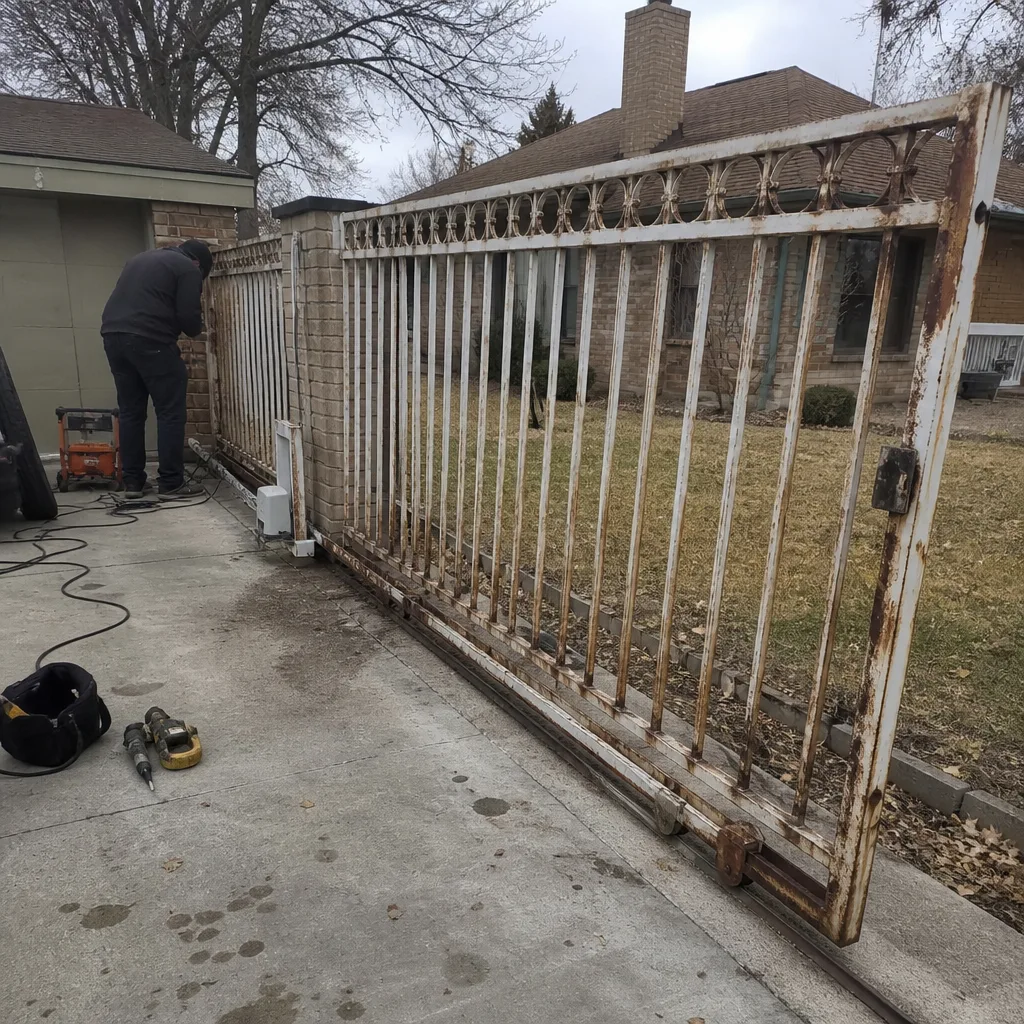 Before
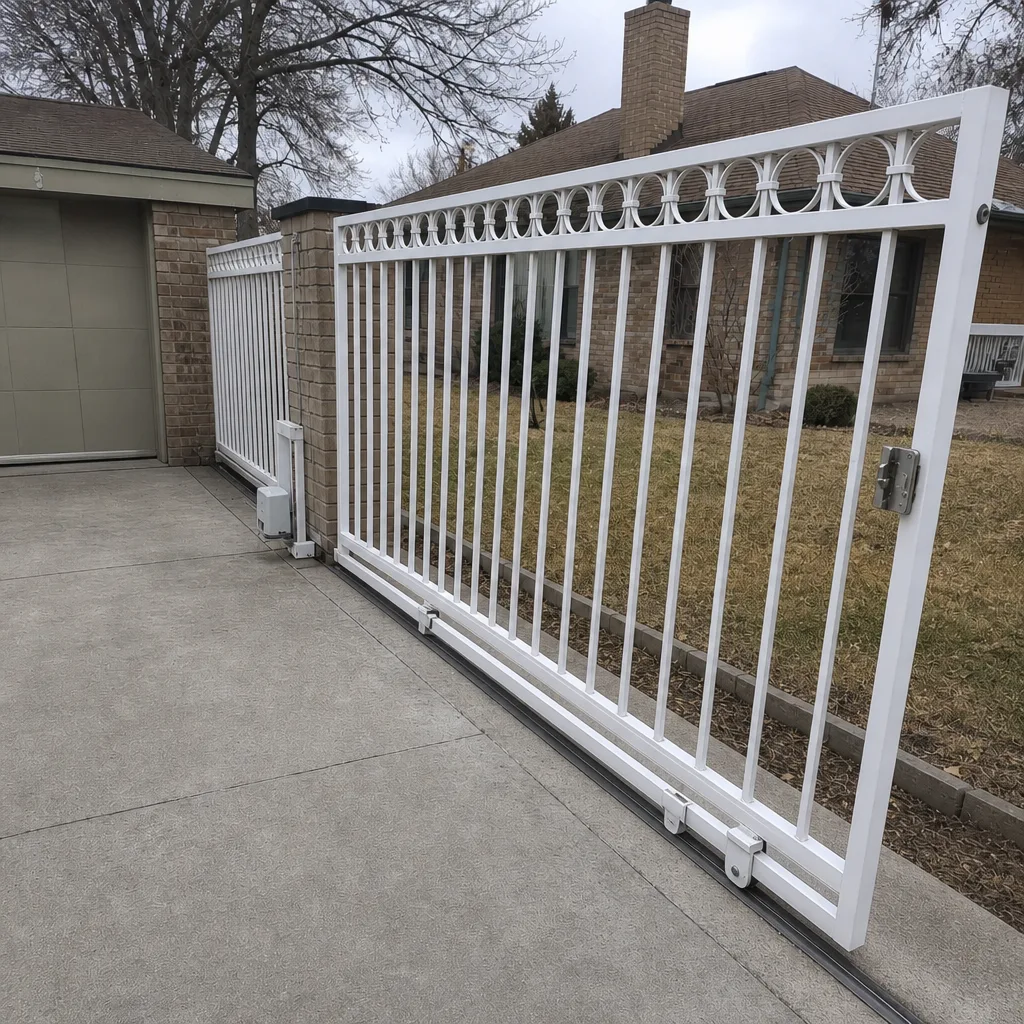 After
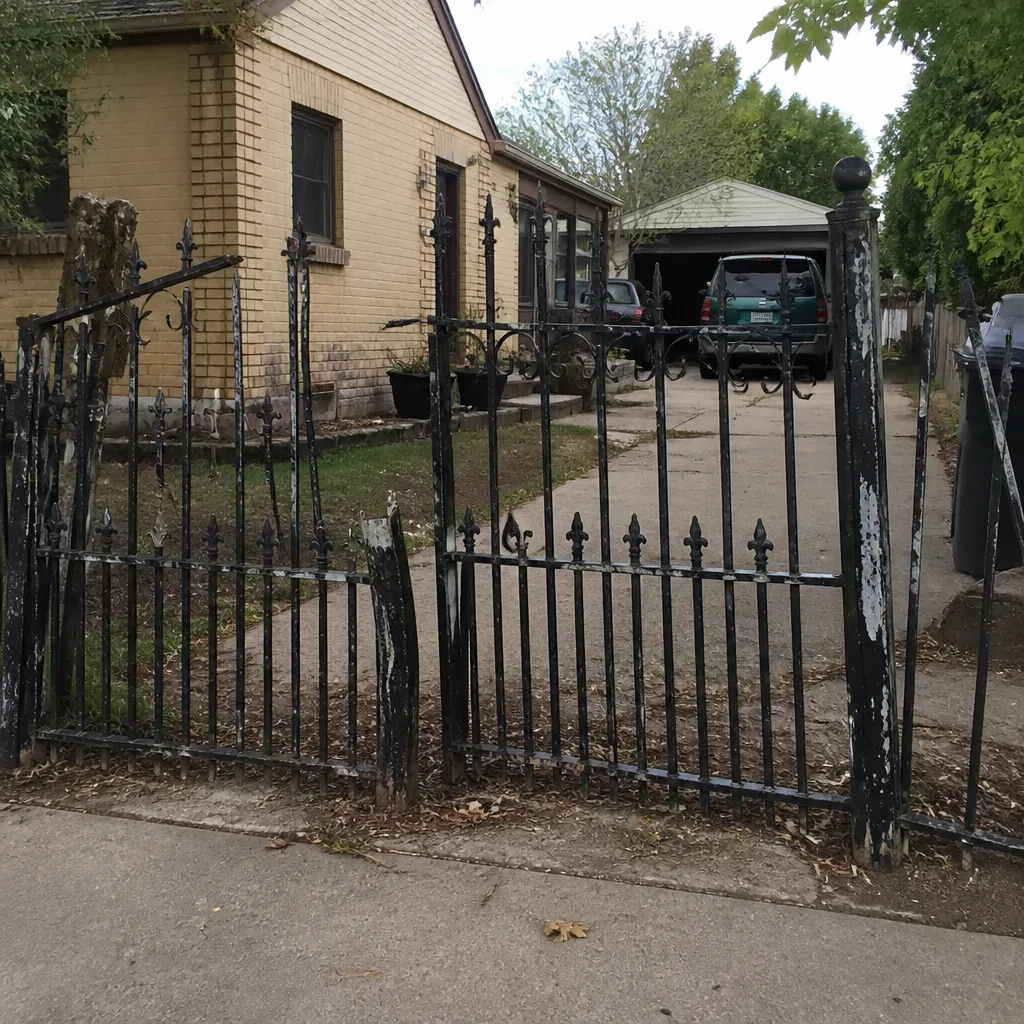 Before
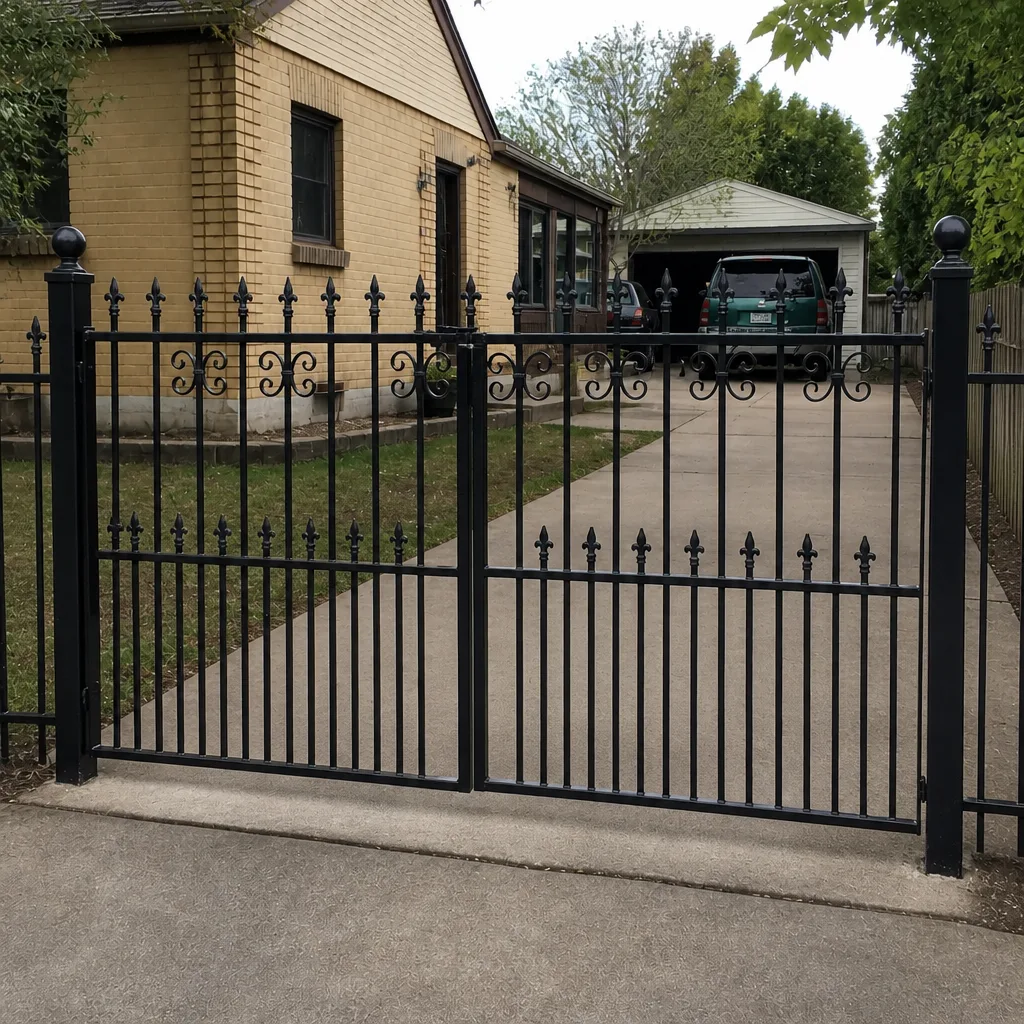 After
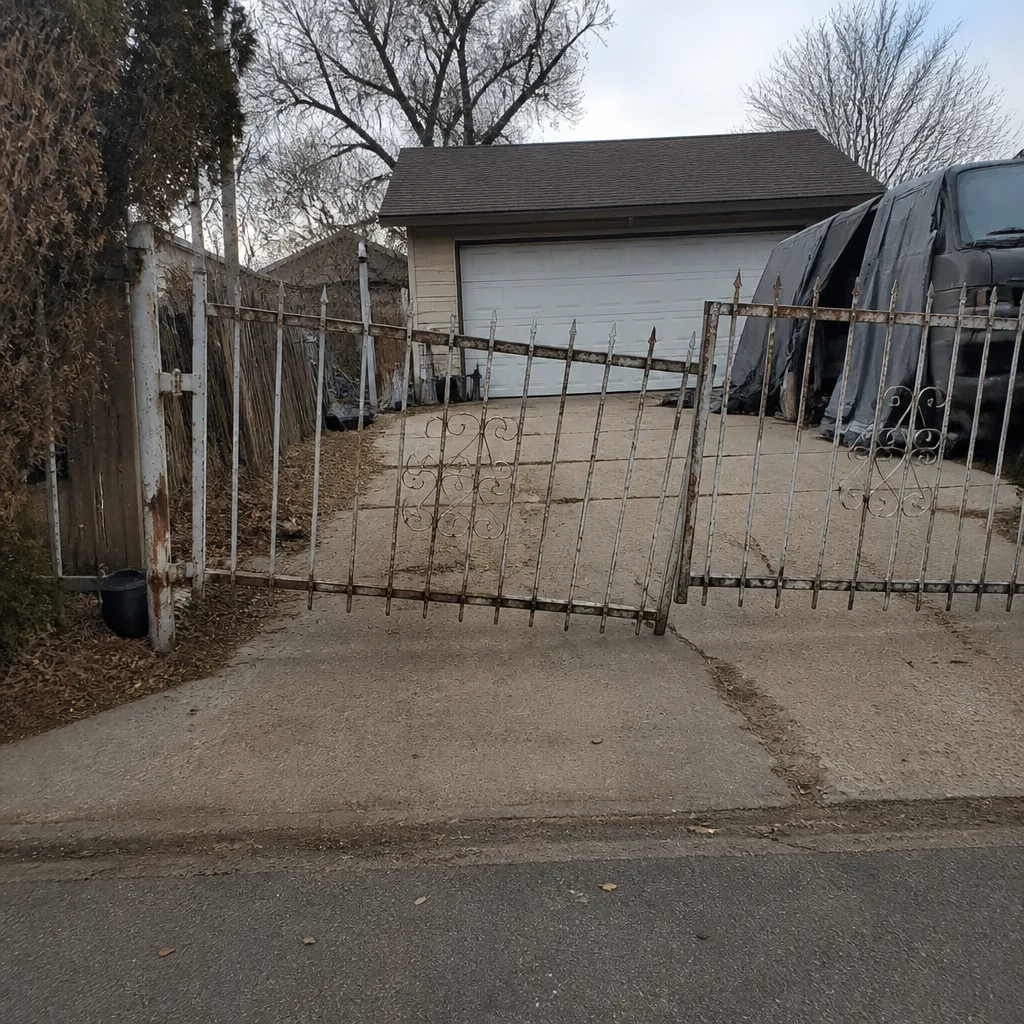 Before
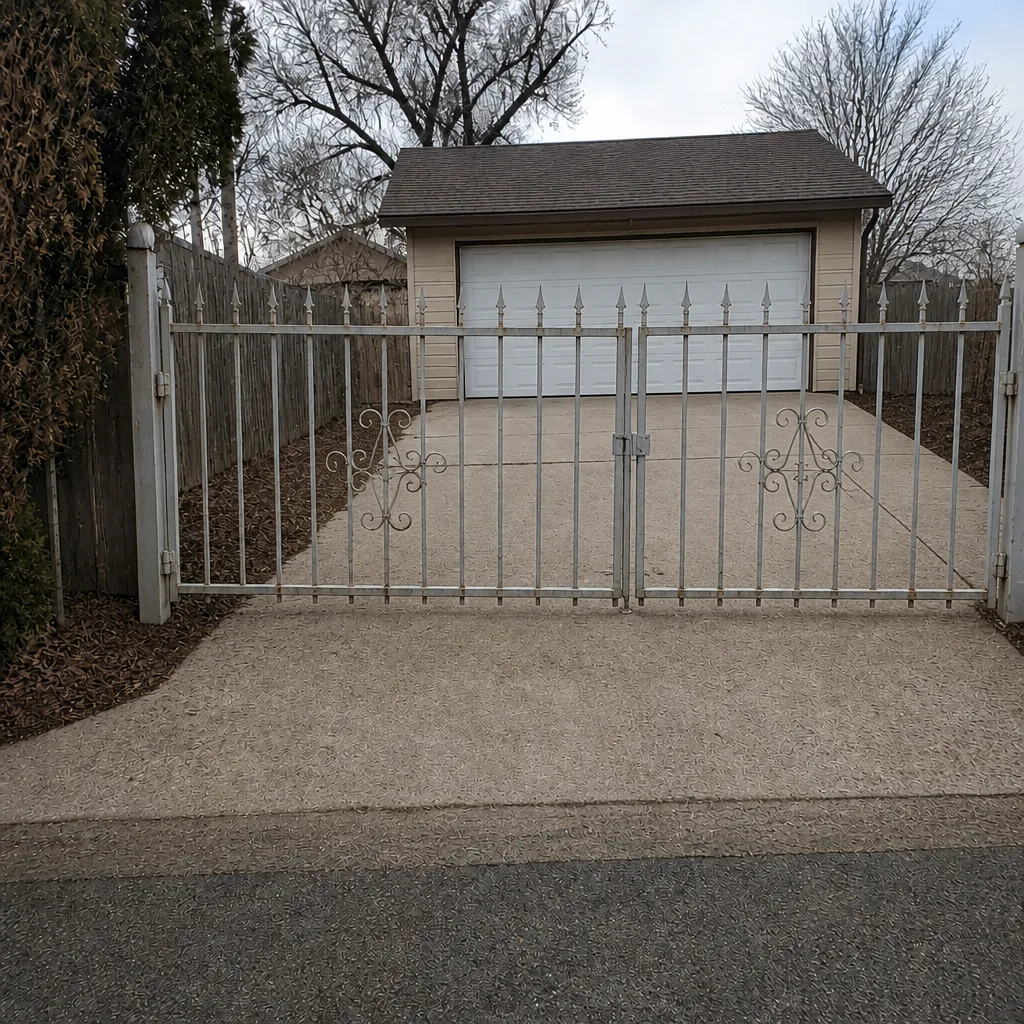 After