
Last updated November 15, 2026
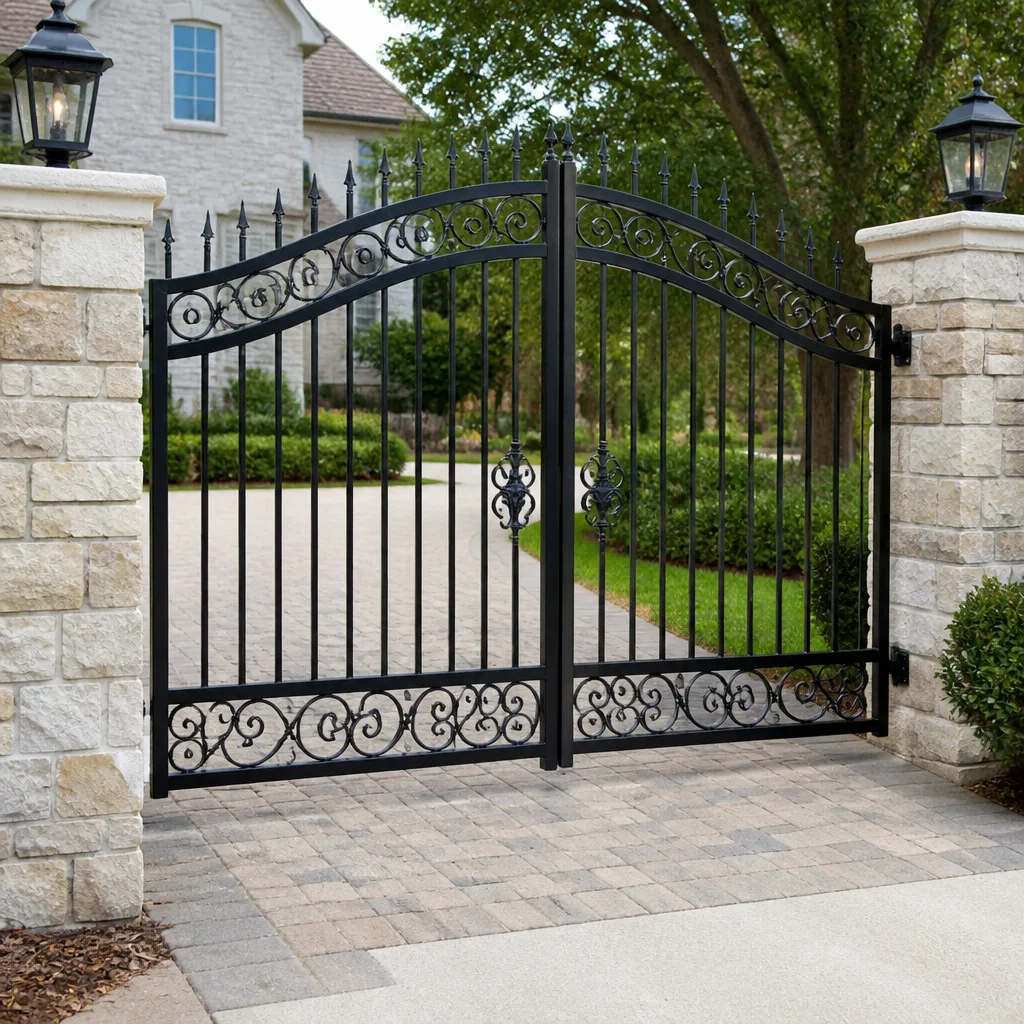 Wrought iron
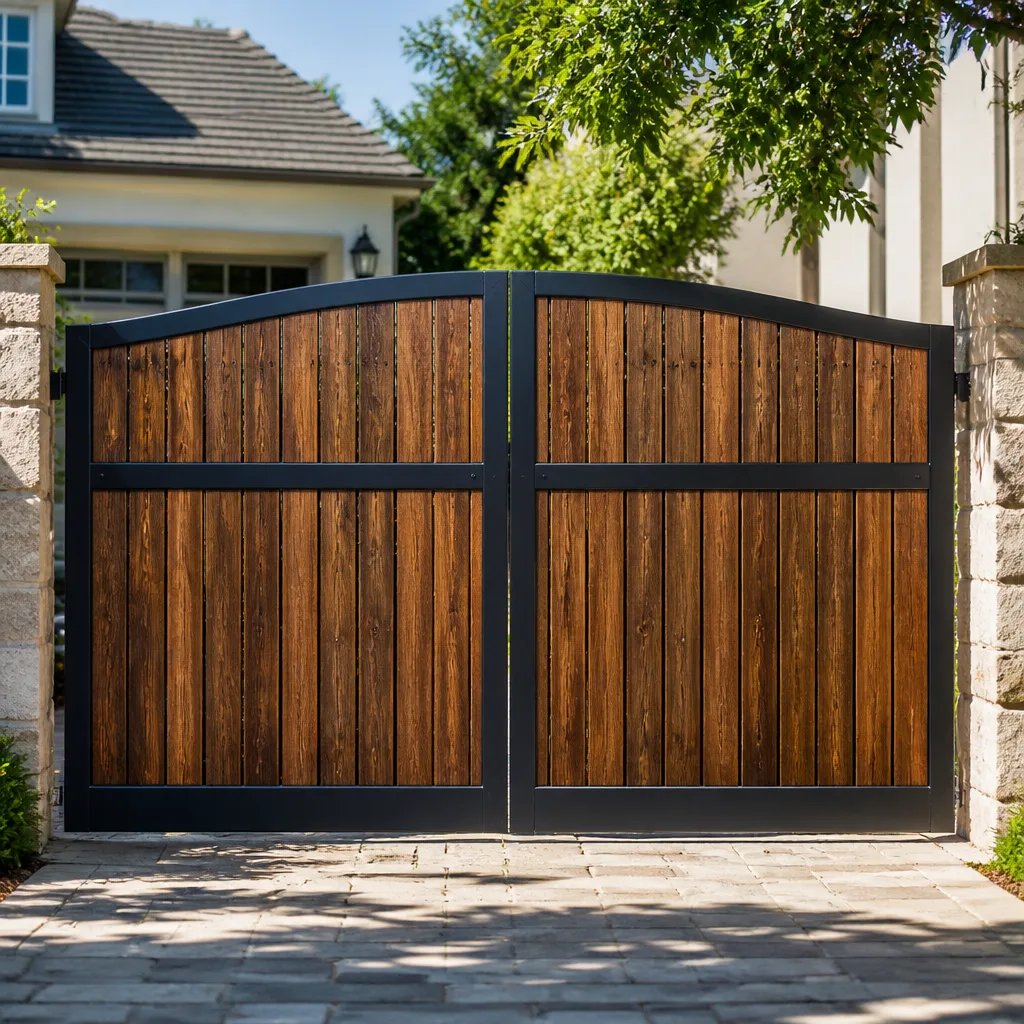 Wood & steel frame
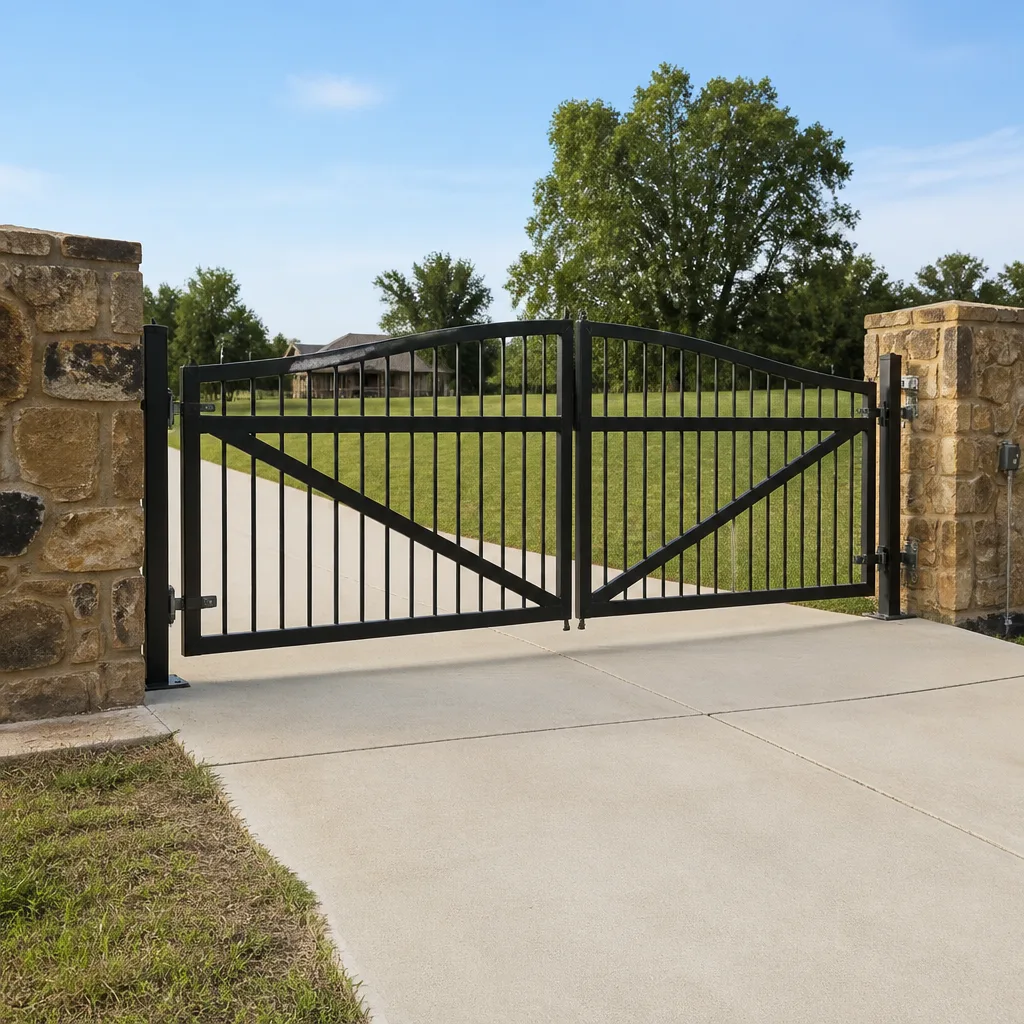 Farm & ranch
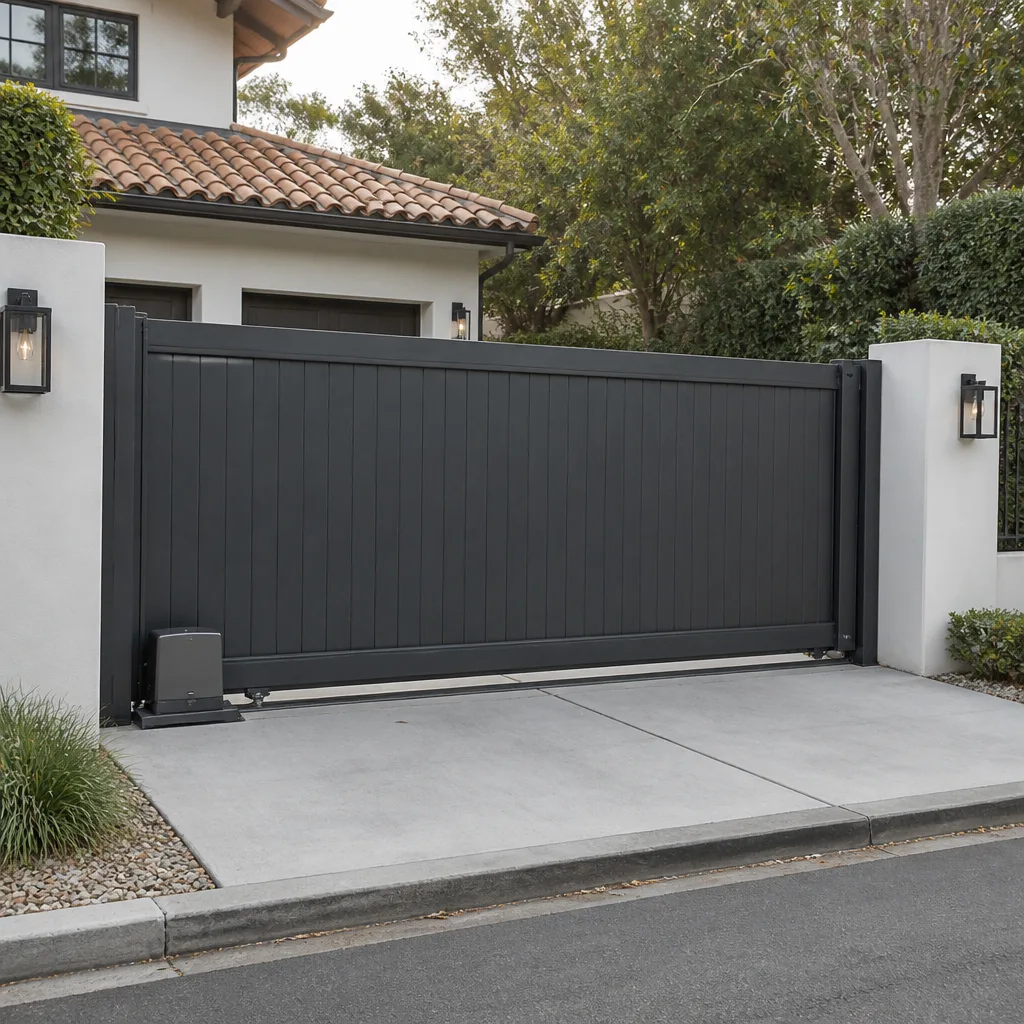 Sliding driveway gates
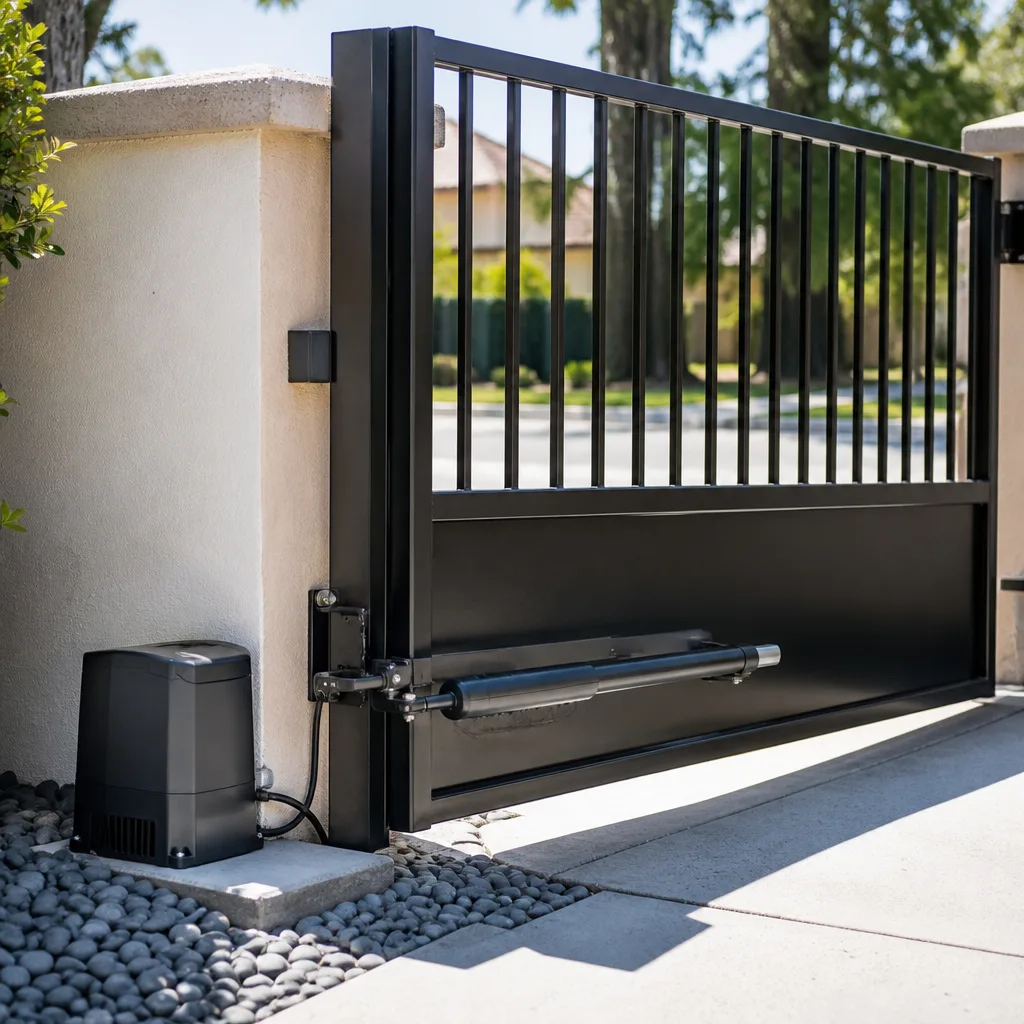 LiftMaster operators
Free on-site gate assessment - hinges, posts, and your LiftMaster or Nice gate operator checked before anything is quoted
The assessment is free and the quote is the invoice.
Get your free estimateThe Complete Guide to Gate Repair in Aurora
Most gate repair calls in Aurora get misquoted on the first visit. The technician diagnoses the symptom, a gate that won’t close, and reaches for the nearest part instead of diagnosing the system: a close-limit switch on a Viking SL3000UL that’s drifted a few degrees after a hard frost cycle, say. The gate isn’t broken. The setting is. This guide maps every common gate failure to its actual cause so you can tell the difference between a real fix and a Band-Aid. We’ll walk through brand-specific failure patterns, how Aurora’s freeze-thaw cycles stress gate hardware, the correct diagnostic order, and what repair costs actually look like by gate type and system.
Quick Answer
Gate repair in Aurora usually means one of four things: a failed operator motor, a control board that’s lost its limits after a freeze-thaw cycle, a safety sensor that’s out of alignment, or a gate that’s physically sagged or shifted off its hinges or track. Diagnosing in that order, and knowing the brand, is what separates a repair that resets the failure clock from one that just postpones the next service call. The right fix depends on your specific system, not on a generic checklist.
Styles & brands we work with
- Wrought iron
- Wood & steel frame
- Farm & ranch
- Sliding driveway gates
- LiftMaster operators
Table of Contents
- Why Aurora Gates Fail Differently
- Brand-Specific Failure Patterns in Aurora’s Installed Base
- Choosing the Right Power Source for an Aurora Gate
- The Diagnostic Order: Motor vs. Control Board vs. Safety Sensor vs. Physical Alignment
- Repair or Replace: How to Decide
- What a Gate Specialist Checks on a Service Call
- Cost and Timeline Expectations by Gate Type and Repair
- Permits, HOA Rules, and Electrical in Aurora
Why Aurora Gates Fail Differently
Aurora sits on the eastern edge of the Denver metro, high and dry, with wide seasonal swings that hit gate hardware hard. That combination produces failure patterns you won’t see in milder climates. The freeze-thaw cycle is the big one. Daytime sun warms a steel post or gate frame, and overnight lows drop it back below freezing. Water that got into a hinge, a track channel or a post footing expands and contracts, and over a season that works fasteners loose, warps hinge plates and shifts gate leaves out of square.
What makes Aurora different from generic “cold climate” advice is the frequency of the swing. A gate that freezes once a winter and stays frozen is actually easier on hardware than a gate that thaws and refreezes a dozen times. Persistent thaw means constant movement, and movement is what wears fatigue points. This is why we see more limit-switch drift, more sensor misalignment and more mid-travel binding in Aurora than in colder but steadier climates.
The dry air matters too. Very low humidity dries out the rubber seals around operator housings and the gaskets on control boxes. That lets fine grit into the system, and grit in a limit-switch assembly causes the gate to overtravel or stop short. Meanwhile, compacted gravel driveways and pavers common in older Aurora subdivisions shift by fractions of an inch each season, and for a swing gate, that fraction can be the difference between clearing the ground and dragging it.
The lesson: in Aurora, a gate problem is almost never just a motor problem. It’s a mechanical system sitting inside a very demanding climate loop, and any diagnosis that ignores that loop is incomplete.
Brand-Specific Failure Patterns in Aurora’s Installed Base
Neighborhood mix in Aurora produces a wide brand spread. You’ll find a lot of LiftMaster units on newer residential swing and slide gates, Viking SL3000UL sliding operators in the older neighborhoods, FAAC and BFT on light-commercial systems, Mighty Mule on budget residential installs, and DoorKing on anything that feeds into an apartment complex or gated community. Each brand fails in its own way, and knowing which failure belongs to which system is the fastest route to the right repair.
LiftMaster
LiftMaster residential swing and slide operators are reliable, but in this climate the wear lands on two places. The battery in the LiftMaster solar and DC-powered units degrades faster in cold, so the first symptom is often a gate that’s slow or stops mid-travel. Limit-switch assemblies drift after repeated freeze-thaw cycles, so the gate stops a couple of inches short at full close. If you have a LiftMaster RSW12U or a similar swing operator, a gate that stops short is nearly always a limit setting, not a motor failure.
Viking
Viking SL3000UL sliding operators hold up well mechanically. The control board and the external safety-sensor wiring are where the problems show up. Sensor alignment is the most common complaint on a Viking slide gate in Aurora, and it usually presents as the gate reversing halfway or refusing to close at all. Adjust the sensor before you touch the operator.
FAAC and BFT
FAAC and BFT are heavier commercial operators, and they mostly run into issues on gate weight and start-up torque after cold nights. A FAAC 740 swing operator gets sluggish in December not because the motor is failing but because the grease on the arm has stiffened. BFT slide operators often show up with oil-seal weep or a pressure-plate setting that’s too aggressive for the weight of the gate.
Mighty Mule
Mighty Mule units are entry-level DIY systems, and in Aurora the most common issues are battery voltage drops, a control board that’s aged out, and safety edges that stop communicating. These are quite repairable, but again, the fix depends on knowing the system.
Choosing the Right Power Source for an Aurora Gate
If your gate is on a driveway far from the house, one of the first decisions is whether to run line voltage or use a low-voltage solar unit. In Aurora, both work, and the right answer depends on distance, sun exposure and how much cycle use the gate sees in a day.
- Measure the run. Distance from the nearest power source to the gate operator location determines how much voltage drop you’ll see and how much conduit you’ll need. If you’re more than a few dozen feet out, the trenching and conduit cost often pushes the project toward low-voltage solar.
- Check sun exposure. A south-facing driveway with open sky is a good candidate for solar. A gate under heavy shade or tucked into a shadow of a large building is not.
- Estimate daily cycles. A single-family home might cycle the gate a half-dozen times a day. A small commercial lot or multifamily property might cycle it hundreds of times. Solar works for the first; line voltage is the safer bet for the second.
- Talk to the city about the electrical permit. Most Aurora gate electrical runs require a permit, and the specific requirements come from the city’s building department. Ask before you buy anything.
- Plan for battery replacement. Low-voltage solar systems need batteries, and batteries have a finite life in cold weather. Build a replacement into your seasonal maintenance thinking.
If you plan to bring line voltage to the gate, we can work with your licensed electrician and set the operator-side connections ourselves. That’s an electrical-adjacent job and we treat it with the right caution: no shortcuts on the run, no crossing of the trenching, no DIY for the homeowner.
The Diagnostic Order: Motor vs. Control Board vs. Safety Sensor vs. Physical Alignment
This is the part where most first visits go wrong. A gate that won’t close is a symptom, not a cause. The correct diagnostic order treats the system structurally, moving from the cheapest, easiest, most common cause outward to the more expensive and less common ones.
Step 1: Physical Alignment
Before touching any electronics, we check that the gate leaf is level, the hinges aren’t worn, the track is clear and the post footing hasn’t shifted. A gate that drags or binds will trigger the safety circuit and reverse, causing a symptom that looks electrical. Pay special attention after Aurora’s thaw cycles, when footing movement is most likely.
Step 2: Safety Sensors and Safety Edges
Next, we check the safety sensor alignment, the safety edge communication, and whether the receiver sees the transmitter. In Aurora, dust and grit from dry spring winds can foul optics, and a small misalignment is often all it takes to keep a gate open. This step alone resolves a surprising share of Aurora service calls.
Step 3: The Control Board
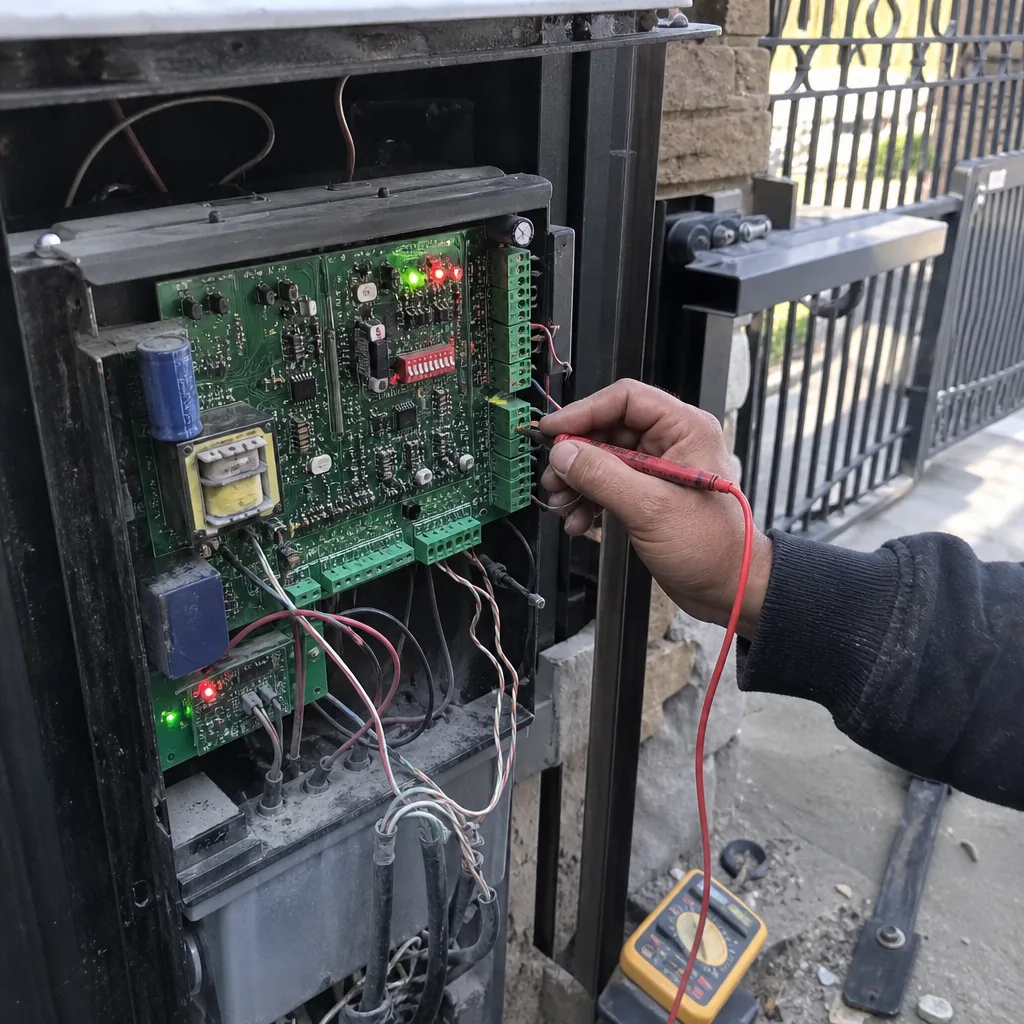
Once alignment and sensors are verified, we test the control board. The board is where brand knowledge matters most. A LiftMaster board diagnoses differently from a FAAC or BFT board; the logic, the limit settings and the fault codes are brand-specific. If the board is showing a real fault, we confirm it against the specific brand’s diagnostic protocol before recommending a replacement.
Step 4: The Motor and Mechanical Drive
Only after alignment, sensors and control board are ruled out do we test the motor and the mechanical drive. Motor failure is the least common cause of a gate symptom in our experience. It’s also the most expensive, which is why jumping to it first is the most common misdiagnosis we see.
Following this order is what we mean by “the right fix for your specific system.” The gate you have and the brand on the housing are the two facts that drive every decision after that.
Repair or Replace: How to Decide
Sometimes a repair fixes the problem for years. Sometimes it’s a Band-Aid that buys a few months. The distinction is worth understanding, because it determines whether you spend once or twice.
- Repair resets the failure clock when the cause is isolated and the rest of the system is healthy. A limit switch that drifted on a LiftMaster or Viking operator after a freeze cycle, a sensor that fell out of alignment, a hinge that loosened: fix it and the system goes back to normal.
- Repair is a Band-Aid when the underlying system condition hasn’t changed. Replacing a control board without checking ground-loop sensitivity or the earth ground at the operator housing is a classic example. The board fails again in a few months because the fault that killed it is still present.
- Replacement is the better call when the operator has multiple component failures, or the failsafe logic on the board is aging out, or the gate’s structural alignment can’t be corrected without replacing major hardware. A gate that needs new hinges, a new operator and a new control board in the same season is usually better served by a new system.
- Brand and age matter. A well-kept FAAC or DoorKing system can reasonably run much longer than an entry-level Mighty Mule that’s seen several Aurora winters. That’s a general observation, not a hard rule, and the right answer depends on your specific system.
The proper way to decide is with a full diagnostic. A repair quote that didn’t start with alignment and sensors isn’t really a diagnostic, it’s a guess.
What a Gate Specialist Checks on a Service Call
A gate is a system. A good service visit walks through every part of that system in order, not just the part that’s visibly misbehaving. Here’s the sequence a gate-only specialist should follow.
- Visual walk-around. Check the gate leaf, posts, hinges, track, rollers and any ground shifts. Look for rust, fatigue, loose fasteners and drag marks.
- Manual cycle test. Release the operator and move the gate by hand to assess resistance and balance. A gate that’s hard to move by hand has a mechanical problem regardless of what the electronics say.
- Operator housing and seals. Inspect for grit, moisture or dried seals. Aurora’s dry air and dusty springs matter here.
- Battery and power. Check the battery voltage on solar units, check the line voltage, and confirm the operator’s power supply is stable.
- Safety devices. Test the safety sensor and safety edge. Confirm both respond before the gate completes a close.
- Control board and limits. Cycle the gate and watch for the operator’s built-in fault logic and limit positions. Compare to the brand’s expected behavior.
- Operator drive and motor. Only now test the motor and drive for current draw and response.
- Final cycle and documentation. Run the gate through a full open-close-open cycle, then tidy the electrical box and leave a written note on what was found.
That’s the order we follow on every call, and it’s the same order that keeps a repair from turning into a call-back.
Cost and Timeline Expectations by Gate Type and Repair
Cost varies by gate type, operator brand and the category of repair. We don’t quote prices over the phone, but here’s how the categories break down so you know what to plan for. The written estimate you get after the on-site check is what sets the final price, and it’s agreed before any work starts.
Residential vs. Commercial
A residential swing or slide gate with a LiftMaster or Mighty Mule operator is the entry point. A light-commercial gate with a FAAC or BFT operator, or an access-controlled community gate running DoorKing, sits in a higher tier because the parts are heavier and the diagnostic is more involved.
General Repair Categories
- Mechanical adjustment (limits, sensor alignment, hinge adjustment): usually the lowest cost, often resolved in a single visit.
- Component replacement (control board, safety edge, battery, receiver): mid-range, priced by the specific brand part.
- Operator motor or drive replacement: higher tier, sometimes requiring a scheduled follow-up if the part needs to be ordered for a specific brand.
- Structural repair (gate leaf realignment, hinge replacement, post work): depends on the gate’s size and material, quoted after the on-site inspection.
Timeline Expectations
Mechanical adjustments and sensor work are typically done in one visit. Component replacements depend on part availability for the specific brand, which is why knowing your operator’s brand before we arrive speeds the process. New installations are measured, ordered and scheduled, so they don’t happen on the same day as the estimate.
For pricing on anything specific to your gate, call gate repair at (877) 330-0618 for a free on-site estimate. We’ll walk the gate with you and quote per job, not per hour.
Permits, HOA Rules, and Electrical in Aurora
Gate projects in Aurora can touch permitting and HOA rules, and it’s easier to plan for that up front than to find out later. Most cities require a permit for structural gate work and electrical runs to a gate operator, so ask your city’s building department what applies to your property before the work is scheduled. HOA rules vary widely by neighborhood. Corner lots and visible-from-the-street gates typically have tighter design restrictions, and some HOAs limit gate height or finish. If your gate is in a gated community, the board or property manager usually has the rules on file.
Electrical work at the gate is a place where a trained professional matters. The operator housing carries live connections, and a fault at the board can carry that fault back to the electrical panel. We treat any electrical work at the gate as a job for a qualified technician, and we flag safety concerns rather than work around them. For a new gate installation or an electrical upgrade to an existing one, we bring the operator side, and we work with licensed electricians on the electrical run.
If you’re coordinating a new gate project with a builder, the best time to get us involved is before the driveway is poured or the posts are set. We can talk through power, sensor placement and safety edge routing while the site is still open.
Common Mistakes to Avoid
- Diagnosing the symptom instead of the system. A gate that won’t close is not necessarily a broken motor. It could be a limit switch, a sensor misalignment or a physical bind, and treating it as a motor problem is how people end up paying twice.
- Replacing a control board without checking ground and sensitivity. A new board fails again in Aurora’s climate if the ground loop or earth ground at the operator housing is still faulty. Fix the cause, not the evidence.
- Ignoring footing and post shift after a freeze-thaw cycle. Aurora’s thaw cycles move footing by fractions of an inch. If the gate drags or rubs at the base, check the post, not the electronics.
- Running line voltage to a gate without a permit. Most Aurora gate electrical runs require a permit. Skipping it may force rework later, and it exposes you to code issues that a licensed electrician would catch.
- Choosing a general handyman over a gate specialist. Gate systems are brand-specific in their logic, limits and safety circuits. A generalist often learns on the job, and the learning curve costs you time.
- Skipping the free estimate and accepting a phone quote. A gate problem quoted over the phone is a guess. A written estimate after an on-site check prices the actual work.
- Ignoring the safety edge and sensors. Safety devices exist for a reason, and a gate that’s been “adjusted” to close on a sensor fault is a genuine hazard, especially on a property with children or pets.
See the difference
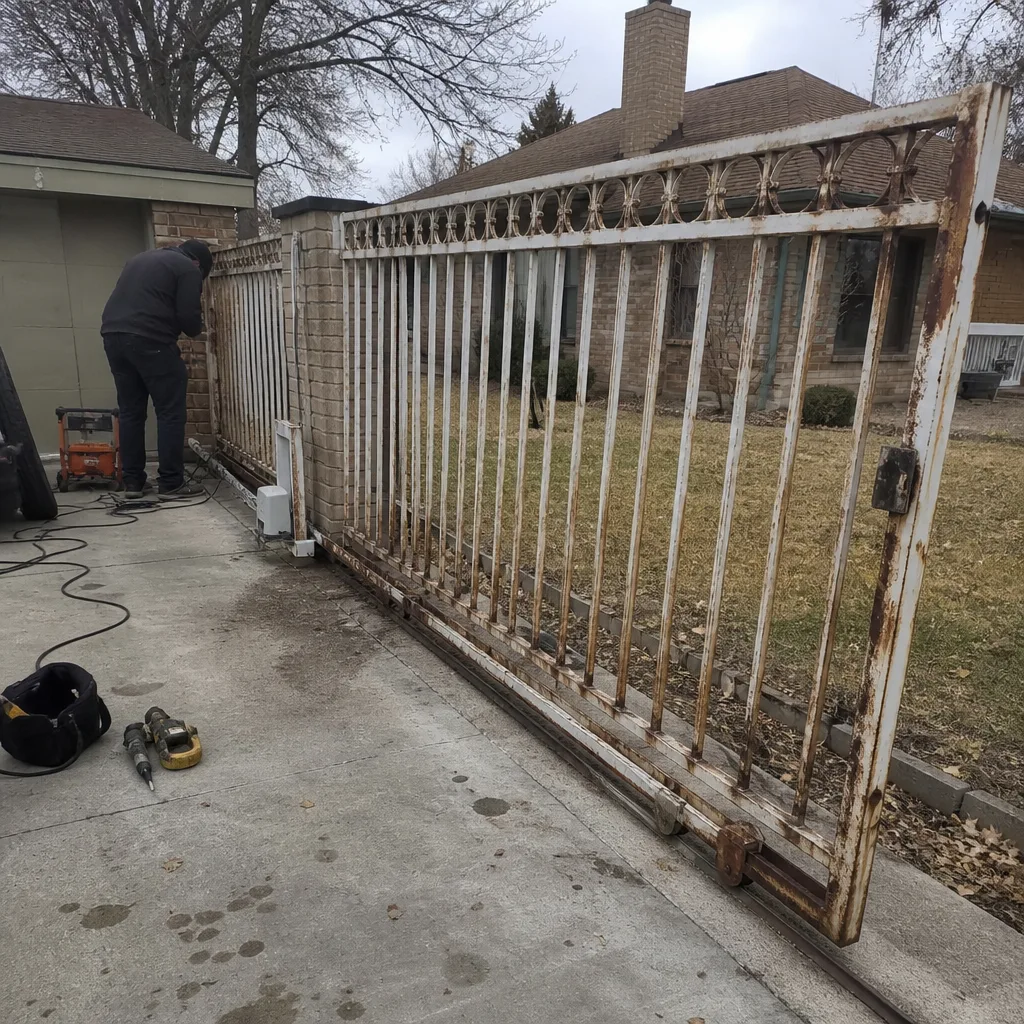 Before
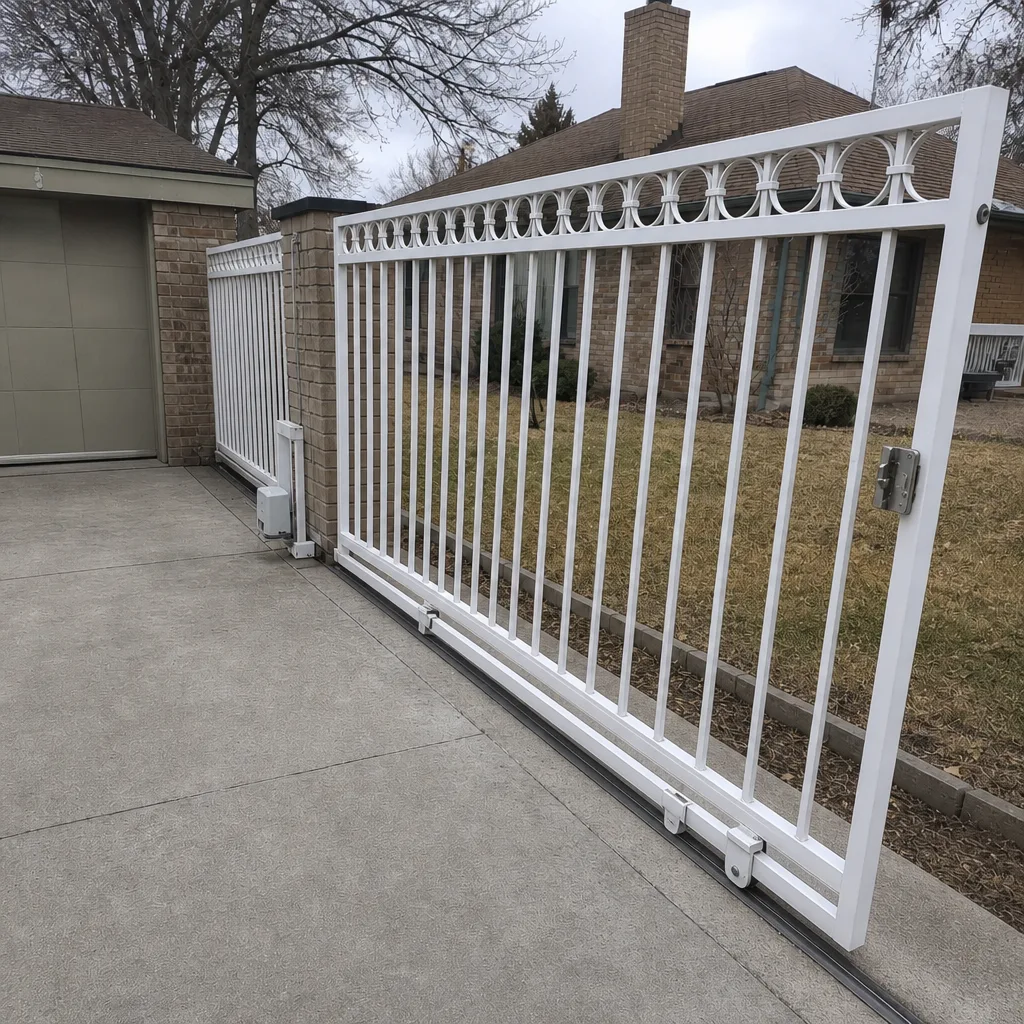 After
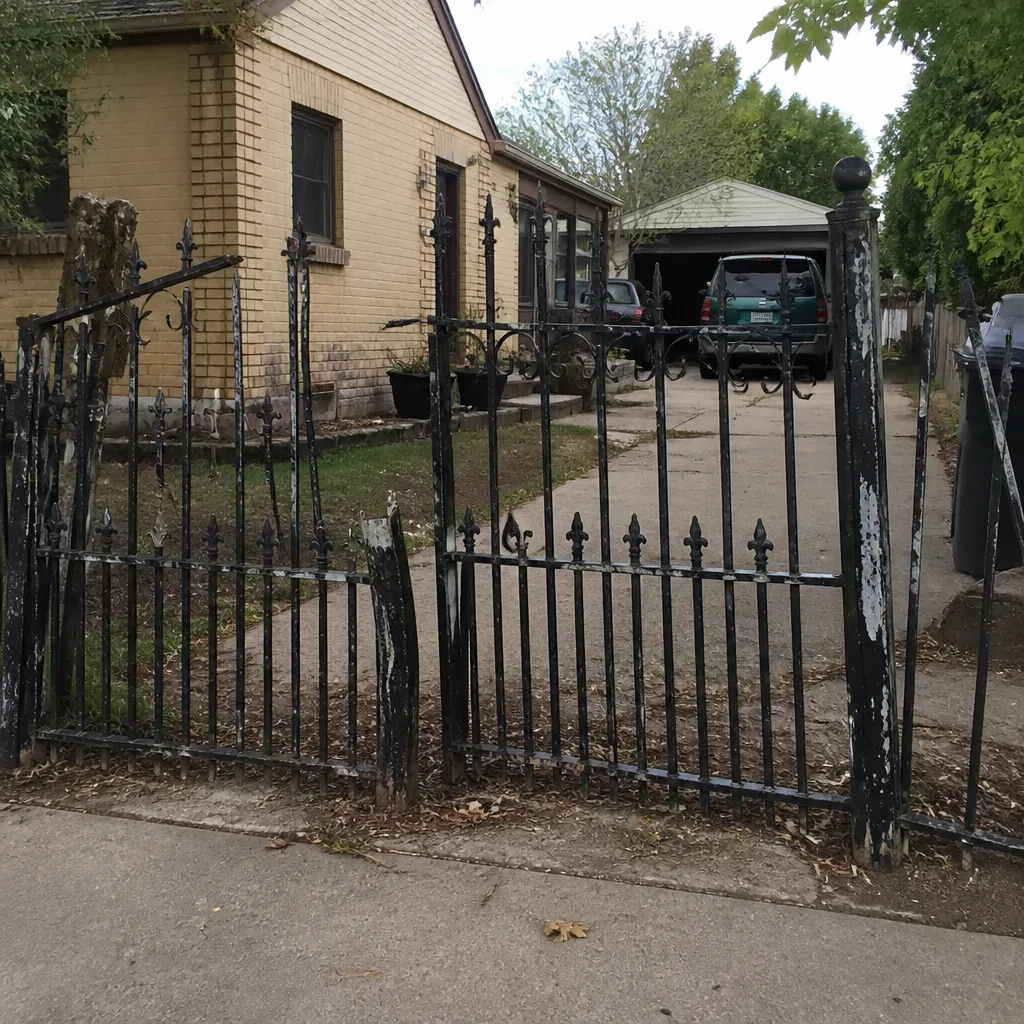 Before
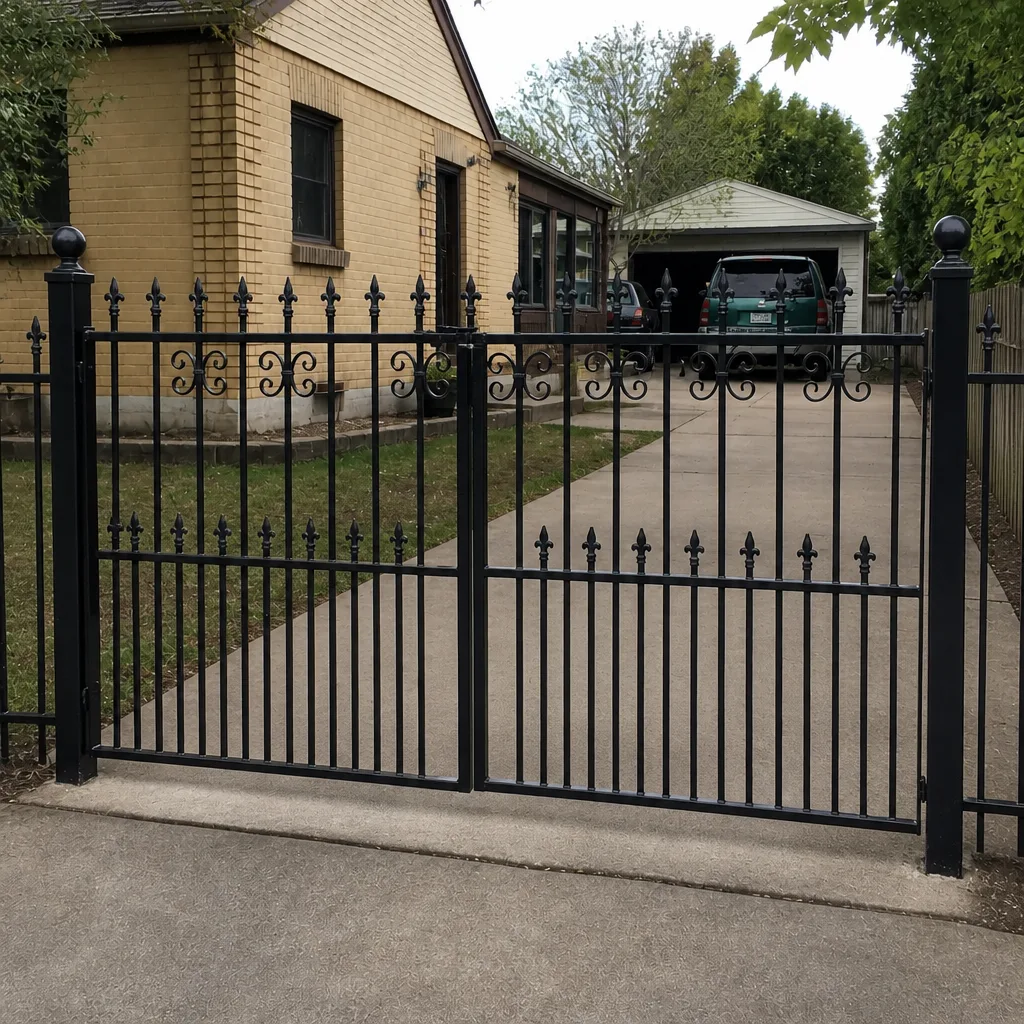 After
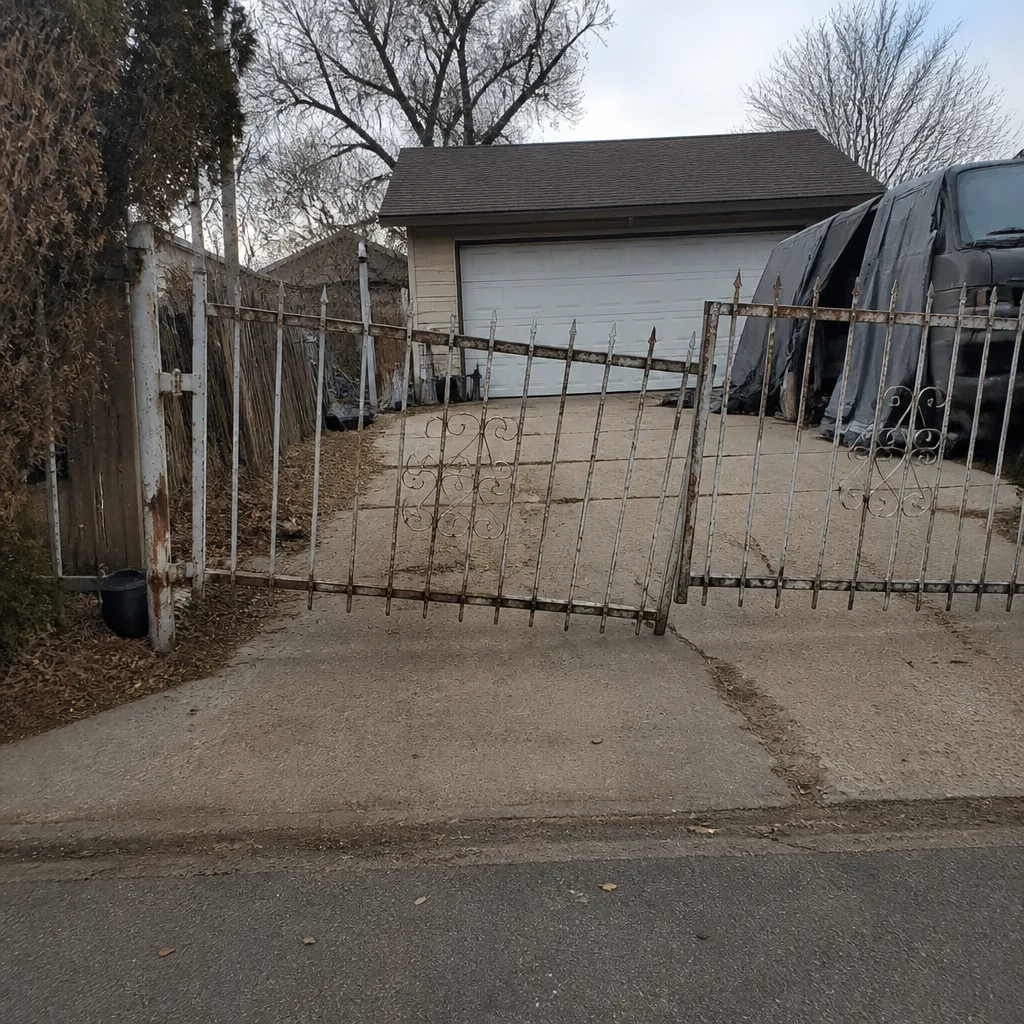 Before
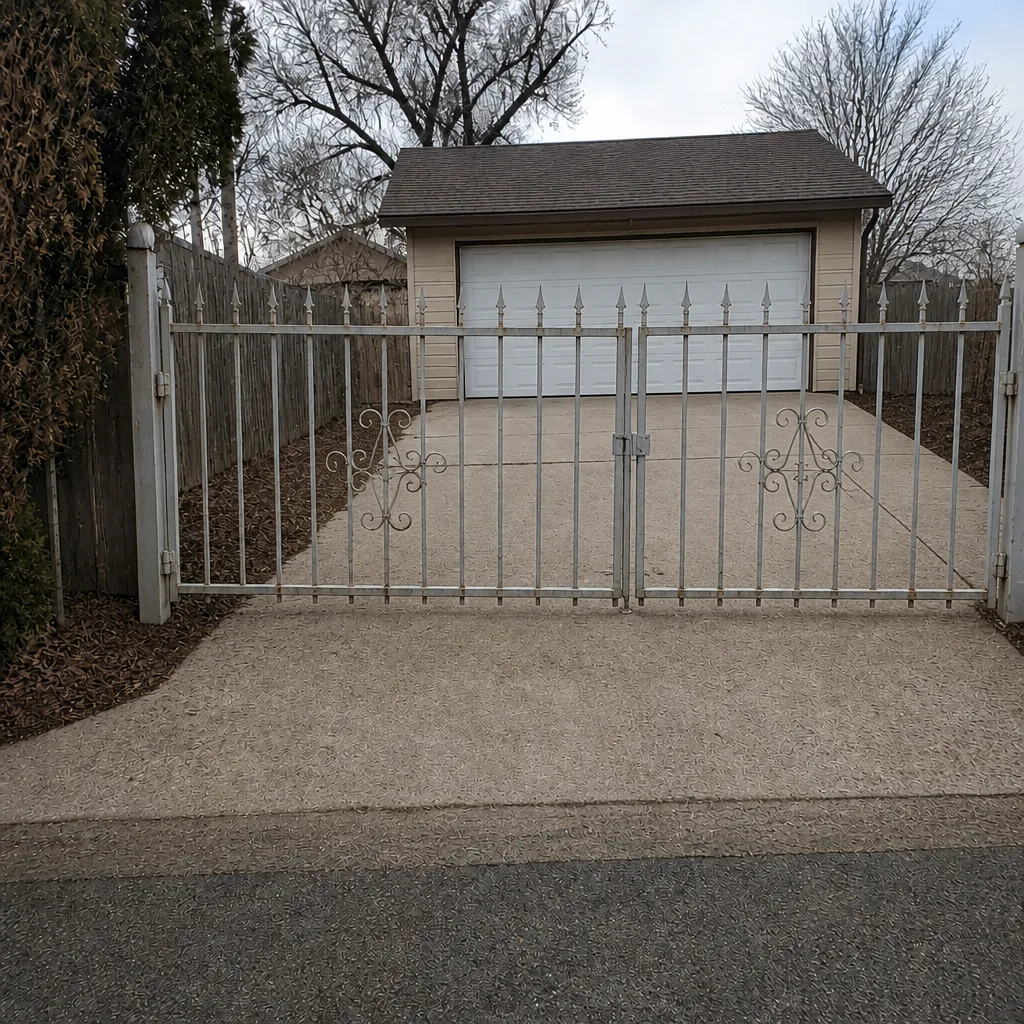 After
When to Call a Professional
Call a professional when the gate stops in the wrong position, reverses without a visible obstruction, makes a grinding or clicking sound from the operator housing, or fails a safety-sensor test. Call before you touch the electrical side of the operator housing, before you replace a control board, and before you adjust the gate’s structural alignment after a hard freeze. Also call when a repair quote from a previous visit didn’t include an alignment and sensor check, because that’s a sign the diagnosis is incomplete. We offer free estimates in Aurora for both repair and installation, so you’re not guessing. Aurora Gate Repair offers free estimates in Aurora. Call (877) 330-0618. We answer 24/7. A call outside dispatch hours is booked into the next opening, Sunday through Friday, 7am to 7pm. Fast dispatch from 7am to 7pm, Sunday through Friday.
Frequently Asked Questions
Gate repair in Aurora is priced per job based on the written estimate, and that estimate is agreed before any work starts. Mechanical adjustments and sensor alignment are typically the lowest tier, followed by component replacement (control boards, batteries, safety edges), then operator motor and drive work, then structural repair. A free on-site estimate is the reliable way to get a real number. Call (877) 330-0618 for an exact quote, and remember the written estimate sets the final price.
Yes, we work on LiftMaster, FAAC, BFT, Linear, Viking, Ghost Controls, DoorKing, Elite, and Mighty Mule systems. That covers both entry-level residential operators (Mighty Mule, Ghost Controls) and commercial-grade access systems (FAAC, BFT, DoorKing, Viking). Telling us the brand when you call speeds the diagnosis. Call (877) 330-0618 for a free estimate.
For repair and diagnostic calls, same-day service is often available. Fast dispatch from 7am to 7pm, Sunday through Friday. We answer 24/7, and a call outside dispatch hours is booked into the next opening, Sunday through Friday, 7am to 7pm. Call (877) 330-0618 and we’ll confirm the earliest opening for your Aurora gate.
Yes. Our installation service covers the operator side, the power run coordination with a licensed electrician, and the safety sensor and safety edge setup. New gate installations are measured, ordered and scheduled, so there’s no same-day install; the whole project is planned and quoted in advance. Call (877) 330-0618 for a free measure and a written price.
The most common cause is a safety sensor or safety edge that’s drifted out of alignment or has a wiring issue, followed by a limit switch that’s shifted after a freeze-thaw cycle. In Aurora’s climate, footing movement and dried seals contribute to the drift. A proper diagnostic tests the sensor before it touches the operator. Call (877) 330-0618 for a free estimate on your specific system.
Repair is worth it when the cause is isolated and the rest of the system is healthy; replace when the operator has multiple component failures or the failsafe logic on the board is aging out. In our experience, a well-kept FAAC or DoorKing system can reasonably outlast an entry-level Mighty Mule that’s seen several Aurora winters, but the specific system decides. Call (877) 330-0618 for a free diagnostic and a written estimate.
The Bottom Line
Gate repair in Aurora is not a single-skill job. It’s a matrix of mechanical, electrical and climate-driven problems that change depending on whether you’re running a LiftMaster swing operator or a FAAC 740 on a commercial slide. The right diagnostic sequence is physical alignment, then safety sensors, then control board, then motor, and that order is what separates a repair that resets the failure clock from one that buys six months. Know your brand, check the sensors before the board, watch your footing after a freeze, and get a written estimate before anyone touches the gate. That’s what keeps a repair a repair and not a repeat service call.
If your gate is stuck, slow or unreliable, or if you’re planning a new installation, we’re the gate-only specialist in the Aurora area. From electric gate repair to full installation, we’re familiar with LiftMaster, Mighty Mule, FAAC, BFT and six other major brands, and we know each one’s failure patterns. To see everything we handle, start at Aurora Gate Repair, and learn more about the city we work in at Aurora. Call (877) 330-0618. We answer 24/7. Fast dispatch from 7am to 7pm, Sunday through Friday. Free estimates, and the written estimate sets the final price.
Written by the team at Aurora Gate Repair.